
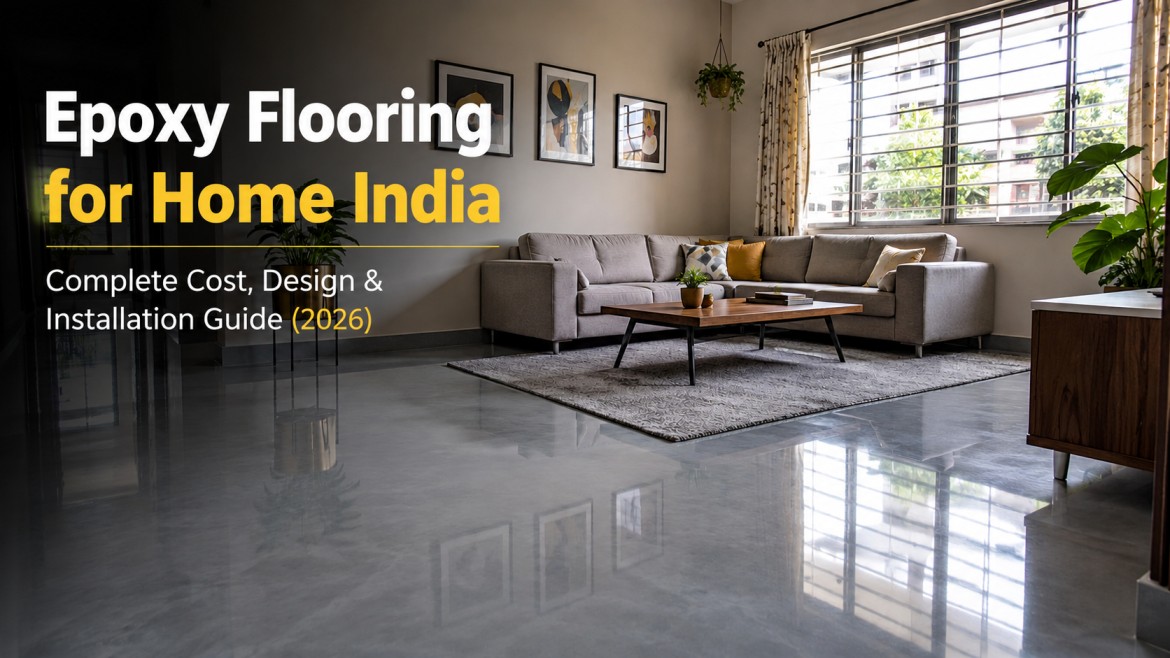
Epoxy flooring for home India applications has moved well beyond garages and factories. Homeowners in Mumbai, Thane, and across the MMR are now choosing epoxy for living rooms, kitchens, and balconies because it delivers a seamless, glossy finish without grout lines. Moreover, it resists stains, spills, and daily wear far better than plain tiles.
However, before you commit, you need clarity on cost, durability, and which rooms actually suit this flooring. As a result, this guide breaks down everything a Furnofy client should know before choosing epoxy for their next renovation.
Outline
- What Is Epoxy Flooring?
- Why Choose Epoxy Flooring for Your Home in India
- Epoxy Flooring Cost in India: Room-by-Room Pricing
- Epoxy Flooring vs Tiles vs Marble: Which Wins for Indian Homes?
- Best Rooms for Epoxy Flooring in Your Home
- How Epoxy Flooring Is Installed: Step-by-Step Process
- Maintenance Tips for Long-Lasting Epoxy Floors
- FAQ’s
- Conclusion
What Is Epoxy Flooring?
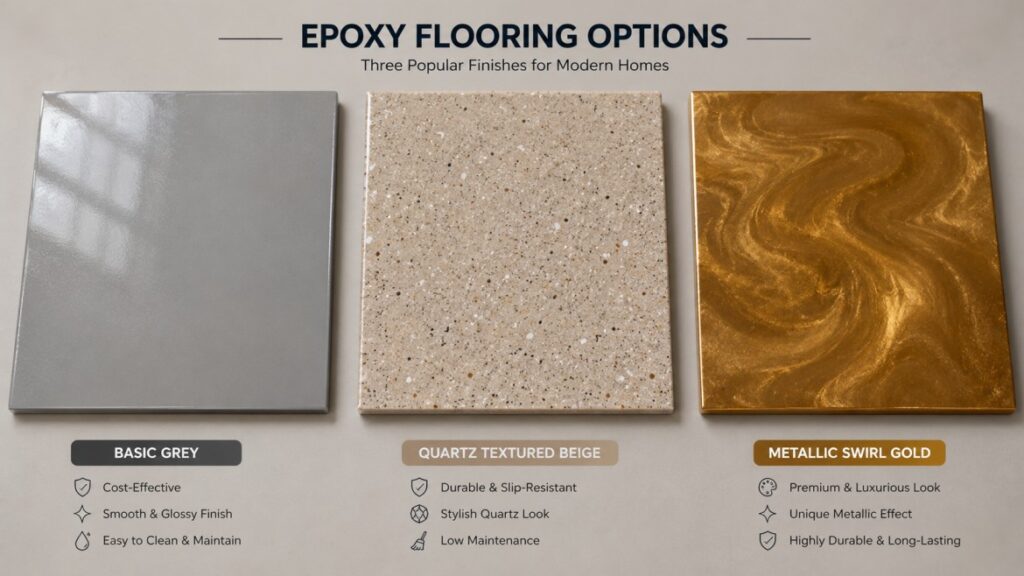
Epoxy flooring is created when epoxy resin is mixed with a hardening agent and applied over a prepared concrete surface. Once cured, the two components react chemically and form a hard, glossy, seamless layer. Because the material bonds tightly to concrete, it resists cracking and chipping far better than many conventional finishes. In addition, it can be pigmented, layered with flakes, or finished with a metallic swirl for a more decorative look.
Why Choose Epoxy Flooring for Your Home in India
Indian homes face heavy monsoon humidity, dust, and constant foot traffic, so flooring needs to handle more than just looks. Epoxy flooring for home India settings addresses these challenges directly. Since the surface is seamless, dust and bacteria have nowhere to collect, which makes cleaning far easier than tiled or grouted floors. Additionally, epoxy resists oil, turmeric, and other common kitchen stains that usually mark porous stone or tile grout.
- Seamless, hygienic surface with no grout lines to scrub
- High resistance to stains, spills, and daily scuffing
- Wide range of finishes: matte, glossy, metallic, or flake-textured
- Faster installation than natural stone or vitrified tile flooring
- Long lifespan of 10–20 years when installed and maintained correctly
Epoxy Flooring Cost in India: Room-by-Room Pricing
Epoxy flooring cost India buyers should expect varies mainly by finish type, floor condition, and city, and no two contractors quote identically. Based on publicly available pricing data, most homeowners currently pay somewhere between ₹70 and ₹150 per square foot for a good-quality self-levelling system, while decorative metallic epoxy can climb past ₹250 per square foot. The table below reflects general market estimates rather than fixed rates, since labour and material costs shift often; therefore, always request a site-specific quote before sharing a number with a client.
| Epoxy Type | Best For | Price Range (per sq ft) |
| Basic epoxy coating | Budget garages, utility floors | ₹40 – ₹70 |
| Self-levelling epoxy | Living rooms, bedrooms, offices | ₹70 – ₹120 |
| Quartz epoxy flooring | Kitchens, wet areas | ₹100 – ₹160 |
| Metallic / decorative epoxy | Statement living rooms, villas | ₹250 – ₹500+ |
Note: The figures above are indicative, drawn from publicly available sources rather than Furnofy’s live vendor pricing. Confirm current rates internally before quoting.
Furthermore, an old or cracked floor can add extra cost for grinding, levelling, and crack repair before the epoxy goes down, so ask your contractor for a cost breakdown that separates surface preparation from the finish coat itself, since skipping prep work is the most common cause of early peeling.
Epoxy Flooring vs Tiles vs Marble: Which Wins for Indian Homes?

When comparing epoxy flooring for living room spaces against vitrified tiles or marble, each material trades off differently. Tiles offer variety and easy spot replacement, but grout lines trap dirt over time. Marble looks premium, yet it stains easily and needs periodic polishing. Epoxy, on the other hand, wins on seamlessness and stain resistance, although it lacks the natural texture that marble buyers often want. As a result, epoxy suits high-traffic, spill-prone areas better, while marble still holds appeal for formal living rooms and foyers.
Best Rooms for Epoxy Flooring in Your Home
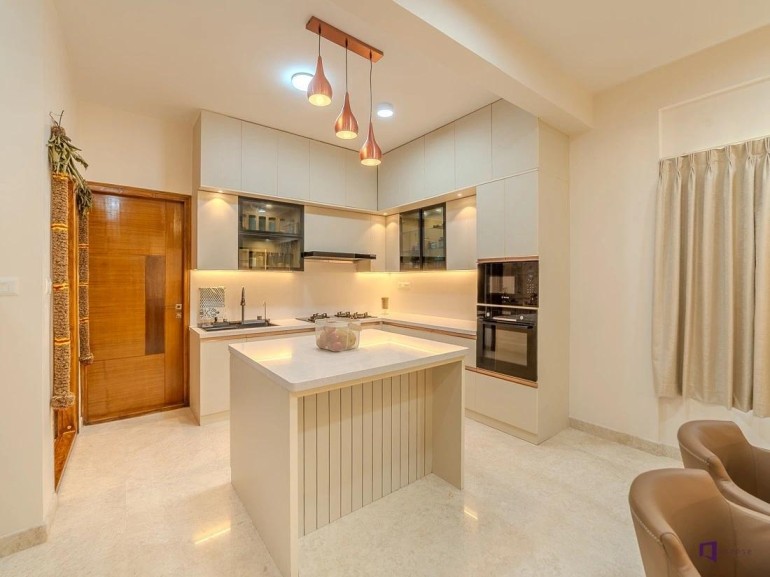
Not every room benefits equally from epoxy flooring for home India layouts. Living rooms, kitchens, home offices, and covered balconies are excellent candidates because they see regular foot traffic and occasional spills. Garages and utility areas also suit epoxy well, since it handles oil stains and vehicle weight without cracking. However, epoxy is generally unsuitable for open, sun-exposed terraces, because UV rays cause yellowing and gradual surface degradation unless a UV-resistant polyurethane topcoat is specifically used.
How Epoxy Flooring Is Installed: Step-by-Step Process
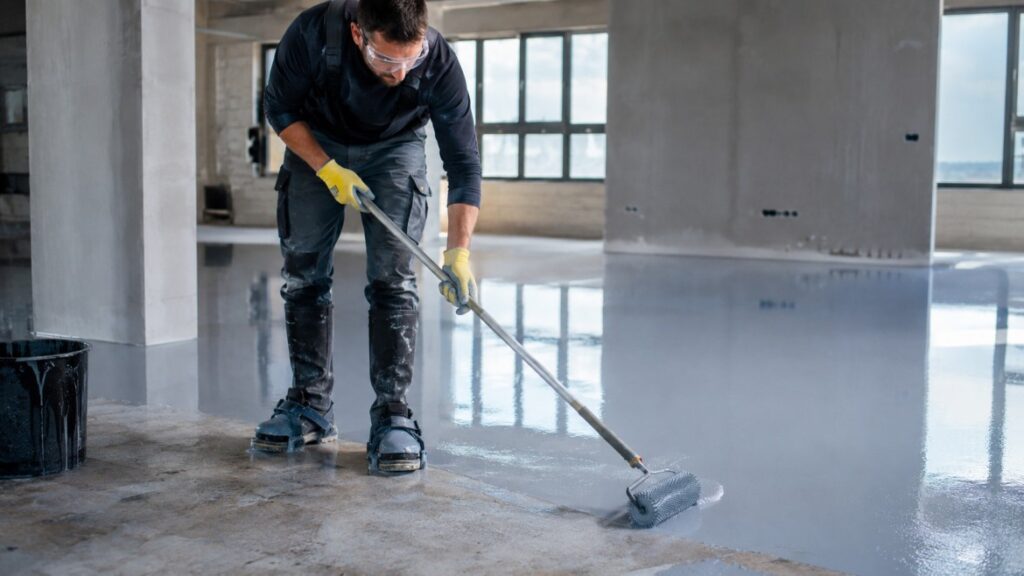
Understanding the installation process helps you evaluate whether a contractor is cutting corners. A proper epoxy flooring job for a home typically follows these steps, and skipping any one of them shortens the floor’s lifespan considerably.
- Step 1: Surface diagnosis – the contractor checks for cracks, moisture, and old coatings
- Step 2: Grinding and cleaning – the concrete is mechanically prepared for bonding
- Step 3: Primer coat – a bonding primer seals the concrete and improves adhesion
- Step 4: Base coat – the pigmented epoxy layer is poured and self-levelled
- Step 5: Decorative layer (optional) – flakes, quartz, or metallic pigments are added
- Step 6: Topcoat and curing – a clear protective topcoat is applied, then left to cure for 24–72 hours before foot traffic
Maintenance Tips for Long-Lasting Epoxy Floors
Because epoxy floors are low-maintenance rather than zero-maintenance, a few simple habits extend their life significantly. Sweep or vacuum regularly to prevent grit from scratching the glossy topcoat. Additionally, wipe spills promptly, since standing liquid can dull the sheen over time. Avoid dragging heavy furniture directly across the surface; felt pads under furniture legs prevent scuff marks. With this routine, most homeowners can expect their floor to stay glossy for well over a decade.
FAQ’s
Yes, epoxy flooring works well for Indian homes because it resists humidity, stains, and daily wear better than many traditional floor finishes, provided it is installed indoors or in covered areas.
Public market estimates put residential epoxy flooring at roughly ₹70 to ₹150 per square foot, with decorative or metallic finishes going higher, but rates vary by city and contractor, so a site visit and current quote are the only way to confirm an exact price.
A properly installed epoxy floor lasts 10 to 20 years indoors, assuming normal residential foot traffic and routine cleaning.
In most cases, yes, provided the existing tile surface is level, structurally sound, and properly prepared through grinding or bonding primer.
Covered balconies work well, but open, sun-exposed terraces need a UV-resistant polyurethane topcoat, since standard epoxy tends to yellow under prolonged sunlight.
Conclusion
Epoxy flooring for home India projects offers a durable, low-maintenance, and visually striking alternative to tiles and marble, particularly for busy households across Mumbai and the MMR. That said, the right choice ultimately depends on your rooms, budget, and desired finish. If you are weighing epoxy against other flooring systems for your renovation, Furnofy’s design team can walk you through material samples and a room-by-room cost estimate suited to your home.