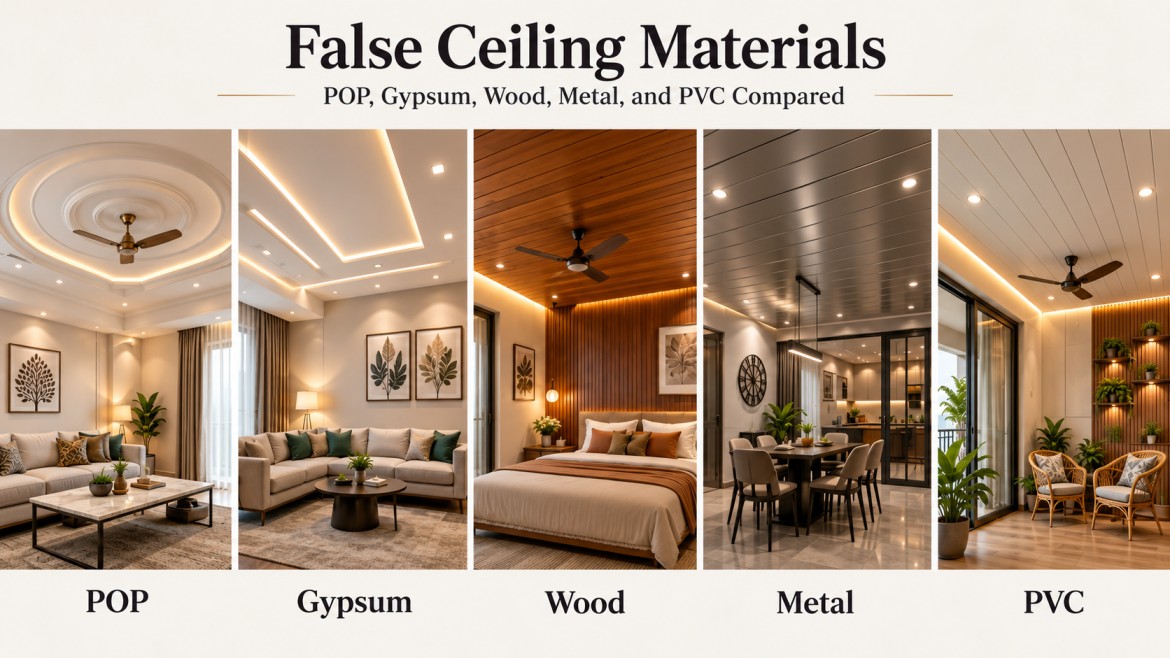
Picking a ceiling material is harder than it should be, mostly because every contractor recommends whatever they install most often. Yet among the false ceiling material types India homeowners actually choose from, the right pick depends on the room, the budget, and how much moisture that space sees. POP gives you curves and detail; gypsum installs faster and cleaner; wood adds warmth; metal survives humidity; PVC handles wet areas at the lowest cost. Below, each material is broken down by strength, weakness, and the rooms it actually suits, so you can decide with facts instead of a salesperson’s opinion.
Outline
- POP (Plaster of Paris) False Ceiling
- Gypsum Board False Ceiling
- Wooden False Ceiling
- Metal False Ceiling
- PVC False Ceiling
- False Ceiling Material Comparison Table
- Which False Ceiling Material Should You Choose?
- False Ceiling Cost in India: What Affects the Price
- FAQ’s
- Final Thoughts
POP (Plaster of Paris) False Ceiling
POP is mixed on-site and moulded by hand, so it can form curves, layers, and decorative motifs that other materials struggle to match. Because of that flexibility, designers reach for POP whenever a client wants an elaborate, layered ceiling in a living room or hall. On the downside, POP work depends heavily on the mason’s skill, takes longer to dry, and tends to develop hairline cracks if the building settles or if curing is rushed.
Gypsum Board False Ceiling
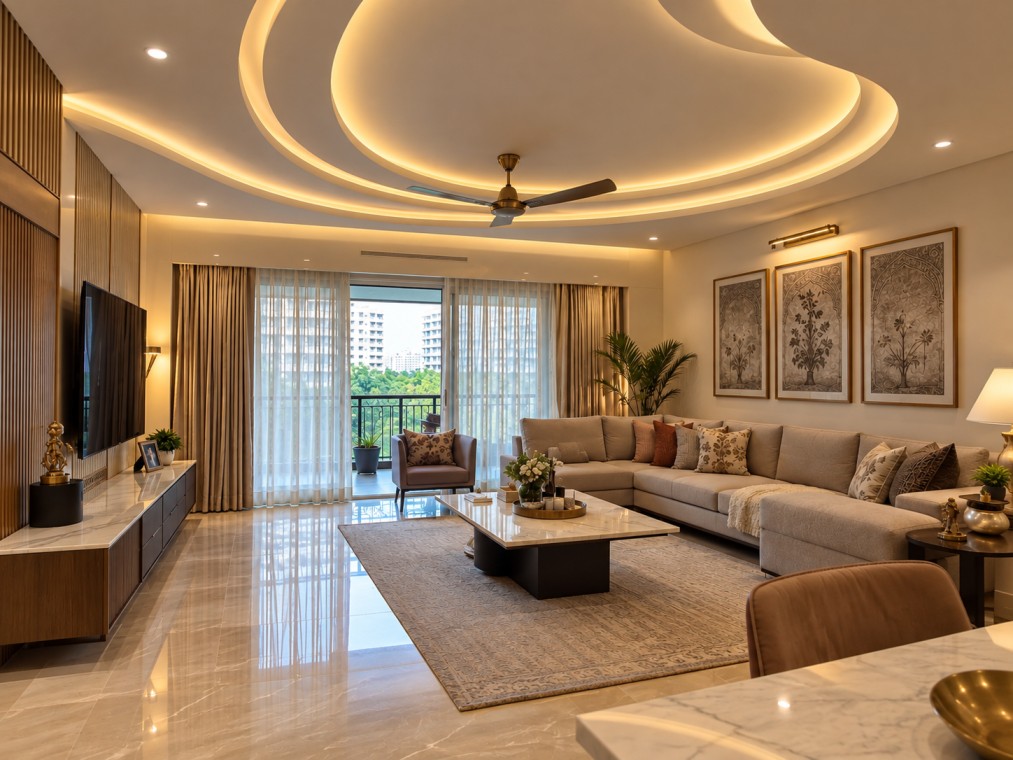
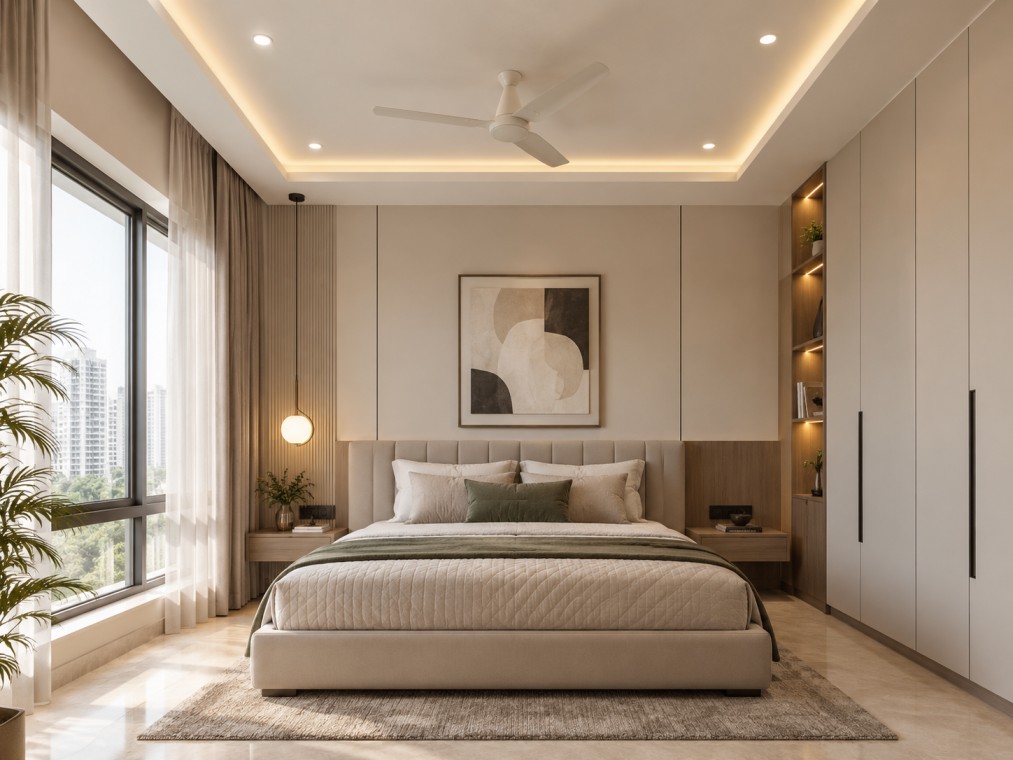
Gypsum arrives as pre-fabricated boards, so installation is quicker, cleaner, and produces almost no on-site dust compared to POP. In addition, gypsum boards accept recessed lighting and cove designs easily, which is why they dominate straight-line ceiling designs across Indian homes today. That said, gypsum absorbs moisture over time, so it isn’t the best fit for bathrooms or open balconies unless a moisture-resistant board is specified.
Wooden False Ceiling
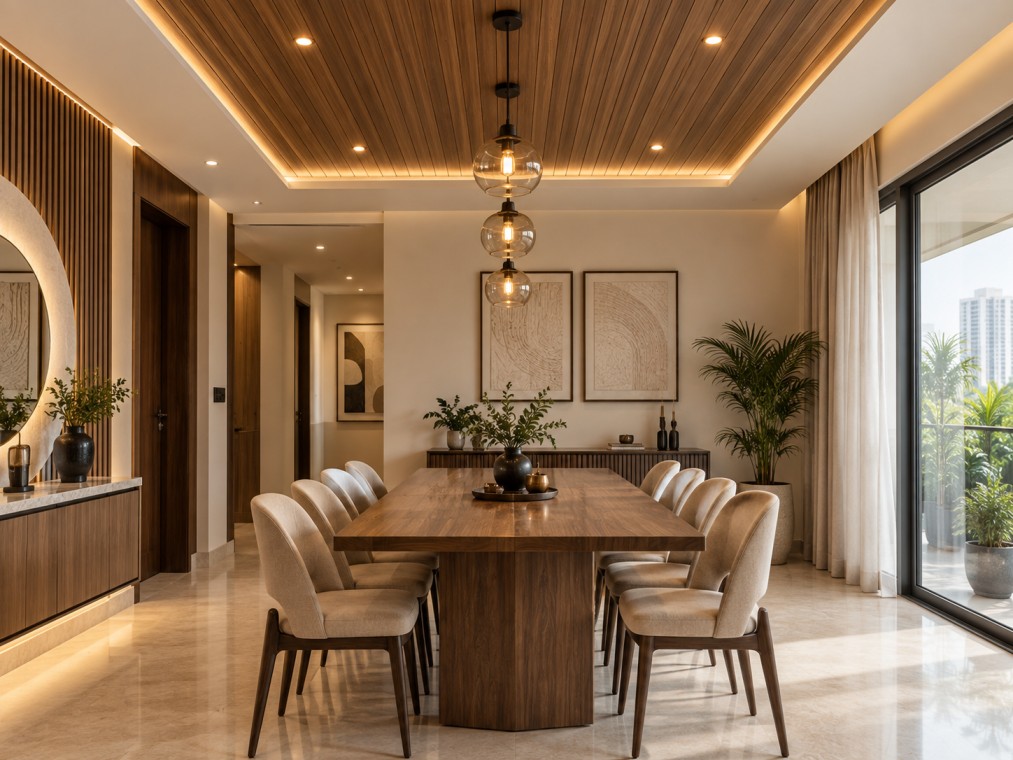
Wood panelling brings a warmth and texture that no other material fully replicates, especially in dining rooms, home bars, and statement ceiling sections. However, real wood costs more, needs periodic polishing, and reacts to humidity by swelling or warping if it isn’t sealed properly. For that reason, many homeowners now choose engineered wood or laminate panels instead, since these mimic the look while resisting moisture far better.
Metal False Ceiling
Metal ceilings — usually aluminium or GI panels — resist moisture, fire, and pests better than any other option on this list. Consequently, they’re the standard recommendation for kitchens, bathrooms, and covered balconies in humid coastal cities like Mumbai. Even so, metal offers less design flexibility for curved or layered ceilings, so it’s rarely the first choice for a decorative living room centrepiece.
PVC False Ceiling
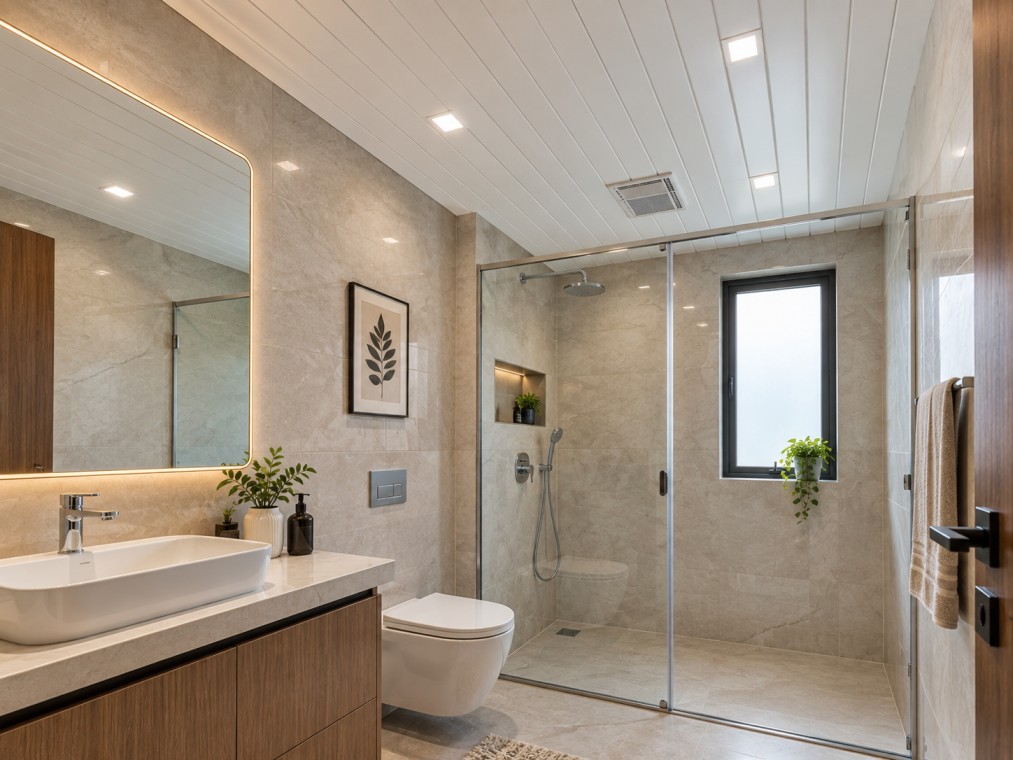
PVC panels are the most water-resistant and budget-friendly material in this comparison, which is exactly why they show up so often in bathrooms, utility areas, and rental properties. Installation is quick since panels simply click together, and cleaning only requires a damp cloth. On the other hand, PVC looks noticeably less premium than gypsum or wood, so it rarely appears in main living spaces or formal areas.
False Ceiling Material Comparison Table
| Material | Best For | Moisture Resistance | Design Flexibility | Relative Cost |
| POP | Living rooms, halls | Low | High (curves, layers) | Medium |
| Gypsum | Bedrooms, halls | Low to medium | High (straight lines, cove) | Medium |
| Wood | Dining areas, bars | Low (needs sealing) | Medium | High |
| Metal | Kitchens, bathrooms, balconies | High | Low to medium | Medium to high |
| PVC | Bathrooms, utility areas | High | Low | Low |
Which False Ceiling Material Should You Choose?
Room type should decide the material, not the trend of the year. So, use the guide below as a starting point before your designer fine-tunes it to your space.
- Living room or hall: POP or gypsum, since both support cove lighting and layered designs.
- Bedroom: gypsum, because it installs quickly and keeps the design simple and calm.
- Kitchen or bathroom: metal or PVC, as both handle grease, steam, and humidity without warping.
- Balcony or sit-out: metal, since it’s weatherproof and low-maintenance through the monsoon.
- Dining area or feature wall ceiling: wood or engineered wood, for warmth and texture.
False Ceiling Cost in India: What Affects the Price
Cost varies by material, ceiling design complexity, room size, and city, so treat any number here as a rough starting point rather than a quote. Generally speaking, PVC and gypsum sit at the more affordable end, POP and metal fall in the middle depending on design complexity, and real wood costs the most per square foot. Before finalising a budget, please verify current rates with your installer or with the Furnofy design team, since material prices shift often.
FAQ’s
There’s no single best material — it depends on the room. Gypsum and POP suit dry living spaces, while metal and PVC suit humid, high-use areas like kitchens and bathrooms.
Gypsum installs faster and stays cleaner during construction, whereas POP allows more elaborate curved designs. Neither is universally better; the choice depends on the design you want.
Technically yes, though most homeowners avoid it there because PVC looks less premium than gypsum or wood in formal spaces.
Yes, real wood needs periodic polishing and protection from humidity. Engineered wood or laminate panels reduce this maintenance considerably.
Metal generally lasts the longest in Indian conditions, since it resists moisture, fire, and pests better than POP, gypsum, wood, or PVC.
Final Thoughts
No single material wins across every room in a home — that’s precisely why most Indian interiors mix two or three of these options. Start by matching the material to the room’s moisture and usage, then let design preferences narrow the final choice. If you’d like a professional opinion on which false ceiling material types India’s climate suits best for your specific home, the Furnofy design team can help you compare options and current pricing.