
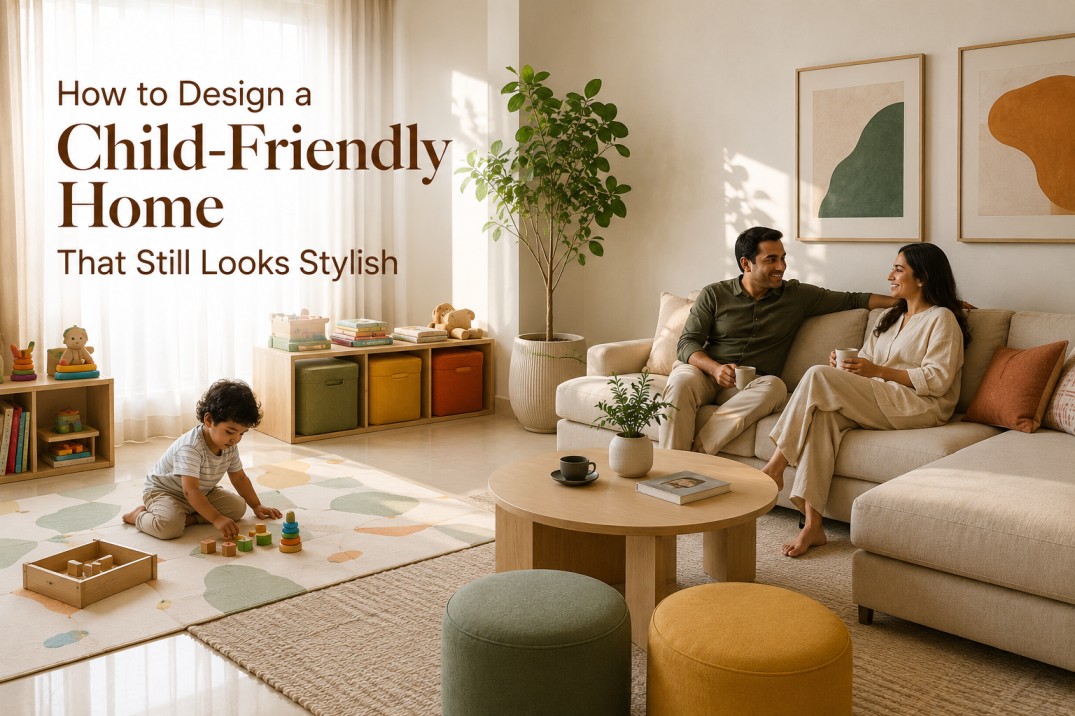
Most parents assume they have to choose — either a home that looks great or one that actually works for kids. But that’s not true at all. With the right approach, you can have both. A child-friendly home doesn’t have to mean foam-covered furniture or plastic everywhere. It simply means designing smart — choosing materials, furniture, and layouts that hold up to real family life without compromising on style.
At Furnofy, we’ve seen firsthand how a few thoughtful choices can completely transform a home for families. So whether you’re setting up a new home or rethinking your current space, these tips will help you build something that works just as well for your kids as it does for you.
Outline
- Choose Durable and Easy-to-Clean Materials
- Use Furniture That’s Safe and Functional
- Create Spaces That Spark Creativity
- Make Storage Actually Work for Kids
- Design Multi-Functional Rooms
- Pick Non-Toxic Paints and Finishes
- Layer in Soft Furnishings the Smart Way
- Get the Lighting Right
- Room-by-Room Design Ideas
Choose Durable and Easy-to-Clean Materials
This is honestly where most family home design goes wrong. People choose materials based on how they look in a showroom — not how they perform after six months of juice spills and muddy hands. The good news is that durable and stylish aren’t mutually exclusive anymore.
- Go for slipcovers and microfibre upholstery on sofas and chairs. They resist stains, survive the washing machine, and still look polished. Microfibre in particular is soft enough for kids but tough enough for everyday family use.: Washable fabrics
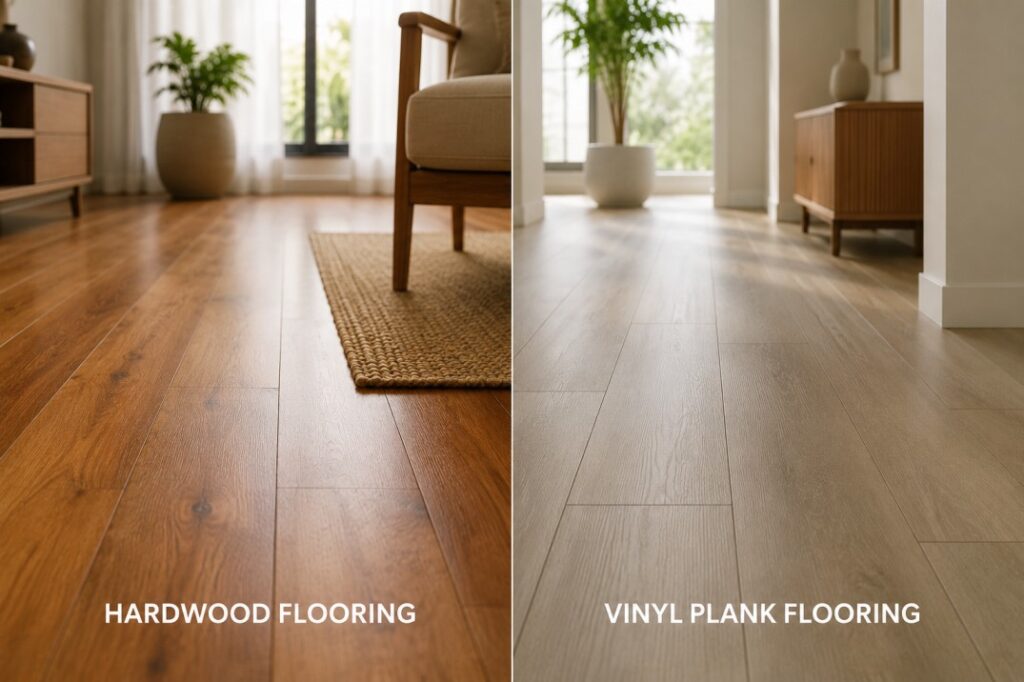
- Hardwood adds warmth and character, but if scratches keep you up at night, vinyl is a seriously strong alternative. Today’s vinyl planks look remarkably similar to wood, and they’re effortless to clean — a huge plus in homes with young children.: Vinyl or hardwood flooring
- Whether it’s a wooden toy shelf or a metal side table, always check that the finish or paint is non-toxic. There are plenty of eco-friendly, child-safe options available in India today that look just as refined as conventional finishes.: Non-toxic finishes on all surfaces
The key is to stop thinking of durability as a compromise. The right materials make your home look better for longer — and that’s a win for everyone.
Use Furniture That’s Safe and Functional
Safe furniture doesn’t mean boring furniture. In fact, some of the most thoughtfully designed pieces you’ll find are also the safest ones. Here’s what to look for when you’re shopping for a family home.
- This is non-negotiable when you have toddlers or young children at home. Coffee tables and side tables with sharp corners are a genuine hazard. Opt for softer, organic shapes — they also tend to look more contemporary, so it’s a win on both counts.: Rounded corners and soft edges
- Adjustable desks, convertible cribs, and height-adaptable chairs are worth every rupee. Instead of replacing furniture every couple of years as your child grows, you invest once and adjust as needed. Smart and cost-effective.: Furniture that grows with your child
- Ottomans with hidden compartments, beds with built-in drawers, and side tables with shelves — these pieces do double duty. They keep your living spaces tidy without adding extra storage units that eat up floor space.: Storage-first furniture
Create Spaces That Spark Creativity
Children don’t just need room to exist — they need room to imagine. And honestly, a well-designed play space makes the rest of your home look better too, because it gives toys and activities somewhere to actually live.
- You don’t have to go overboard with a full jungle mural to create something exciting for your child. A few well-chosen wall stickers, a colour palette your child loves, and some kid-sized furniture go a long way. Keep the base neutral so you can swap out the theme as they grow up.: Themed rooms done right
- A chalkboard wall in the playroom, a magnetic board in the kitchen for notes and drawings, or a sensory table in a corner — these are features kids actually use. They also look intentional and interesting, not chaotic.: Interactive features that serve a purpose
- Even in a compact Mumbai apartment, you can carve out a defined play zone using a soft rug, a few floor cushions, and some open-top bins for toys. A distinct zone keeps the mess contained and teaches kids to associate that area with play.: A dedicated play corner
Make Storage Actually Work for Kids
Clutter is the enemy of a stylish home — and in a home with children, clutter happens fast. The solution isn’t to have less stuff; it’s to have smarter storage that kids can actually use on their own.
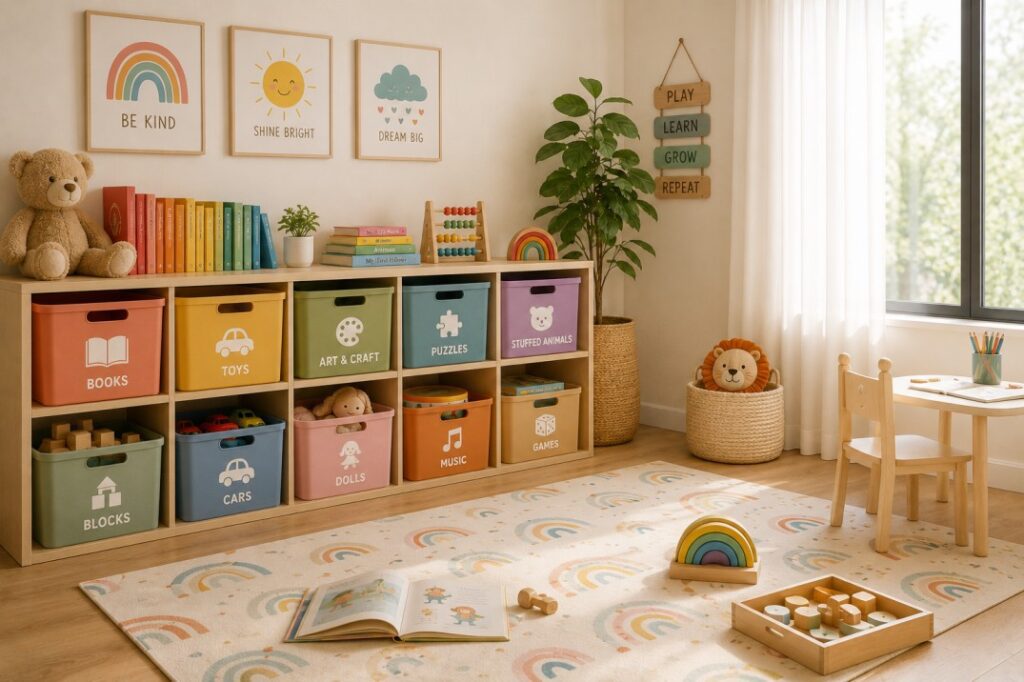
- Bright storage containers make tidying up feel less like a chore and more like a game for young kids. Add simple picture labels and they’ll start sorting their own toys without being asked. It genuinely works.: Colourful bins and baskets with labels
- Wall-mounted shelves placed at the right height, under-bed drawers, and built-in cabinets are all brilliant ways to maximise storage without cluttering floor space. In smaller Indian homes especially, going vertical is the smartest move.: Built-in shelving and under-bed storage
- A toy chest that works as a bench, a bookshelf shaped like a house — these pieces are functional and fun. Kids are more likely to use storage that feels like it was designed for them.: Storage that doubles as furniture
Design Multi-Functional Rooms
In most Indian homes, every square foot counts. That’s why multi-functional design isn’t just a nice idea — it’s essential. The goal is to create spaces that shift effortlessly between adult use and family use.
- Use a soft area rug to define a corner of your living room as a play space. Keep a few baskets there for toys that can be tucked away when you have guests. The rest of the room stays adult-ready.: A play zone within the living room
- If two siblings share a room, or if a guest room doubles as a study, convertible furniture makes all the difference. Fold-away beds, modular shelving, and stackable units let you reconfigure the room as needs change.: Convertible furniture for shared rooms
The principle here is simple: don’t design for one use case. Design for the full range of ways a room will actually be used — and it’ll serve your family far better over the years.
Pick Non-Toxic Paints and Finishes
If there’s one area where you absolutely should not cut corners, it’s paint. Children spend enormous amounts of time indoors — especially in their bedrooms — and the air quality in those spaces matters more than most people realise.
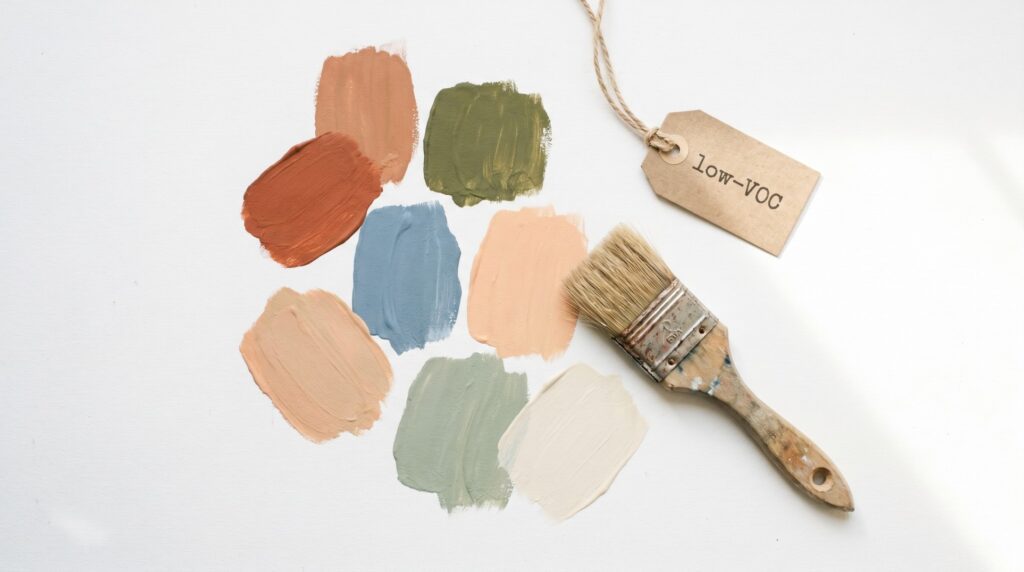
Always choose low-VOC (volatile organic compounds) or zero-VOC paints. These are widely available in India from brands like Asian Paints, Dulux, and Nerolac, and they come in just as many colours and finishes as standard paints. The difference is that they don’t off-gas harmful chemicals into the air your family breathes.
Beyond paints, look for non-toxic finishes on furniture, wood treatments, and even flooring adhesives. It’s a small detail that has a big impact on indoor air quality and your children’s long-term health.
Layer in Soft Furnishings the Smart Way
Soft furnishings — rugs, cushions, curtains, throws — are where a room gets its personality. In a family home, they also serve a practical purpose: they add warmth, reduce noise, and create safe, comfortable surfaces for kids to play on.
- A soft, washable rug in the play zone or living room corner gives children a comfortable surface to sit and play on. Choose designs with fun patterns or shapes — there are some brilliant options from Indian brands that are both child-appropriate and genuinely stylish.: Textured rugs for play areas
- Don’t shy away from colour and pattern on cushions. Mixing bold prints with a more neutral sofa creates a playful, layered look that works for both kids and adults. Just make sure the covers are removable and machine-washable.: Mix-and-match throw pillows
- Blackout curtains in bedrooms help children sleep better during afternoon naps. Choose a fabric and colour that complements your room palette — function and style, in the same window.: Curtains that do more
Get the Lighting Right
Lighting is one of those things that’s easy to overlook during a home design project — but it shapes the entire feel of a room. In a child-friendly home, you need lighting that’s safe, flexible, and age-appropriate.
- Dimmable lights are a game-changer in children’s bedrooms. You can keep the room bright for play and homework, then lower it for bedtime reading and sleep. LED bulbs with warm white tones work best — they’re energy-efficient and easy on the eyes.: Soft and adjustable lighting for bedrooms
- A simple nightlight in your child’s room or the hallway gives them confidence during the night without disturbing sleep. There are lovely designs available — cloud shapes, stars, small animals — that double as decor elements.: Nightlights for safety and comfort
- The light fixture in a child’s room is an easy way to add character. Cloud-shaped pendants, starry LED panels, and colourful shades all make a room feel more magical without requiring a major design overhaul.: Creative ceiling fixtures
Room-by-Room: Child-Friendly Design Ideas
Living Room
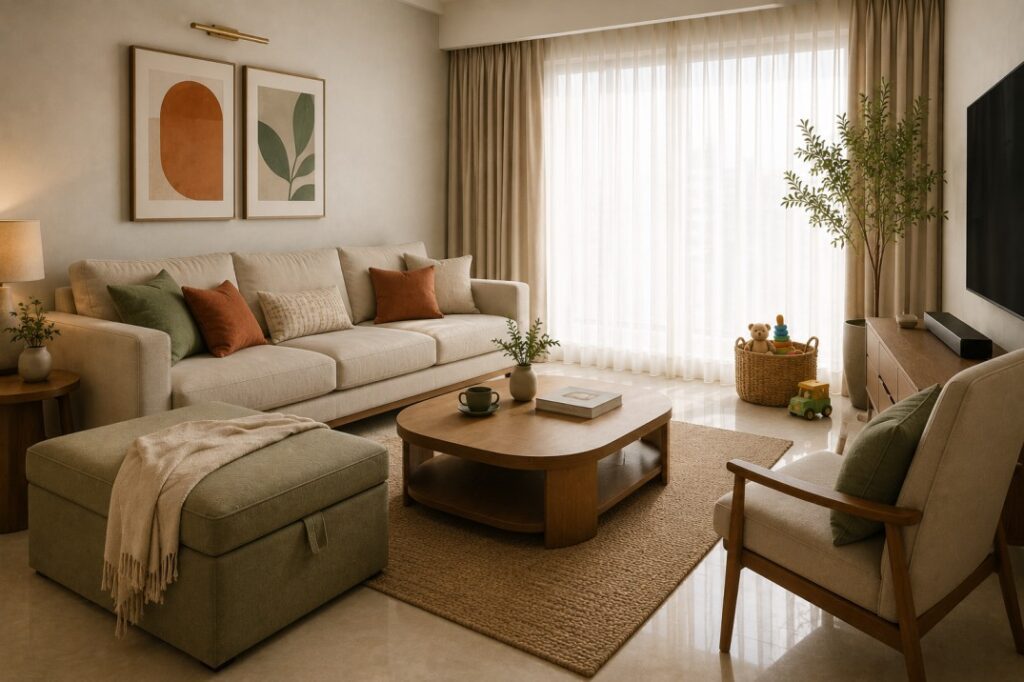
The living room carries the heaviest load in a family home — it needs to be a space for relaxing, entertaining, and letting kids run free. Use washable upholstery, a defined play corner with a soft rug, and storage ottomans to keep toys out of sight when they’re not in use. Choose a coffee table with rounded corners and keep fragile decor items out of reach.
Kitchen and Dining Area
Safety comes first in the kitchen. Store sharp objects and cleaning products well out of reach, use easy-to-clean surfaces like laminate or quartz for counters, and install cabinet locks on lower cabinets. If you have the space, a small step stool and a dedicated corner where your child can safely participate in cooking creates brilliant bonding moments — and teaches them life skills early.
Children’s Bedrooms
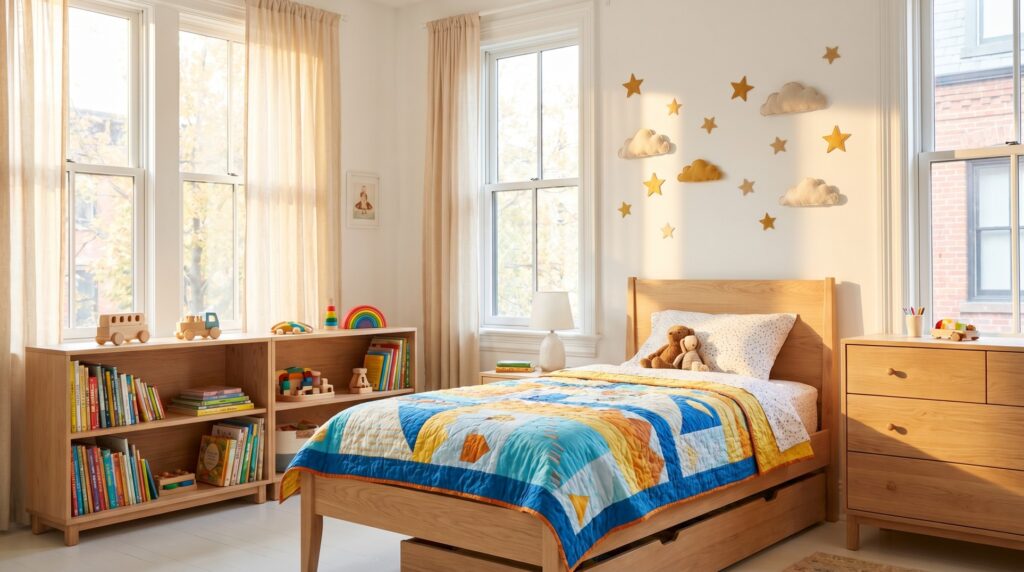
A child’s bedroom should grow with them. Start with a neutral base — walls, flooring, and furniture in timeless tones — and layer in personality through bedding, wall art, and accessories that can easily be swapped as tastes change. Make sure furniture is anchored to walls to prevent tipping, and keep the most-used items at a height your child can reach on their own.
Bathrooms
Bathrooms need to be safe and accessible for children without looking like a public facility. Add a step stool near the basin, use non-slip bath mats inside and outside the tub, install lower hooks for towels and robes, and keep all cleaning products locked away in an upper cabinet. Fun bath toys, soft towels in bright colours, and a cheerful shower curtain go a long way in making the space feel welcoming for kids.
Bringing It All Together
Designing a child-friendly home doesn’t mean giving up the aesthetic you’ve always wanted. It means making smarter choices — materials that last, furniture that’s safe, spaces that flex to suit your family’s needs, and storage that actually gets used.
The most beautiful family homes we’ve seen at Furnofy aren’t the ones that compromise. They’re the ones where every choice — from the flooring to the light fixture — has been made with the whole family in mind. That’s what makes a house feel like a home.
If you’re planning a home makeover or starting from scratch, we’d love to help you get there. Explore more ideas on the Furnofy blog, or get in touch with the team at Maksideo Design Consultants for a consultation.