
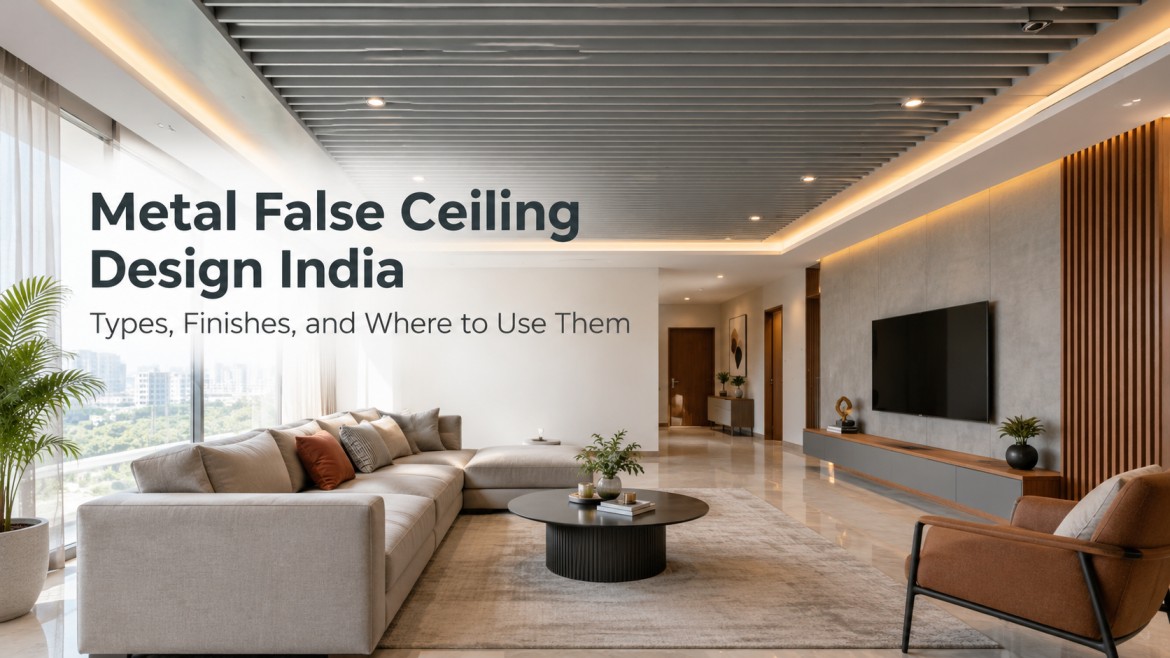
Homeowners across India are moving past plain gypsum boards, and there’s a clear reason for it. In fact, a well-planned metal false ceiling design India homeowners can rely on lasts longer, resists moisture, and gives a room a sharper, more finished look. Unlike paper-faced gypsum, metal panels don’t sag, don’t attract termites, and hold their shape through Mumbai’s humid monsoons. However, metal isn’t a single product — it comes in several formats, and each one suits a different room and budget. So, this guide breaks down the main types, the finishes worth considering, and exactly where each option performs best, allowing you to brief your interior designer with confidence instead of guessing.
Outline
- What Is a Metal False Ceiling?
- Types of Metal False Ceiling Designs
- Popular Finishes for Metal False Ceilings
- Where to Use Metal False Ceiling Designs at Home
- Metal vs Gypsum False Ceiling: A Quick Comparison
- Metal False Ceiling Cost in India: What to Expect
- Choosing the Right Metal False Ceiling Design
- FAQ’s
- Final Thoughts
What Is a Metal False Ceiling?
A metal false ceiling is a suspended structure hung a few inches below the actual ceiling slab. To build it, installers fix a metal grid to the slab and then lock aluminium, GI, or steel panels into that grid using clips, screws, or channels. Since most panels arrive pre-finished, no on-site painting is needed. Because the panels are removable, electricians and plumbers can also access wiring, ducting, or plumbing lines above the ceiling without breaking anything — a genuine advantage over a fixed gypsum board.
Aluminium False Ceiling Panels
Aluminium is the lightest option, and it resists corrosion even in coastal, humid cities like Mumbai and Thane. As a result, manufacturers powder-coat aluminium panels in almost any colour, so designers use them freely in kitchens, balconies, and bathrooms.
GI (Galvanized Iron) Metal Ceiling
Compared to aluminium, GI panels cost less and handle larger spans without sagging. Consequently, contractors prefer GI for bigger commercial kitchens, warehouses, and utility areas where budget matters more than aesthetics.
Perforated Metal Ceiling
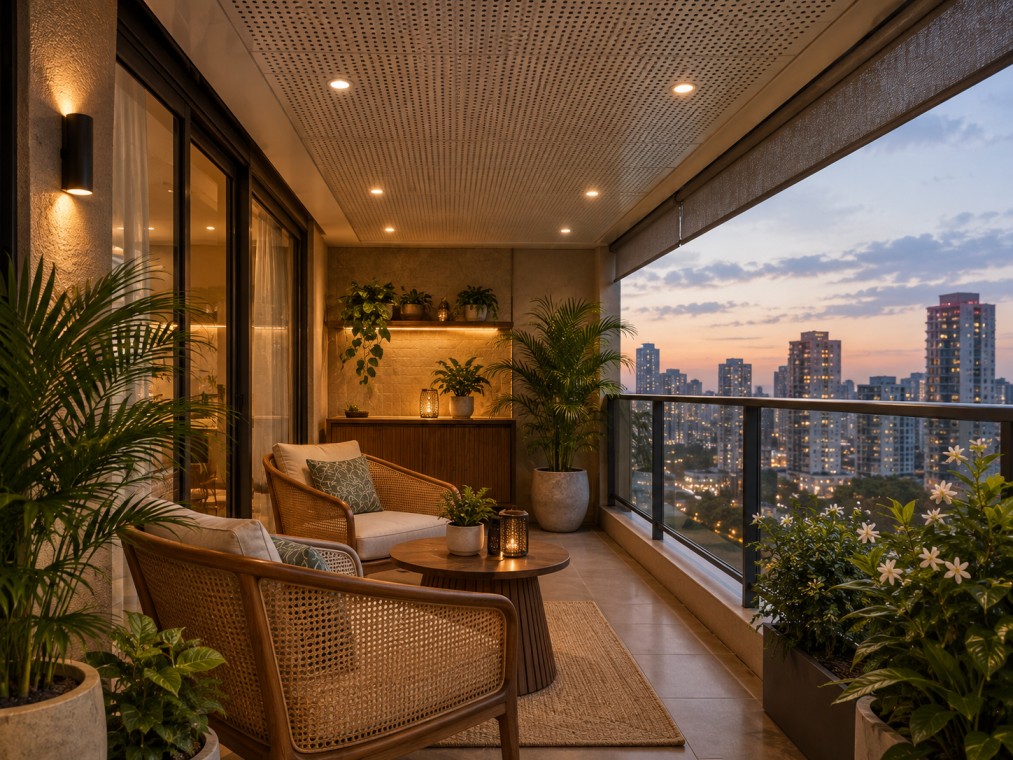
Perforated panels have small, evenly spaced holes backed by a mineral wool or foam layer. Together, this combination absorbs sound instead of bouncing it around, which is why designers specify perforated metal for home theatres, study rooms, and open-plan offices.
Metal Grid or Baffle Ceiling
A baffle ceiling uses long, narrow metal strips hung in parallel lines, leaving gaps between them. Overall, this look works especially well in living rooms and retail stores, since it adds visual depth while still allowing air and light to pass through the gaps.
Clip-in Metal Panel Ceiling
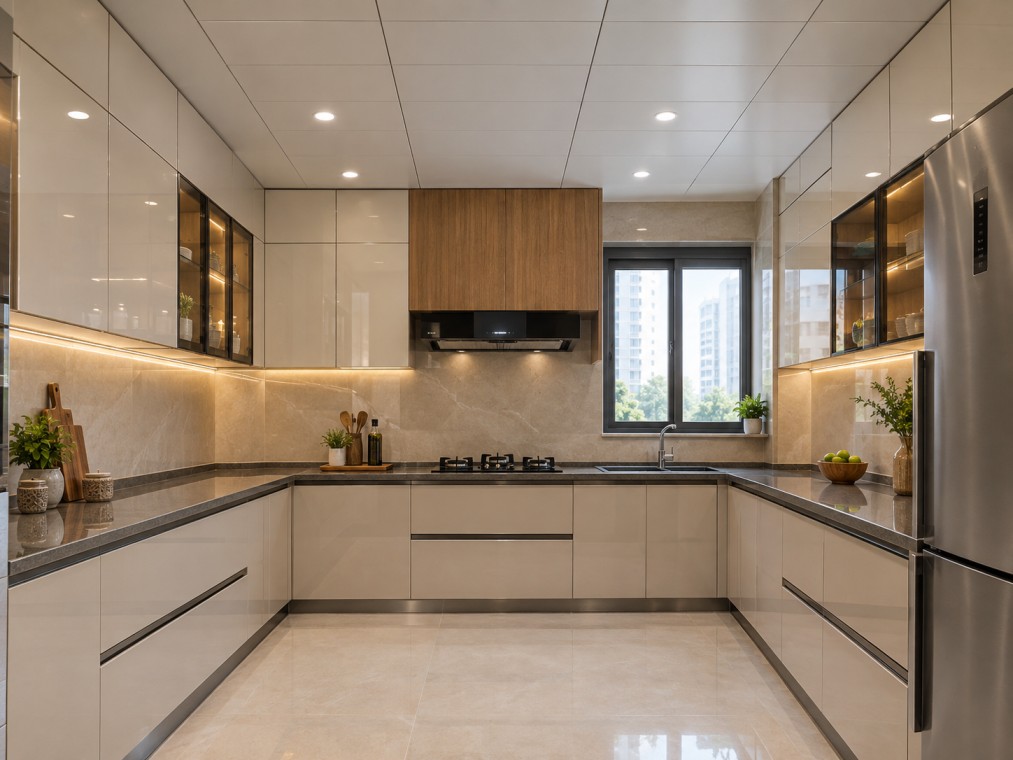
Clip-in panels come as individual tiles that snap into a grid, similar to how office ceilings are often built. Because a single tile can be popped out and replaced, this format is therefore a practical choice for kitchens and offices where repairs or inspections happen often.
Popular Finishes for Metal False Ceilings
Powder-Coated Finish
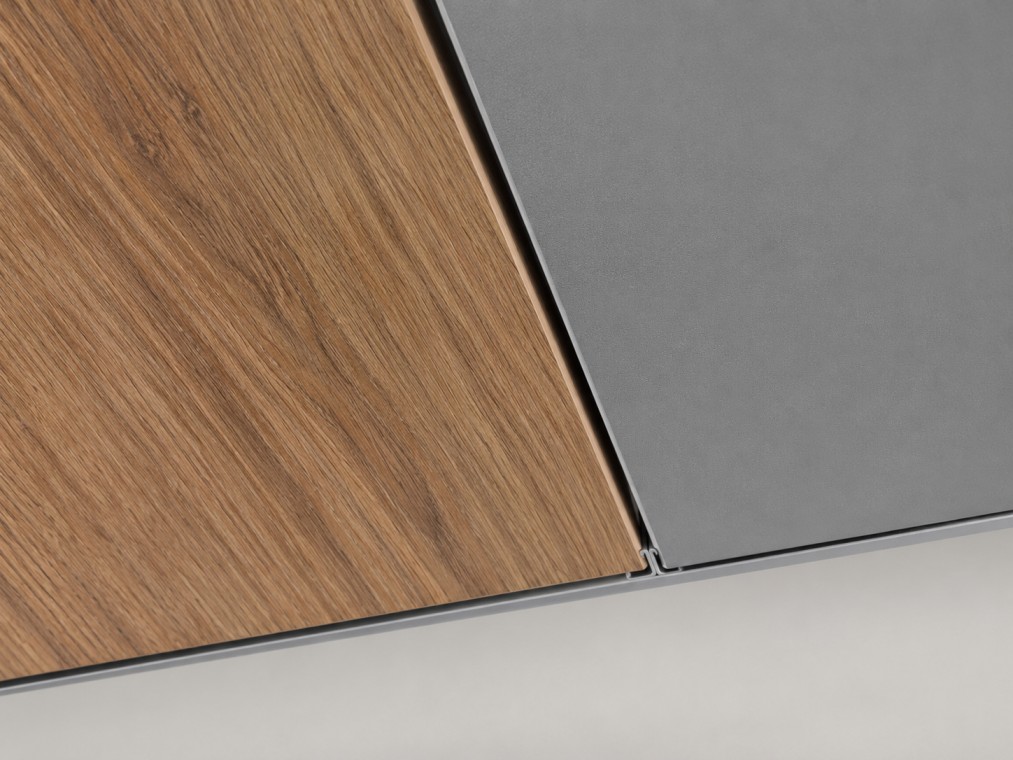
Powder coating bakes a durable colour layer onto the metal, so it resists scratches and fading. Right now, matte greys, whites, and blacks are the most requested shades for Indian homes.
Wood-Grain Metal Finish
A laminate wrap over the metal surface mimics real wood grain. Meanwhile, this finish gives a living room the warmth of timber without timber’s moisture and termite risk — a useful trade-off in humid coastal cities.
Anti-Bacterial or PVDF Coating
PVDF and anti-bacterial coatings create a wipeable, grease-resistant surface. Consequently, this is the standard recommendation for kitchens, clinics, and hospital interiors.
Perforated Acoustic Finish
This finish pairs perforated metal with a sound-absorbing backing panel. For this reason, homeowners choose it mainly for media rooms and home offices where echo is a genuine problem.
Where to Use Metal False Ceiling Designs at Home
Living Room
A baffle or grid metal ceiling, paired with cove lighting, creates a hotel-lobby feel without hiding too much of the slab height. For added warmth, many Furnofy clients also pair this with a wood-grain finish along the ceiling’s border.
Kitchen
Aluminium clip-in panels with a PVDF coating handle grease, steam, and daily wiping far better than gypsum. Additionally, individual tiles can be swapped out if one gets damaged, instead of redoing the whole ceiling.
Bathroom
Constant humidity causes gypsum boards to sag and stain over time. On the other hand, GI or aluminium panels shrug off moisture and don’t need repainting every couple of years.
Balcony and Outdoor Sit-Outs
Since it’s weatherproof, powder-coated aluminium is a low-maintenance choice for covered balconies and outdoor sit-outs, especially through Mumbai’s monsoon season.
Home Office or Media Room
Because they cut down on echo during calls and while watching movies, perforated metal ceilings are worth the extra cost in rooms used for video meetings or home theatres.
Metal vs Gypsum False Ceiling: A Quick Comparison
| Factor | Metal Ceiling | Gypsum Ceiling |
| Moisture resistance | High | Low to medium |
| Fire resistance | High | Medium |
| Design flexibility (curves, coves) | Lower | Higher |
| Typical upfront cost | Slightly higher | Lower |
| Maintenance | Low; wipeable | Needs periodic repainting |
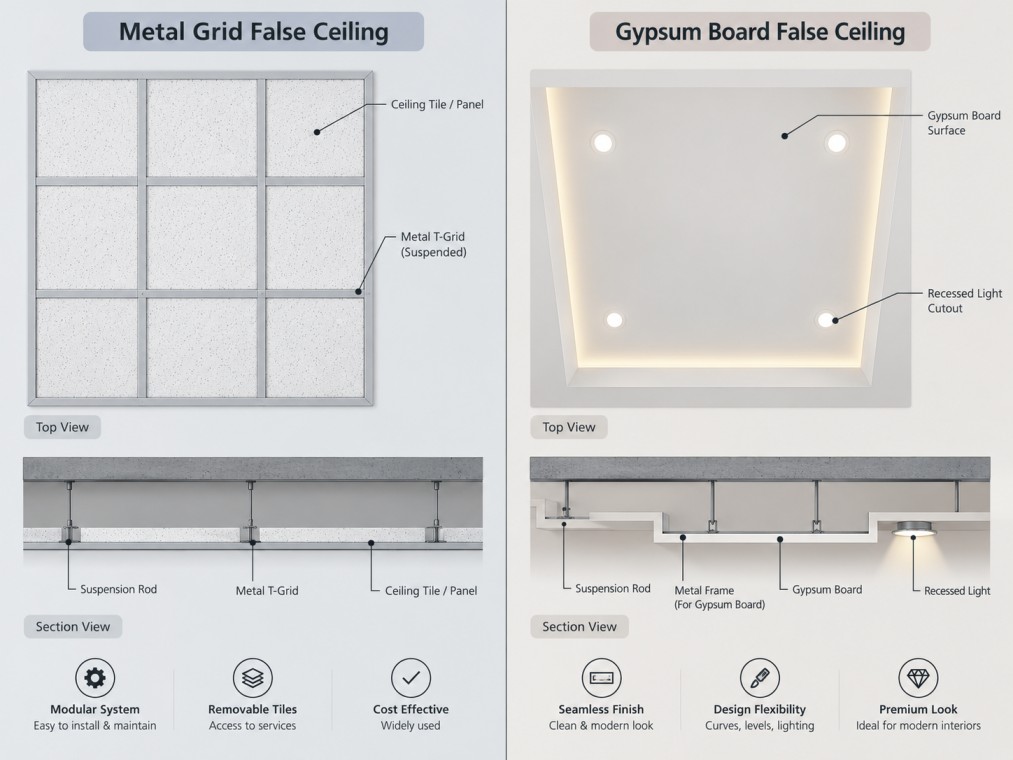
Metal False Ceiling Cost in India: What to Expect
Metal false ceiling cost in India depends on the panel type, span, finish, and the city you’re building in. Generally, aluminium clip-in panels sit at the higher end, GI grid ceilings tend to be more economical, and perforated acoustic panels cost more because of the backing material. Even so, these figures move often with metal prices, so please verify current rates with your installer or the Furnofy design team before finalising a budget — don’t quote the numbers above as fixed.
Choosing the Right Metal False Ceiling Design
- First, start with the room’s function, not the look — a bathroom and a living room have very different needs.
- Also, check the humidity and grease exposure in that space before picking gypsum over metal.
- Then, set a budget range before shortlisting finishes that fit inside it.
- Finally, work with a designer who can calculate span and load correctly, since a poorly supported metal grid will sag over time just like gypsum.
FAQ’s
It depends on the room. Generally, metal performs better in humid, high-use areas like kitchens and bathrooms, while gypsum still wins for curved, layered designs in dry living rooms and bedrooms.
Aluminium is lighter and more corrosion-resistant, so it suits homes. In contrast, GI costs less and handles bigger spans, which is why it’s common in commercial and industrial projects.
Not really — most systems need only two to four inches of clearance, comparable to gypsum, so it won’t make an average Indian room feel cramped.
Yes, although most homeowners still prefer gypsum in bedrooms for softer, curved designs. That said, a metal grid or baffle ceiling works well too if the look fits the room’s theme.
Typically, a well-installed metal false ceiling lasts 15 to 20 years with minimal maintenance, since the powder-coated finish resists fading, rust, and moisture damage.
Final Thoughts
Metal false ceilings aren’t a trend; they solve real problems that gypsum struggles with in Indian conditions — humidity, pests, and heat. So, pick the type and finish based on what each room actually needs, not just on what looks good in a photo. If you’d like help choosing between aluminium, GI, or perforated panels for your own home, the Furnofy design team can walk you through options and current pricing.