
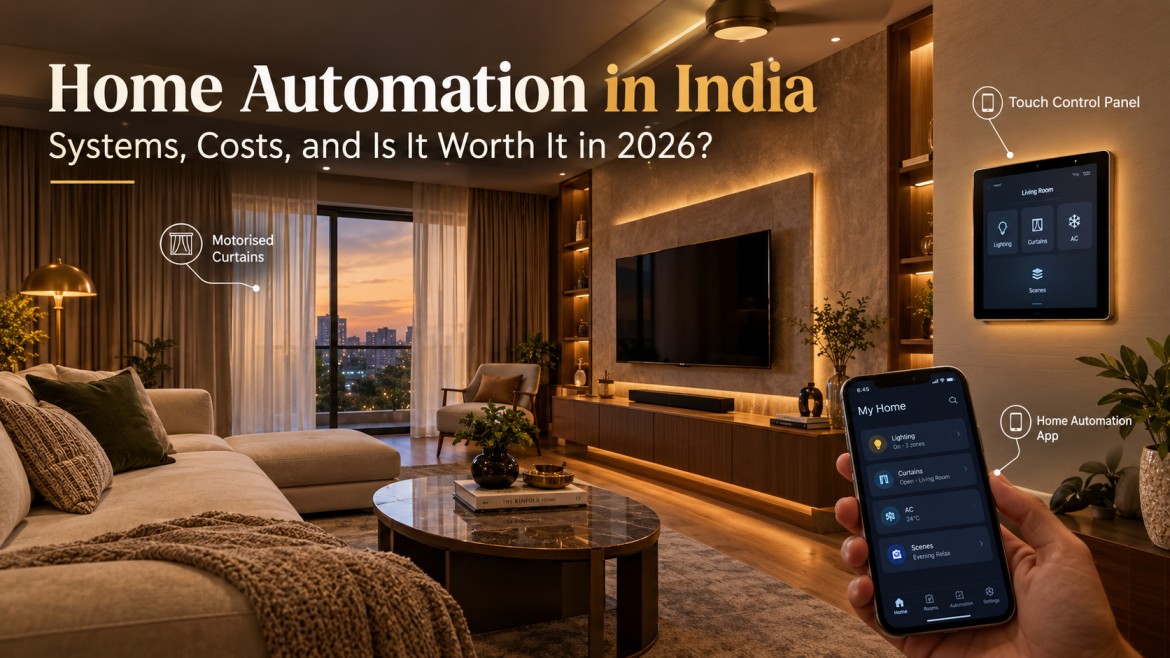
Everyone asks about the gadgets first, but the real question homeowners need answered is different: how much does a home automation system actually cost in India once you add up devices, wiring, and installation? That number varies far more than most sales pitches admit, and it depends heavily on whether you’re automating one room or an entire villa. This guide walks through the systems available, realistic 2026 pricing by home size, and an honest answer to whether automation is worth the spend right now or still a few years too early for most budgets.
Outline
- What Is Home Automation?
- Types of Home Automation Systems
- What Can You Automate at Home?
- Home Automation System India Cost: Room-Wise and Home-Wise Pricing
- Retrofit vs New-Build Automation Costs
- Is Home Automation Worth It in 2026?
- How to Start Small with Home Automation
- FAQ’s
- Final Thoughts
What Is Home Automation?
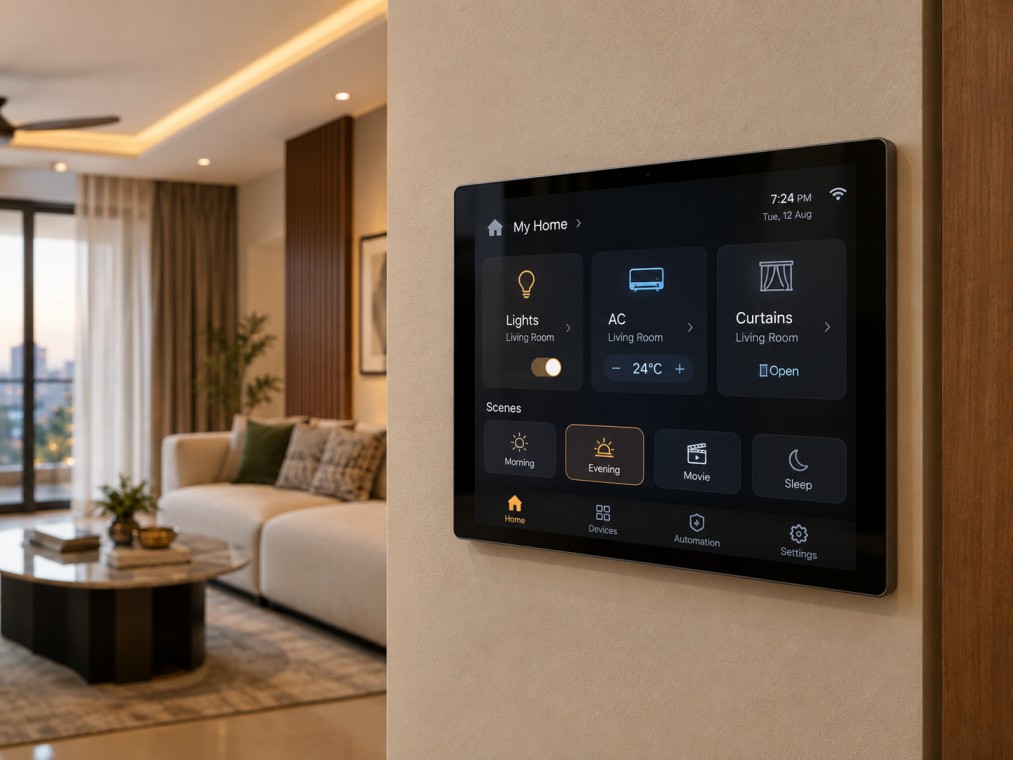
Home automation refers to controlling a home’s lighting, appliances, climate, curtains, and security through an app, a wall panel, voice commands, or pre-set schedules, instead of individual switches. Sensors and a central hub or controller communicate with these devices, so a single tap or voice command can trigger several actions at once — for instance, dimming the lights, lowering the curtains, and switching on the AC together when you say “good night.”
Types of Home Automation Systems
Wired Systems (KNX and Similar Protocols)
Wired systems run dedicated cabling to every switch and sensor, which makes them the most reliable and durable option available. Because the wiring is fixed, however, this system works best when planned during new construction or a full renovation, since retrofitting wired automation into finished walls usually means breaking them open again.
Wireless Systems (WiFi and RF)
WiFi and RF-based devices communicate without new cabling, so they install quickly in existing homes and apartments. As a result, wireless systems have become the default choice for renters and homeowners who want automation without civil work, though they can be more sensitive to network congestion in larger homes.
Zigbee, Z-Wave, and Matter Systems
These protocols use a dedicated low-power mesh network instead of relying on home WiFi, which generally makes them more stable in larger houses with many connected devices. Matter, in particular, is a newer standard designed to make devices from different brands work together, so it’s worth checking for going into 2026 if you plan to mix brands over time.
DIY Plug-and-Play Devices
Smart plugs, standalone bulbs, and battery-powered sensors need no professional installation and connect directly through a phone app. Consequently, this is the cheapest and fastest way to test automation in one or two rooms before committing to a whole-home system.
What Can You Automate at Home?
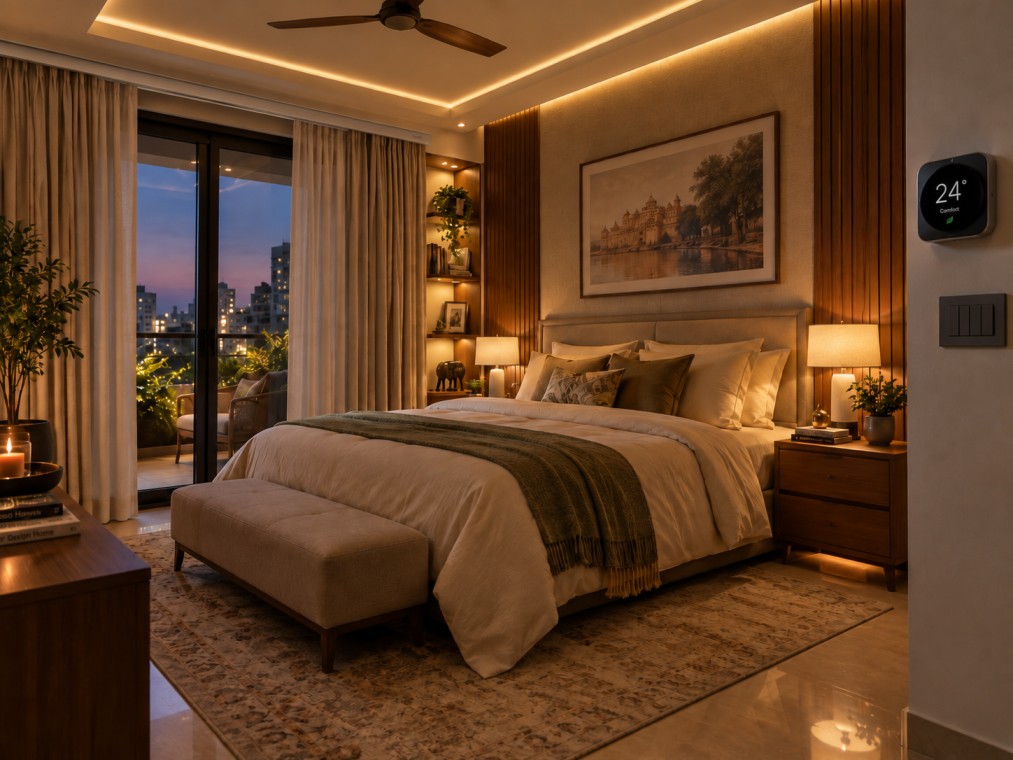
- Lighting: dimming, scenes, and motion-based switching in living rooms, bedrooms, and passages.
- Curtains and blinds: motorised tracks controlled by app, schedule, or voice.
- Climate: smart thermostats and AC controllers that respond to occupancy or time of day.
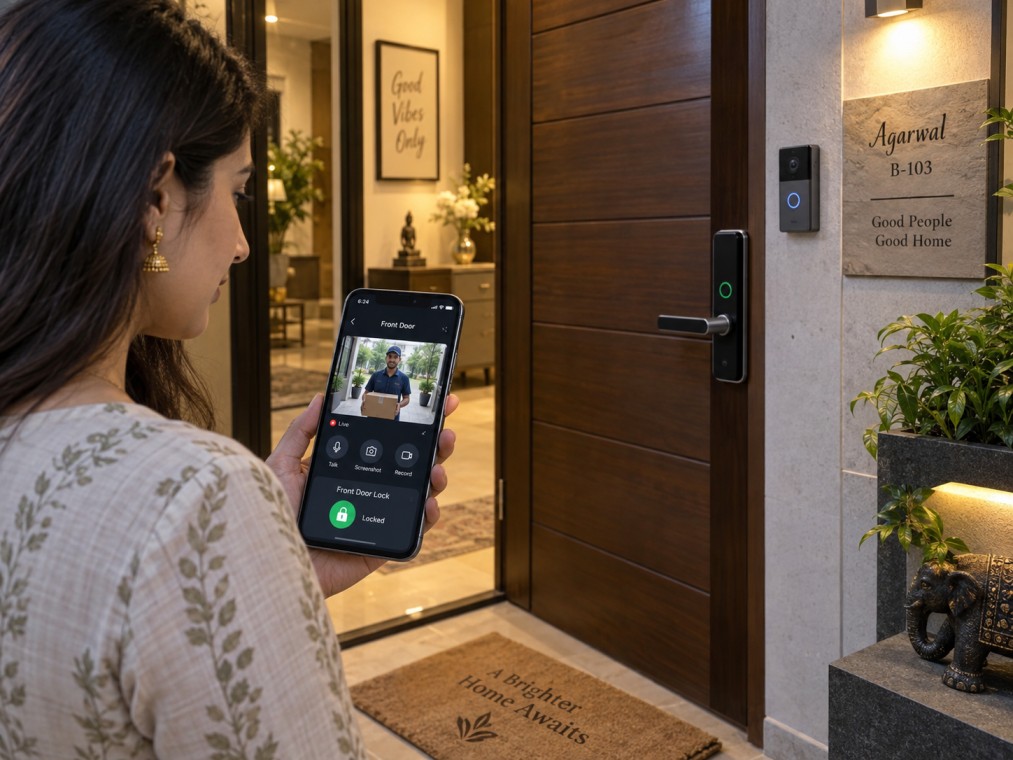
- Security: smart locks, video doorbells, and door or window sensors.
- Entertainment: multi-room audio and centralised control for TVs and speakers.
Home Automation System India Cost: Room-Wise and Home-Wise Pricing
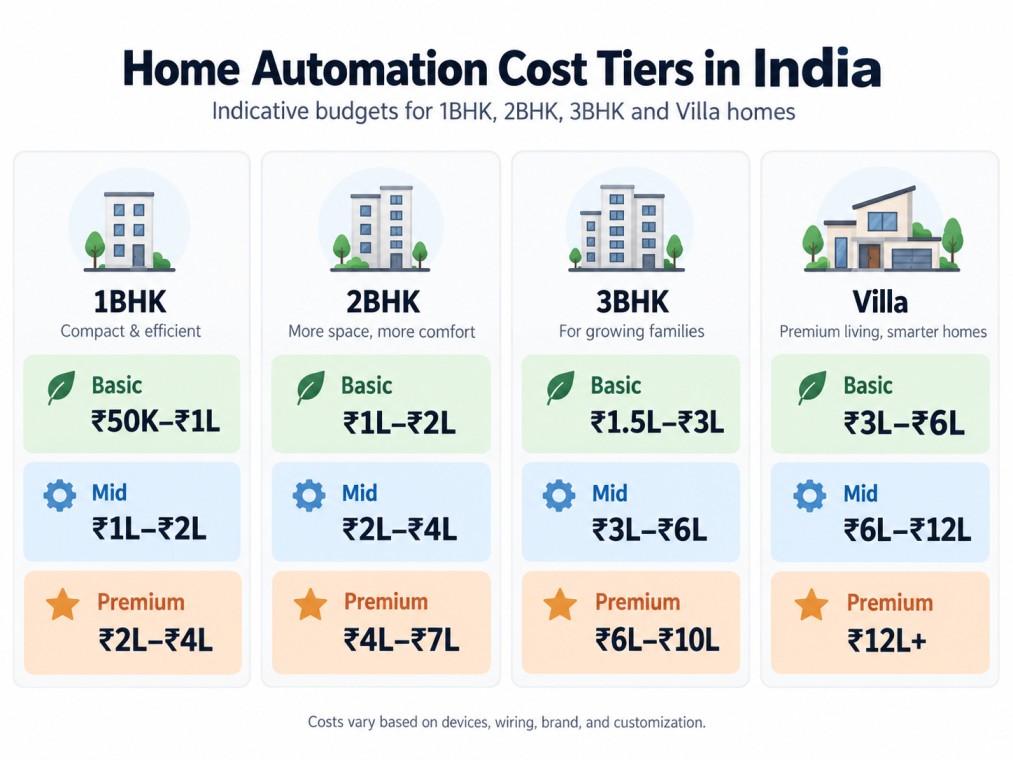
| Home Type | Indicative Cost Range | Typical Inclusions |
| Single room | ₹40,000 – ₹1,00,000 | Smart lighting, one curtain motor, a sensor or two |
| 1–2 BHK apartment | ₹1,00,000 – ₹3,00,000 | Lighting across rooms, smart lock, basic security |
| 3 BHK home | ₹3,00,000 – ₹6,00,000 | Whole-home lighting, curtains, climate, security |
| Villa or bungalow | ₹15,00,000 – ₹25,00,000+ | Full KNX/wired automation, AV, multi-zone climate |
Retrofit vs New-Build Automation Costs
Automating a home during construction almost always costs less than retrofitting one later, since the wiring goes in before the walls close up. On the other hand, wireless systems have narrowed this gap considerably, because they skip the cabling step entirely and work just as well in a flat that’s already finished. If your home is already built, wireless or hybrid systems are usually the more practical starting point.
Is Home Automation Worth It in 2026?
For most Indian homeowners, the honest answer is: yes, but only if you start with the rooms and functions you’ll actually use daily. Security automation — smart locks and doorbells — pays for itself in peace of mind almost immediately, and energy monitoring can trim electricity bills over time by flagging appliances left running unnecessarily. However, a full villa-scale system with AV integration and multi-zone climate control is a genuine luxury purchase, not a necessity, so it makes sense mainly for larger budgets or premium builds. In short, automation is worth it when it’s scoped to real daily habits rather than bought all at once for novelty.
How to Start Small with Home Automation
- Begin with motion-sensor lighting in the entrance, balcony, and bathroom — an inexpensive, high-impact first step.
- Add a smart lock and video doorbell next, since security upgrades tend to matter most to families.
- Expand to living-room and bedroom lighting scenes once the basics are working reliably.
- Save whole-home wired automation for a renovation or new build, when walls are already open.
FAQ’s
A typical 2BHK setup with lighting, a smart lock, and basic security generally falls between ₹1 lakh and ₹3 lakh, depending on the brand and number of points automated.
Yes, for most residential use cases. Wireless systems work well in apartments and mid-sized homes, though very large houses sometimes benefit from a mesh protocol like Zigbee for more stable coverage.
Yes, wireless and plug-and-play devices are specifically designed for this. Wired KNX systems, on the other hand, are far easier to install during construction than after.
It can, mainly through motion-based lighting, scheduled climate control, and energy monitoring that flags appliances left running. The savings vary by household habits, so it’s not guaranteed for every home.
Generally, yes, if you stick to plug-and-play devices that don’t need permanent wiring changes. These can move with you when the lease ends, unlike a wired system.
Final Thoughts
Home automation in India has moved well past early-adopter pricing, and a sensible starting budget is now within reach for most homeowners. Rather than chasing every feature at once, pick the two or three functions that will genuinely change your daily routine, then expand from there. If you’d like help working out what a home automation system will actually cost for your home and budget, the Furnofy design team can walk you through system options and current pricing.