Introduction
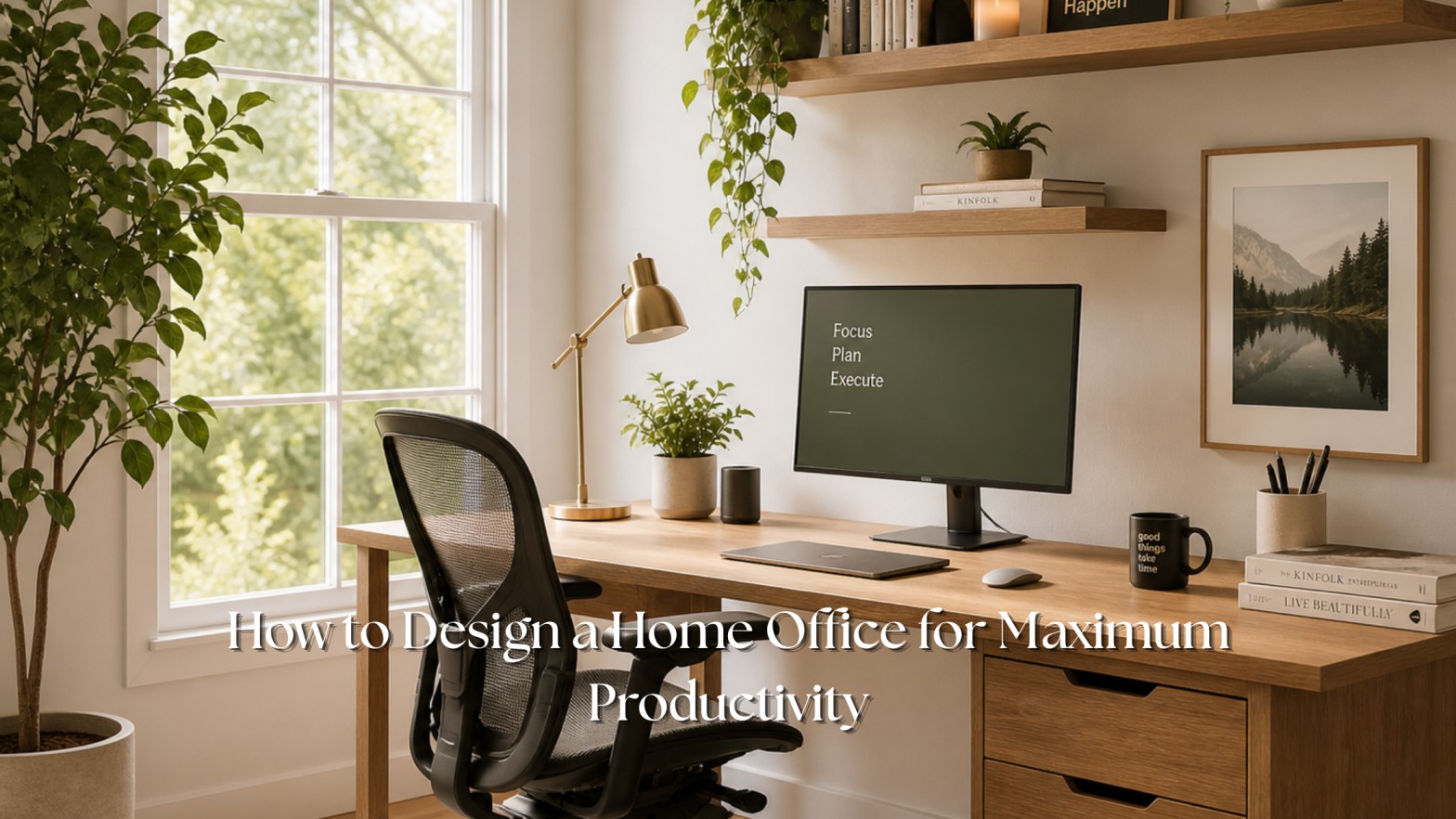
Working from home is no longer a temporary arrangement — it’s a lifestyle. Whether you’re a freelancer, a remote professional, or an entrepreneur running a business from your living space, your home office design for productivity can make or break your daily performance. At Furnofy, we believe that a thoughtfully designed workspace does more than look good; it actively shapes how you think, focus, and create.
In this guide, we walk you through every element of home office design — from choosing the right location and furniture to perfecting your lighting, colour palette, and personal touches — so you can build a workspace that truly works for you.
Outline
- Why Home Office Design for Productivity Matters
- Choosing the Right Location in Your Home
- Furniture and Ergonomics: The Backbone of Your Setup
- Choosing the Right Desk
- Ergonomic Chair: Your Most Important Investment
- Lighting: The Single Biggest Productivity Lever
- A layered lighting approach works best
- Colour Psychology: Choosing the Right Palette
- Organisation and Storage: Keeping the Space Tidy
- Practical storage ideas
- Personal Touches, Plants, and Decor That Inspire
- Technology Setup for a Seamless Workflow
- Conclusion: Build the Workspace You Deserve
Why Home Office Design for Productivity Matters
Your environment is not a passive backdrop — it actively influences your mental state. Research in environmental psychology consistently shows that the spaces we inhabit shape our mood, focus, and energy levels. A chaotic, poorly lit, or uncomfortable workspace can trigger stress and fatigue, while a clean, well-organised office fosters calm, intention, and momentum. For homeowners in India’s fast-growing urban centres — like Mumbai, Pune, or Bengaluru — carving out a dedicated work zone at home has become an interior design priority. The good news: you don’t need a large room. You need the right design choices.

Choosing the Right Location in Your Home
The first step in designing a home office for productivity is deciding where it goes. The ideal location has three qualities:
- Low noise and minimal foot traffic from other household members
- Access to natural daylight (ideally a north or east-facing window)
- A door or visual barrier to help your brain switch into work mode
If a separate room isn’t available, consider transforming a large balcony, an alcove under the stairs, or a corner of your bedroom using a well-placed bookshelf or curtain divider. Even in compact Indian apartments, spatial creativity can give you a meaningful work zone.
Furniture and Ergonomics: The Backbone of Your Setup
Choosing the Right Desk
Your desk is the centrepiece of your home office design. Choose a size proportionate to your room — a desk that’s too large overwhelms the space; one that’s too small limits function. Look for desks with built-in cable management, storage drawers, or a side hutch to keep your surface clear. Solid wood and engineered wood with clean lines work beautifully in both modern and transitional interiors.
Ergonomic Chair: Your Most Important Investment
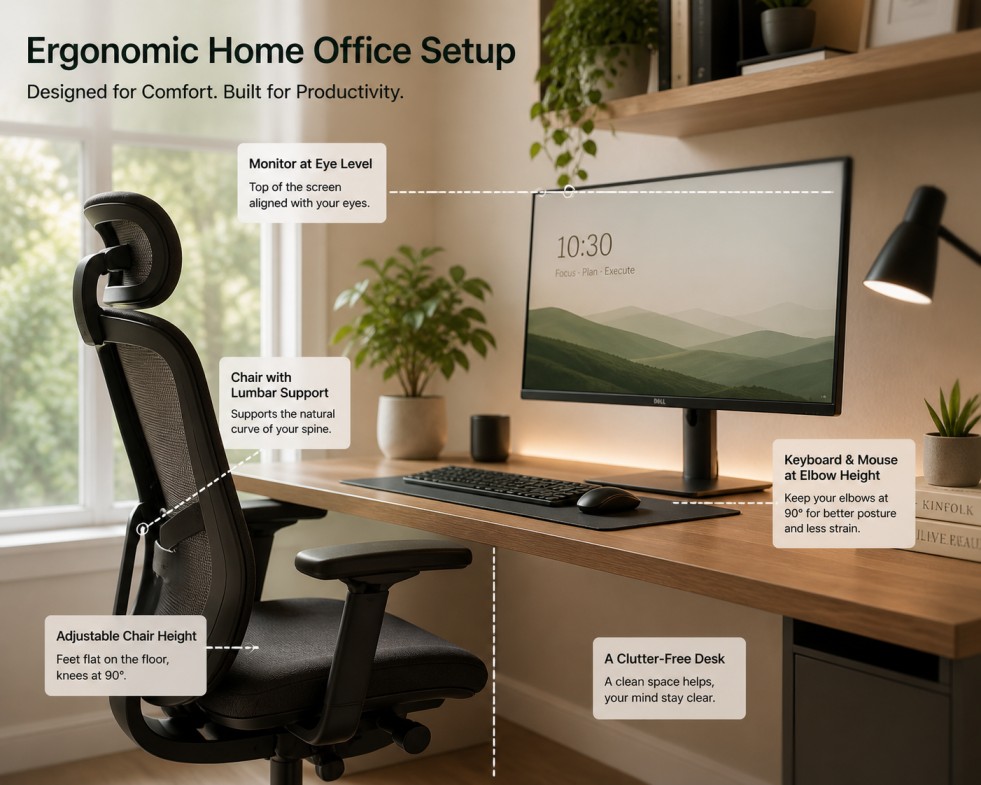
An ergonomic chair with lumbar support, adjustable seat height, and armrests is non-negotiable if you work more than four hours a day. Position it so your feet rest flat on the floor and your screen sits at eye level. This simple alignment prevents back pain, neck strain, and the mid-afternoon energy crash that comes from poor posture.
Lighting: The Single Biggest Productivity Lever
Lighting is one of the most underrated aspects of home office design for productivity. Poor lighting — whether too dim, too harsh, or poorly directed — strains your eyes and depletes your focus within hours.
A layered lighting approach works best:
- Natural light: Position your desk perpendicular to the window (not facing it) to avoid screen glare while still benefiting from daylight.
- Task lighting: A cool-white adjustable desk lamp (5000–6500K) keeps you alert during focused work sessions.
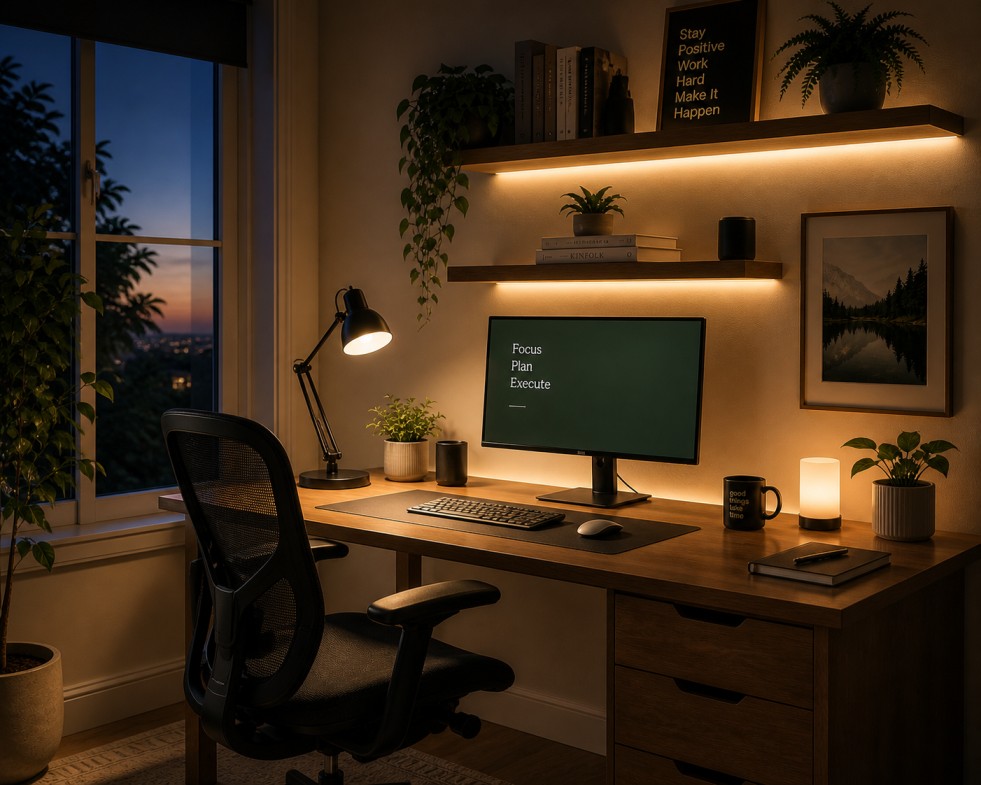
- Ambient lighting: Soft warm-toned LED strips behind your monitor or under shelving reduce contrast fatigue during long screen hours.
Colour Psychology: Choosing the Right Palette
Colour has a direct, measurable impact on how you feel and perform. When choosing a colour scheme for your home office, consider what kind of work you do most:
- Blue and navy: Promotes deep focus and calm — ideal for analytical, writing-heavy, or financial work.
- Sage green: Reduces stress and brings a sense of balance — great for creative professionals.
- Warm white or off-white: Maximises the sense of space and light in smaller rooms.
- Mustard yellow or terracotta as accents: Stimulates energy and creativity without overwhelming the space.
At Furnofy, we often recommend a neutral base wall with one bold accent wall behind the desk — this creates a focal point on video calls and gives the room a design identity without feeling claustrophobic.
Organisation and Storage: Keeping the Space Tidy
A cluttered desk equals a cluttered mind. Effective storage is central to any successful home office design for productivity. Think vertical: floating shelves, wall-mounted pegboards, and tall bookcases free up floor space while keeping frequently used items within reach.
Practical storage ideas:
- Use labelled bins and drawer organisers for stationery and cables.
- Install a filing cabinet or document drawer to eliminate paper piles.
- Use cable management clips or trays to hide cords — visual noise is as distracting as physical clutter.
Beyond physical organisation, set up a digital system too. Cloud-based file management and project tools like Notion, Trello, or Google Drive keep your workflow structured without adding paper to your desk.
Personal Touches, Plants, and Decor That Inspire
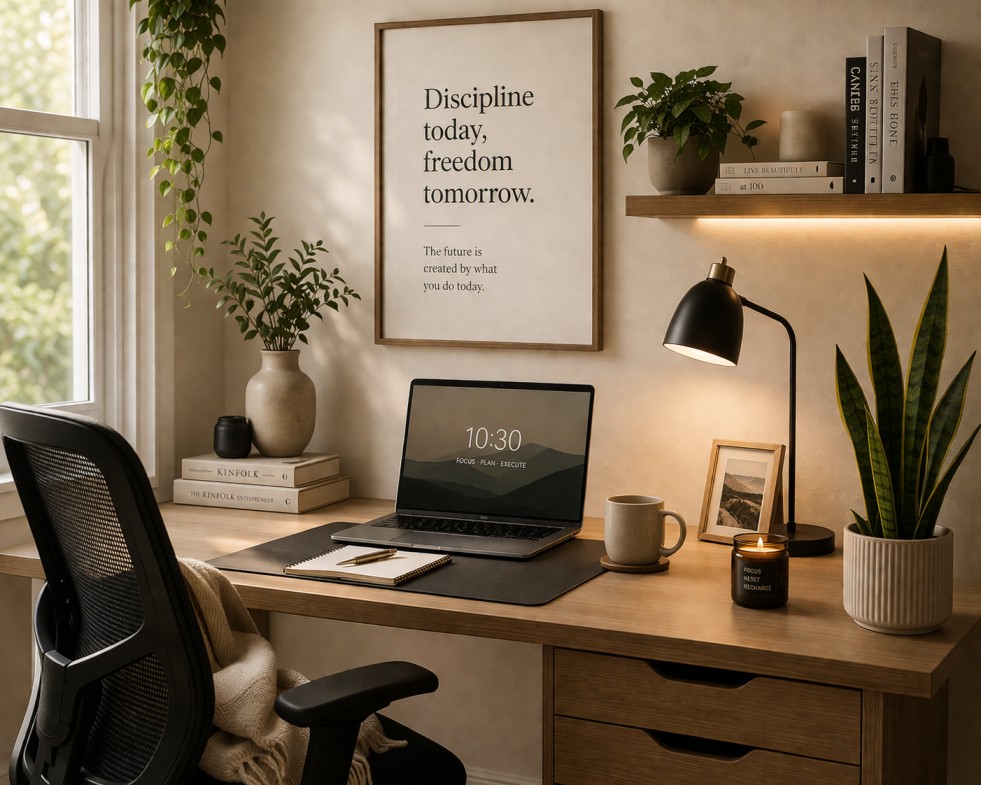
Your home office should reflect who you are. A space you love to be in is one you’ll show up to consistently. Add a framed piece of art, a motivational quote, or a shelf of books that matter to you. These personal anchors make the space feel less like a corporate cubicle and more like a curated environment built for your best work.
Plants are a particularly powerful addition. Low-maintenance varieties like the snake plant, ZZ plant, pothos, or peace lily improve air quality, reduce stress hormones, and bring a grounding sense of nature into an otherwise screen-heavy environment. Even a single plant on your desk can shift the energy of a workspace.
Technology Setup for a Seamless Workflow
No amount of beautiful design will compensate for a lagging internet connection or a tangled web of cables. Ensure your home office is equipped with a high-speed broadband connection (ideally a wired ethernet backup), noise-cancelling headphones for calls and focus sessions, and a second monitor if your work involves multitasking.
Invest in a quality webcam and ring light if you attend frequent video meetings — these tools enhance your professional presence and reduce the frustration of technical issues during important calls. Keep charging stations and cable boxes hidden within your storage setup to maintain a clean aesthetic.
Conclusion: Build the Workspace You Deserve
Designing a home office for maximum productivity is one of the most valuable investments you can make in your work life. When your space is intentionally designed — with the right location, ergonomic furniture, layered lighting, a considered colour palette, smart storage, and personal inspiration — it becomes more than a room. It becomes a system that supports your goals every single day.
At Furnofy, we specialise in creating interiors that balance beauty with function. If you’re ready to transform your home office — whether it’s a full renovation or a smart refresh — our team is here to help you design a space that reflects your style and elevates your performance.