
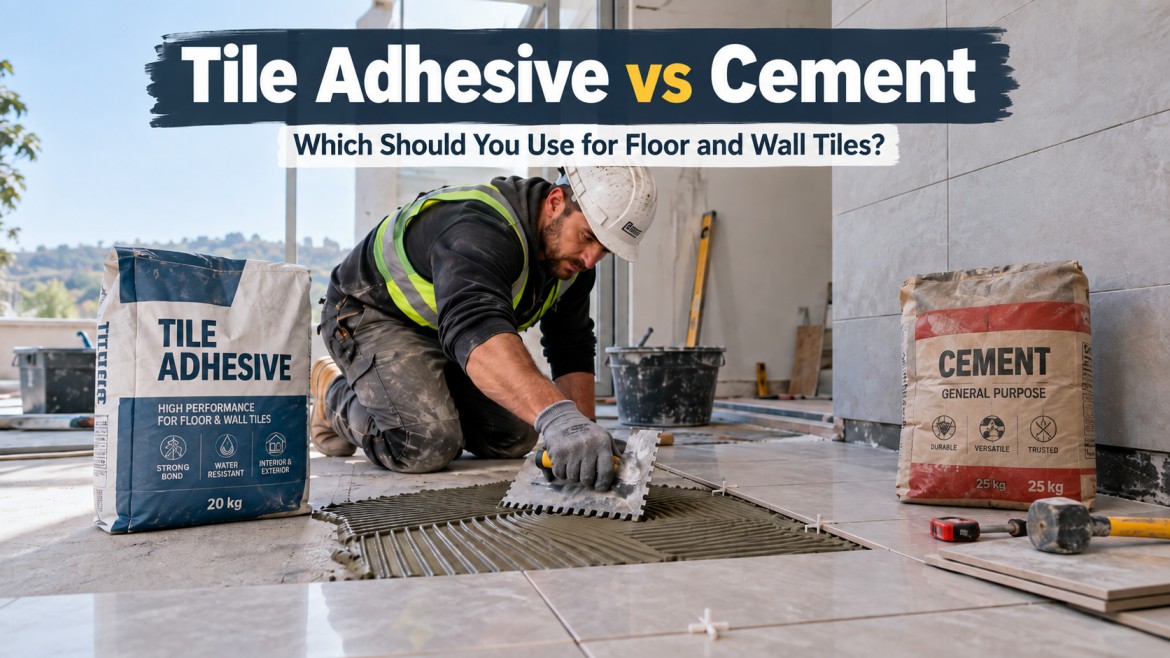
Tiles that pop or crack within a few years usually didn’t fail because of the tile itself — the fixing material underneath is the more common culprit. Contractors often default to cement mortar out of habit, even though the tile adhesive vs cement India comparison has shifted noticeably as tile sizes and formats have changed. This guide explains how each material actually bonds tiles, where cement still holds up fine, and where switching to adhesive prevents problems you won’t notice until months after the tiler has left.
Outline
- What Is Tile Adhesive?
- What Is Cement Mortar for Tiling?
- Tile Adhesive vs Cement: Bonding Strength
- Tile Adhesive vs Cement: Best Use Cases
- Tile Adhesive vs Cement: Application Time
- Tile Adhesive vs Cement: Cost
- Tile Adhesive vs Cement Comparison Table
- Which Should You Use: Floor or Wall Tiles?
- Frequently Asked Questions
- Final Thoughts
What Is Tile Adhesive?
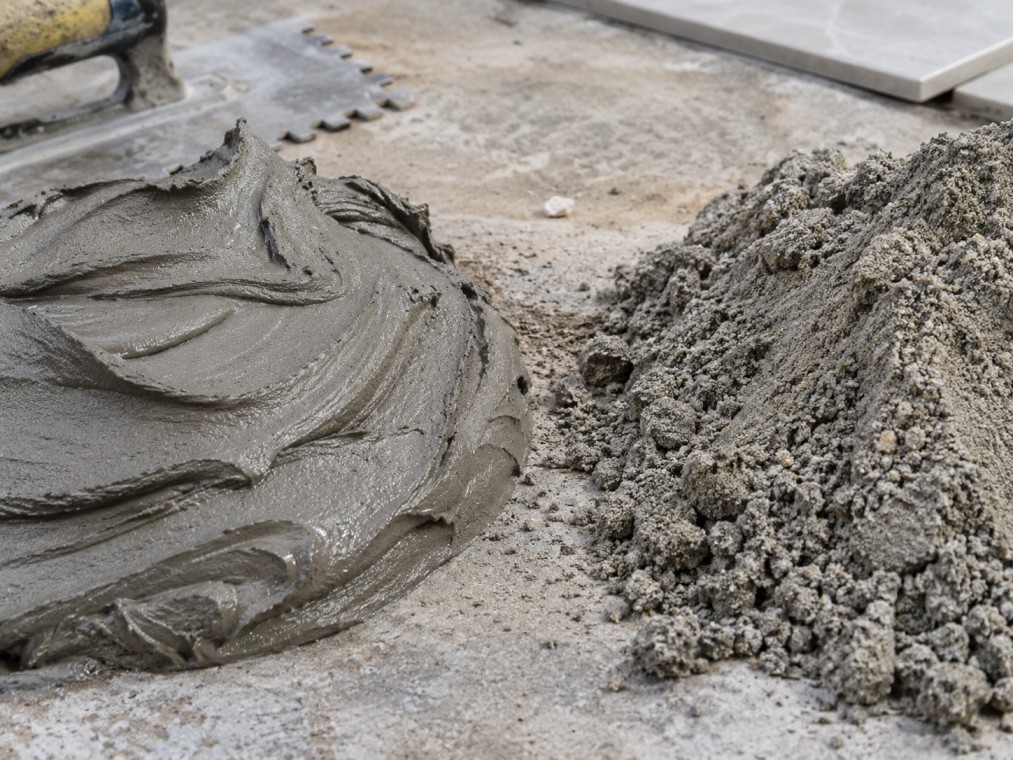
Tile adhesive is a factory-manufactured powder made from cement, fine sand, and polymer additives, mixed with water on-site into a paste. Because the polymers improve flexibility and bonding strength, adhesive grips tiles more securely than plain cement mortar, especially on tricky surfaces like existing tiles, plywood, or vertical walls.
What Is Cement Mortar for Tiling?
Cement mortar is the traditional method — a site-mixed blend of cement and sand, sometimes with a small amount of additive, spread in a thicker bed beneath the tile. This approach has worked for decades on standard floor tiling, largely because it’s inexpensive and every mason already knows how to apply it without special training.
Tile Adhesive vs Cement: Bonding Strength
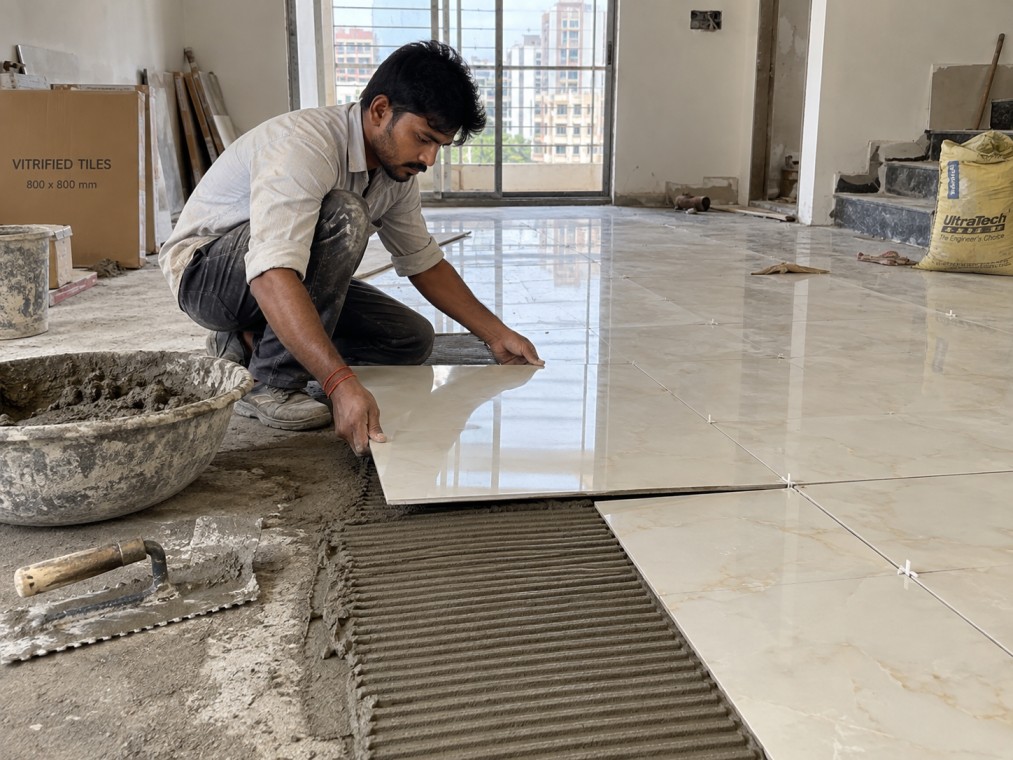
Tile adhesive bonds more consistently across the full tile surface, since it’s applied in a thin, even layer with a notched trowel rather than a variable-thickness mortar bed. As a result, adhesive significantly reduces the hollow patches and weak spots that later cause tiles to crack or sound hollow when tapped.
Tile Adhesive vs Cement: Best Use Cases
Cement mortar still works reasonably well for small, standard-size floor tiles laid over a solid concrete base, particularly in budget projects. However, for wall tiles, vitrified tiles, glass tiles, and large-format tiles, adhesive is now the industry-recommended method, since these tile types either have low water absorption or hang vertically, both situations where cement mortar bonds poorly.
Tile Adhesive vs Cement: Application Time
Adhesive application is generally quicker, since it skips the process of soaking tiles and preparing a thick mortar bed that cement fixing typically requires. Consequently, projects using adhesive often finish tiling faster, which also reduces labour costs even though the material itself costs more per bag.
Tile Adhesive vs Cement: Cost
Cement mortar costs less upfront, since raw cement and sand are cheaper than a manufactured adhesive product. That said, the labour savings and reduced tile-failure risk with adhesive often narrow this gap over the life of the project, so it’s worth comparing total cost rather than just the material price per bag.
Tile Adhesive vs Cement Comparison Table
| Factor | Tile Adhesive | Cement Mortar |
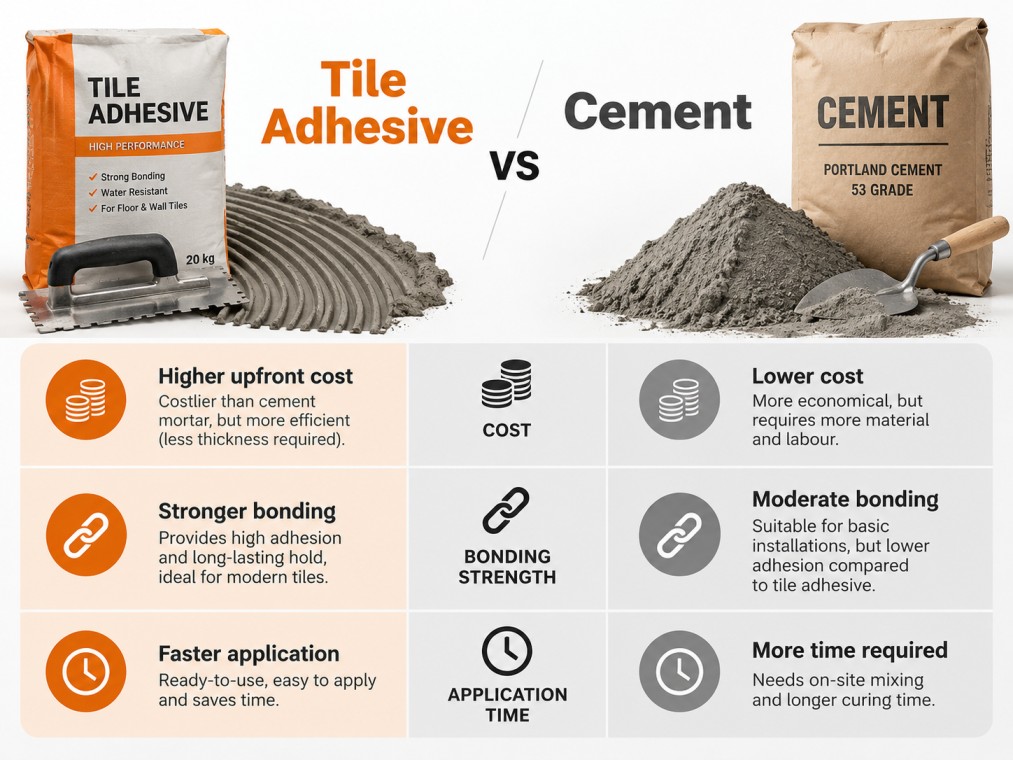
| Bonding strength | High; consistent | Moderate; can leave hollow spots |
| Best for | Wall, vitrified, large-format tiles | Small, standard floor tiles |
| Application time | Faster | Slower; needs tile soaking |
| Material cost | Higher | Lower |
| Skill required | Moderate; trowel technique matters | Widely known by most masons |
Which Should You Use: Floor or Wall Tiles?
For Wall Tiles
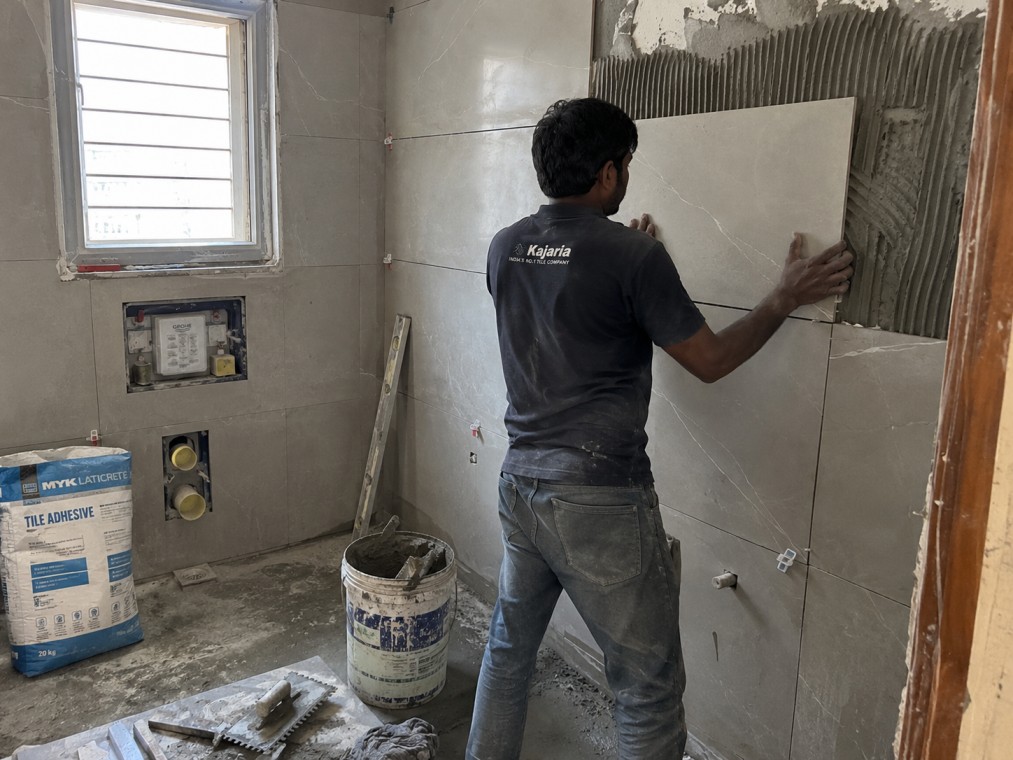
Adhesive is essentially the standard now for wall tiling, since cement mortar struggles to hold tiles vertically without slipping before it cures. This becomes even more important with today’s larger bathroom and kitchen wall tiles.
For Standard Floor Tiles
Cement mortar remains an acceptable, budget-friendly option for small ceramic floor tiles on a solid base, provided the mason applies it correctly and evenly.
For Vitrified and Large-Format Floor Tiles
Adhesive is strongly recommended here, since vitrified tiles absorb very little water and don’t bond well with cement mortar alone, which increases the risk of tiles lifting over time.
For Outdoor or Terrace Tiling
Weatherproof tile adhesive handles temperature changes and moisture cycling far better than standard cement mortar, making it the safer choice for terraces and balconies exposed to sun and rain.
FAQ’s
For vitrified or large-format floor tiles, yes. For small standard ceramic tiles on a solid base, cement mortar still performs adequately at a lower cost.
It can, but tiles are more likely to slip or detach before curing, which is why adhesive has become the standard recommendation for wall tiling.
Vitrified tiles have very low water absorption, so cement mortar can’t bond to them as effectively as it does with standard ceramic tiles, increasing the risk of tiles lifting later.
Yes, per bag, tile adhesive costs more than plain cement and sand, though faster application and fewer tile failures can offset some of that difference over time.
Reasonably skilled application matters for adhesive, since it needs an even notched-trowel spread, but most experienced tilers today are already familiar with the technique.
Final Thoughts
Cement mortar hasn’t disappeared, but tile technology has moved faster than the fixing method many contractors still default to. Match the fixing material to the tile type and location — adhesive for walls, vitrified, and large-format tiles; cement for small, standard floor tiles on a budget. If you’re unsure which side of the tile adhesive vs cement India decision fits your project, the Furnofy team can guide the right fixing method for each area of your home. https://furnofy.com/