
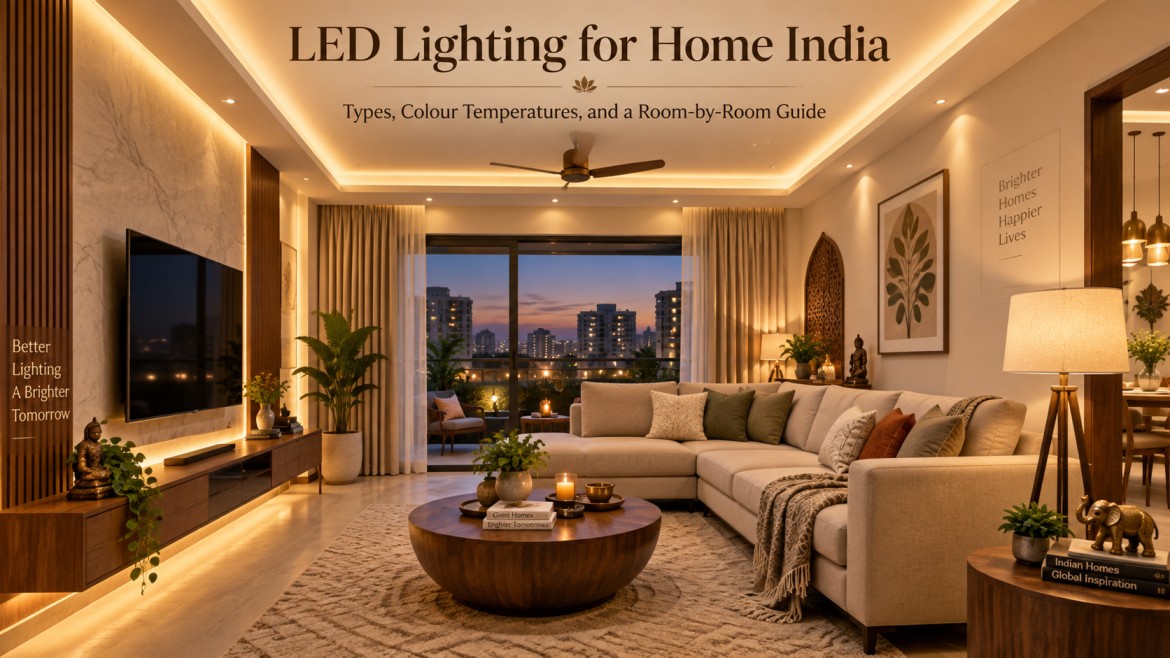
Most people shop for LED lights by wattage and price, and then wonder why a room still feels wrong once the lights go on. In reality, colour temperature and fixture type matter far more than brightness alone, which is exactly why the right choice of LED lighting for homes in India changes depending on the room, not just the budget. This guide covers the main LED types available, what colour temperature actually means for how a room feels, and a practical room-by-room breakdown so you stop guessing at the electrical shop.
Outline
- Types of LED Lights for Homes
- Understanding LED Colour Temperature
- Room-by-Room LED Lighting Guide
- Why LED Still Makes Sense for Indian Homes
- How to Choose the Right LED for Each Room
- FAQ’s
- Final Thoughts
Types of LED Lights for Homes
LED Panel and Downlights
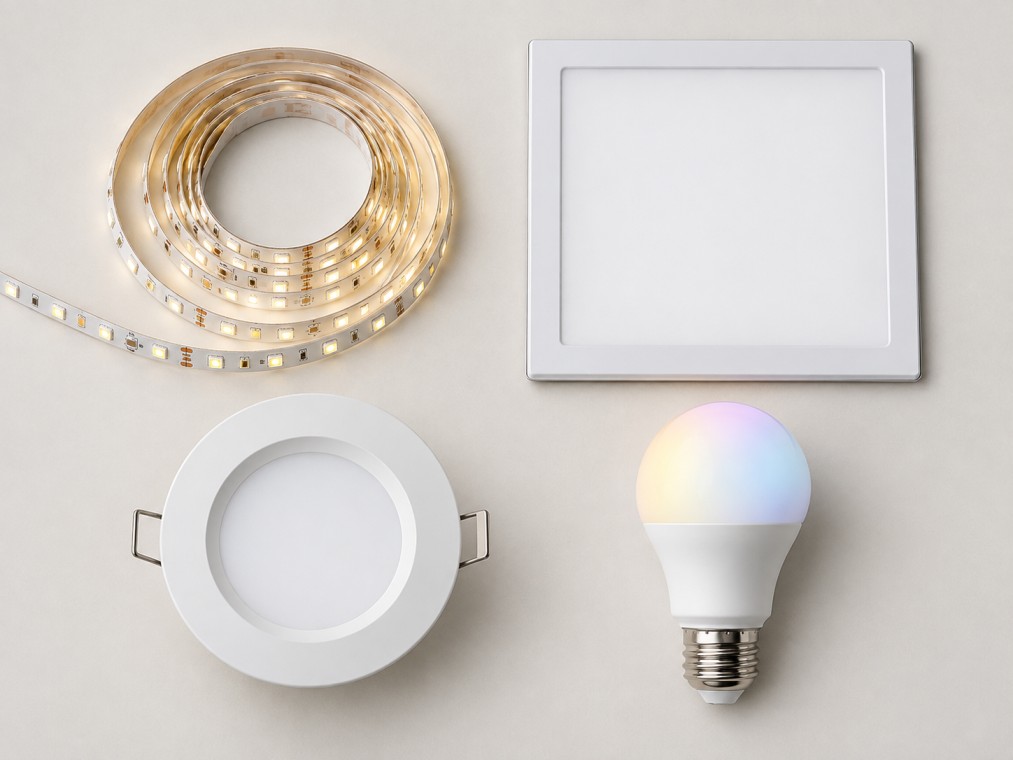
Panel lights sit flush against a false ceiling and spread light evenly across a room, so they work well as the main source of light in living rooms and bedrooms. Downlights, on the other hand, are recessed and focus light in a narrower cone, which makes them better suited to highlighting specific areas like a dining table or a reading corner.
LED Strip or Tape Lights
Strip lights are flexible, self-adhesive, and hide neatly inside a false ceiling cove or under kitchen cabinets. Because they come in continuous rolls, designers use them to create soft, indirect lighting that avoids harsh shadows — something a single bulb simply can’t do.
LED Bulbs and COB Spotlights
Standard LED bulbs fit existing holders and remain the easiest upgrade for older homes that still use CFL or incandescent fittings. COB (Chip-on-Board) spotlights, in contrast, concentrate light into a tighter, brighter beam and typically go into accent lighting for artwork, shelves, or a feature wall.
Smart LED Lights
Smart bulbs and strips connect to an app or voice assistant, so colour, brightness, and schedules can all change without touching a switch. As home automation adoption grows in India, smart LEDs have become one of the most affordable entry points into a connected home.
Understanding LED Colour Temperature
Colour temperature is measured in Kelvin (K), and it describes how warm or cool a light appears, not how bright it is. A lower Kelvin number produces a yellow-orange warm glow, while a higher number shifts toward a blue-white daylight tone. Getting this wrong is the single most common reason a freshly renovated room still feels off, even when the fixtures themselves look expensive.
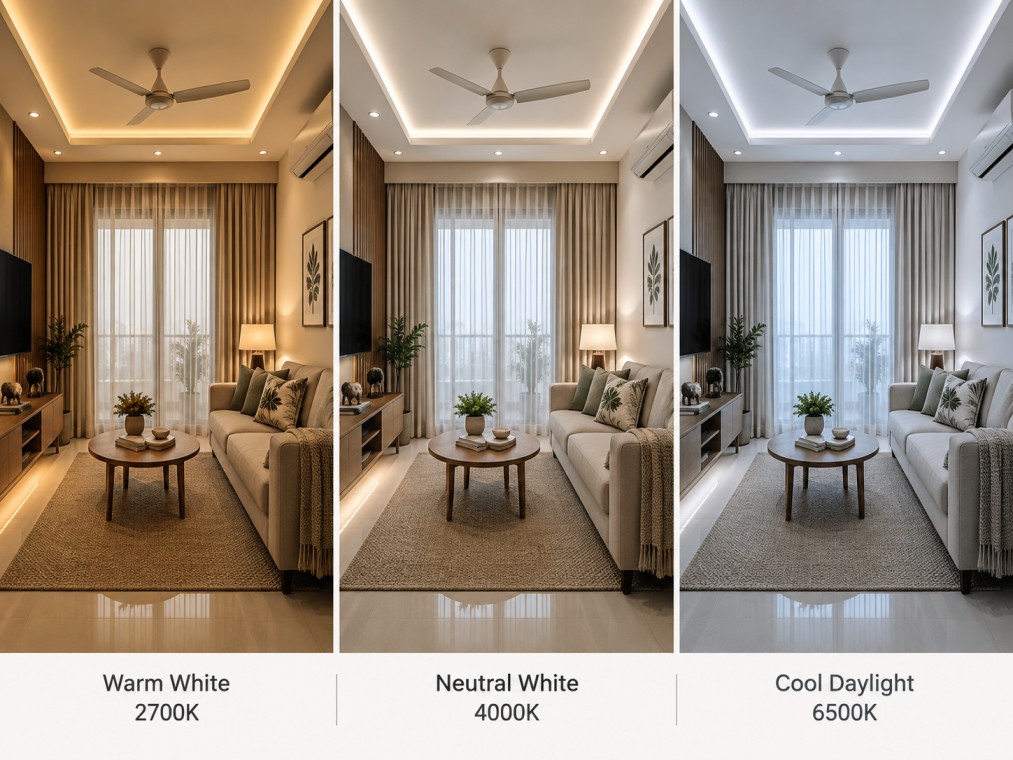
| Colour Temperature | Appearance | Best Used In |
| 2700K – 3000K (Warm White) | Soft, yellow-orange glow | Living rooms, bedrooms, dining areas |
| 3500K – 4000K (Neutral White) | Balanced white light | Kitchens, bathrooms, hallways |
| 5000K – 6500K (Cool Daylight) | Crisp, blue-white light | Study rooms, home offices, garages |
Room-by-Room LED Lighting Guide
Living Room
Warm white panel lighting works best as the base layer here, since it keeps the space feeling relaxed rather than clinical. Adding a warm-white LED strip along a false ceiling cove, meanwhile, layers in depth without competing with the main light source.
Bedroom
Bedrooms benefit from dimmable warm white light, ideally below 3000K, so the room can shift from a bright morning setting to a calmer night mood. A smart LED bulb on the bedside table also allows brightness changes without getting out of bed.
Kitchen
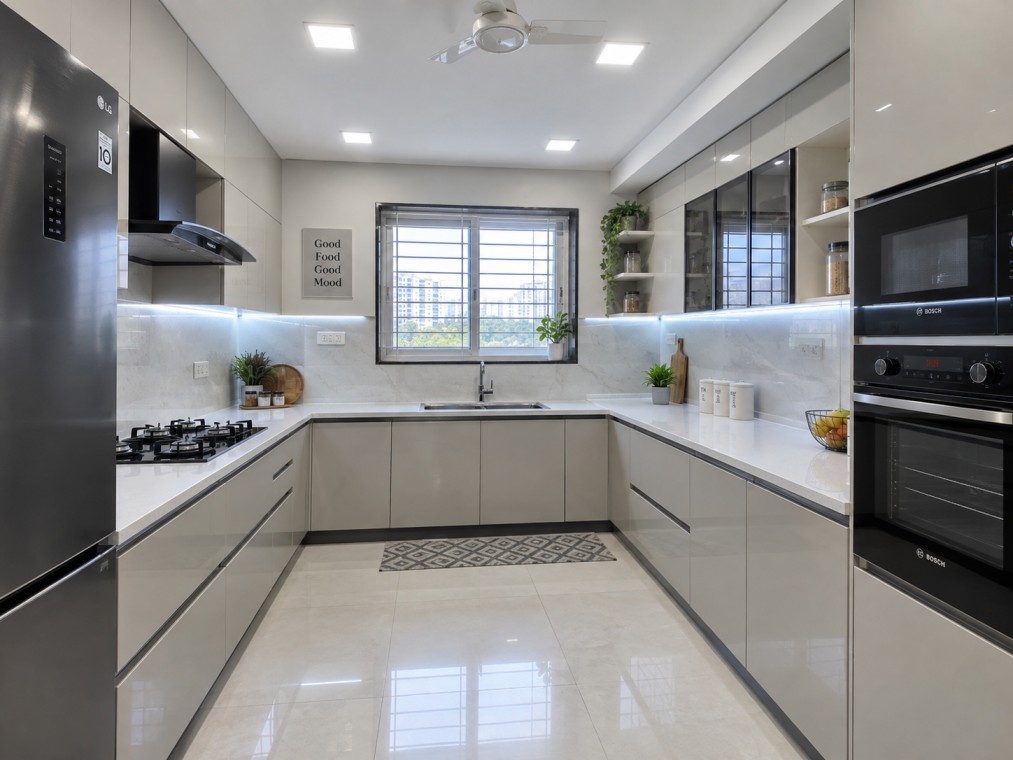
Neutral white LED strips under the cabinets light up the countertop directly, which genuinely matters when chopping vegetables or reading a recipe. Overhead, a brighter neutral or slightly cooler panel light keeps the whole kitchen well lit during cooking.
Bathroom
Neutral white light around the mirror gives the most accurate skin tone for grooming and makeup, so it’s generally preferred over warm white in this one room. Moisture-rated LED fixtures are also worth specifying here, since bathrooms see far more humidity than any other room.
Kids’ Room
A softer warm-to-neutral white supports both play and study without straining young eyes. A dimmable option is particularly useful for a smoother transition into bedtime.
Home Office or Study
Cool daylight LED lighting, in the 5000K to 6500K range, keeps focus sharp during work hours and reduces eye strain during long screen sessions. Task lighting on the desk, layered above the room’s general lighting, further reduces glare from a laptop or monitor.
Balcony or Outdoor Sit-Out
Warm white, weatherproof LED fixtures create a relaxed evening atmosphere without attracting as many insects as cooler light tends to. IP-rated fixtures are essential here, since regular indoor LEDs won’t survive monsoon exposure.
Why LED Still Makes Sense for Indian Homes
LED lighting uses considerably less electricity than CFL or incandescent bulbs for the same brightness, and it typically lasts several years longer before needing replacement. Over time, this lower running cost and reduced maintenance easily offsets the slightly higher upfront price of good-quality LED fixtures.
How to Choose the Right LED for Each Room
- Match colour temperature to the room’s purpose first — relaxation calls for warm white, tasks call for neutral or cool white.
- Check the CRI (Colour Rendering Index) rating; anything above 80 renders colours accurately for daily use.
- Choose dimmable fixtures for bedrooms and living rooms, since fixed brightness limits how the room can be used through the day.
- Pick IP-rated, moisture-resistant fixtures for bathrooms, kitchens, and outdoor areas.
FAQ’s
Warm white, generally between 2700K and 3000K, works best for living rooms because it creates a relaxed, welcoming atmosphere rather than a clinical one.
Neutral to slightly cool white, around 4000K, tends to work best in kitchens, since it offers clearer visibility for cooking and cleaning without feeling harsh.
Yes, LEDs use significantly less power than CFL or incandescent bulbs for the same brightness, and they last considerably longer, which reduces both electricity bills and replacement costs.
Yes, and most well-designed homes do exactly this — warmer tones in relaxation spaces and cooler tones in task-focused areas like kitchens and study rooms.
For most homeowners, yes, especially in living rooms and bedrooms, since app or voice control adds convenience without requiring any additional wiring in most cases.
Final Thoughts
Good lighting design isn’t about buying the brightest bulb available; it’s about matching colour temperature and fixture type to what each room actually does. Start with the rooms you use most, get the colour temperature right there first, and expand the same logic through the rest of the home. If you’d like expert help planning LED lighting for your home in India, the Furnofy design team can recommend fixtures and layouts suited to your specific rooms.