
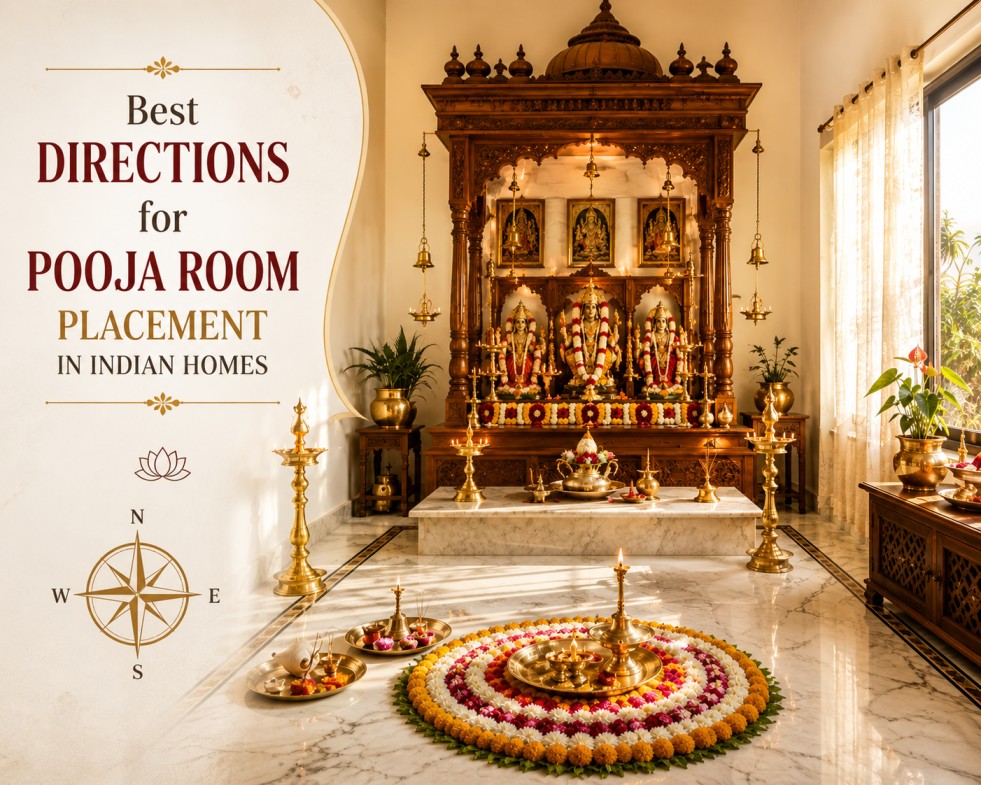
Every Indian home holds that one corner where everything feels a little more peaceful — where the scent of incense lingers, the light falls just right, and the mind instinctively slows down. That corner is the Pooja room. Moreover, it is not just a space for rituals; it is the spiritual heartbeat of the home.
However, many homeowners overlook something important: the direction in which you place your Pooja room matters — deeply. According to Vastu Shastra, the ancient Indian science of architecture and spatial energy, the placement of your mandir directly influences the flow of positive energy, or Prana, throughout your home. In other words, choose wisely and you invite harmony, prosperity, and good health. Choose poorly, on the other hand, and you may unknowingly block the very blessings you seek.
Therefore, in this guide, we walk you through the best directions for Pooja room placement in Indian homes. Furthermore, we cover the directions to strictly avoid, practical Vastu design tips, and common mistakes that many people make — so that your sacred space truly works for you.
Outline
- Why Pooja Room Placement Direction Matters
- Best Directions for Pooja Room Placement
- North-East (Ishaan Corner) — The Most Auspicious Direction
- East — Spiritual Growth and Health
- North — Ideal for Wealth and Financial Prosperity
- Directions to Strictly Avoid for Pooja Room Placement
- South-East (Agni Corner) — Avoid
- South-West — Avoid
- West — Avoid
- Vastu Tips for Designing the Perfect Pooja Room
- Common Mistakes to Avoid When Placing Your Pooja Room
- Conclusion
Why Pooja Room Placement Direction Matters
Before we get into the specific directions, it helps to understand why this decision carries such spiritual weight. Vastu Shastra divides a home into eight directional zones, and each zone holds a different cosmic energy. As a result, the Pooja room — as the most spiritually charged space in the house — must align with the right directional energy to function as a true channel of divine blessings.
Specifically, a correctly placed Pooja room brings the following into your home:
- Spiritual Energy: It actively welcomes the divine presence into your home, rather than blocking it through poor layout.
- Balance and Harmony: A well-placed mandir stabilises the emotional and spiritual atmosphere of the household.
- Wealth and Prosperity: Vastu-aligned Pooja rooms attract financial abundance and material success.
- Health and Vitality: Furthermore, the right placement keeps the home’s energy vibrant, positive, and life-giving.
Think of your Pooja room as an antenna. Place it correctly, and it picks up the right frequencies effortlessly. Place it in the wrong spot, and even the most sincere prayers may struggle to reach where they need to go. Consequently, direction is the single most important decision you make when you plan your Pooja room.
Best Directions for Pooja Room Placement
Direction is the most critical factor when you decide where your Pooja room should go. Below, we break down each recommended direction in detail so you can make an informed choice.
North-East (Ishaan Corner) — The Most Auspicious Direction
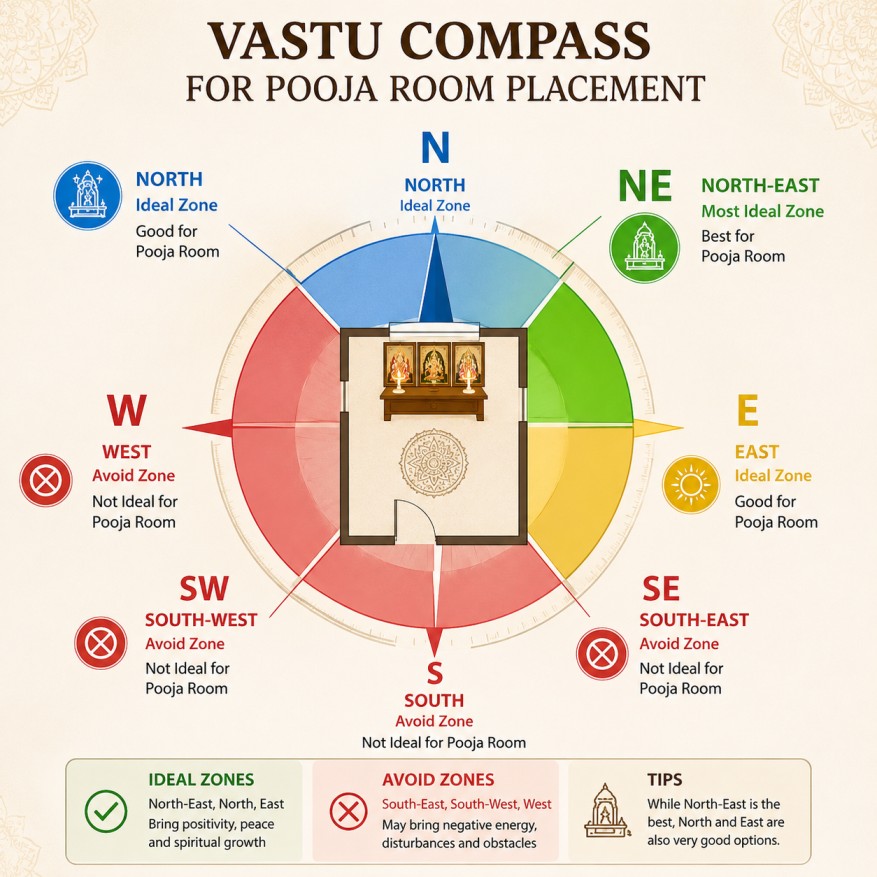
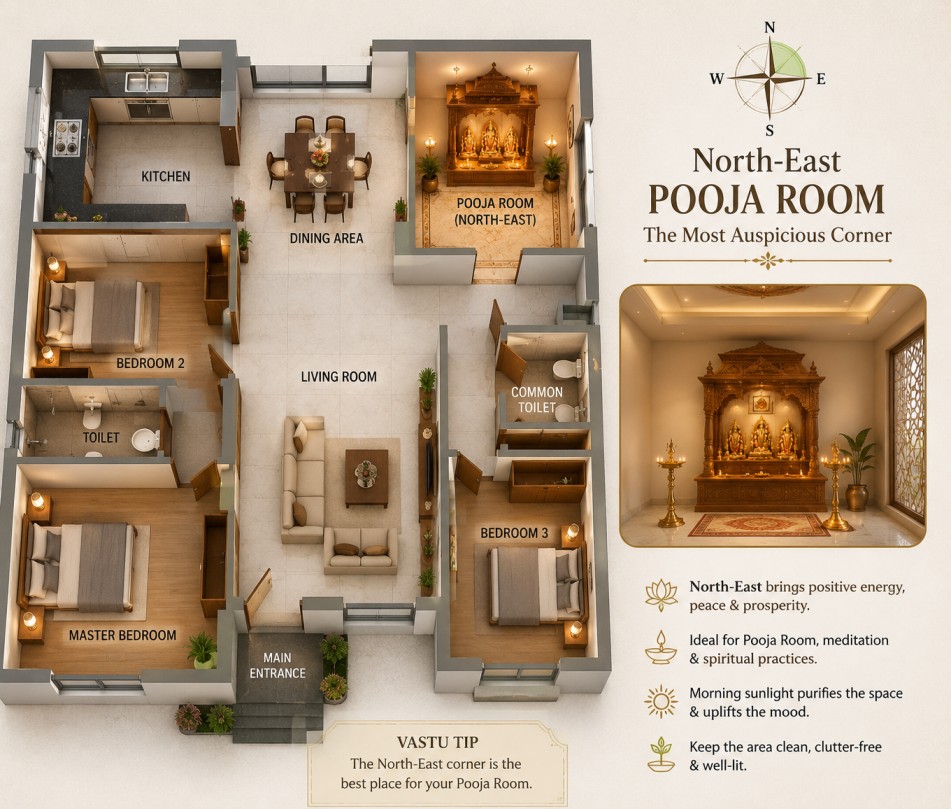
First and foremost, the North-East direction — the Ishaan corner in Vastu — is the single best location for your Pooja room. Lord Kubera, the deity of wealth, governs this direction, and the water element rules it, symbolising purity, clarity, and spiritual growth.
Additionally, the North-East receives the first rays of the morning sun, which Vastu treats as divine light entering the home. Therefore, when your Pooja room sits in the North-East, every morning prayer benefits from that powerful first light. Moreover, families who choose this placement consistently report that the room feels noticeably calmer and more uplifting from the very first day.
Key Benefits:
- Promotes peace, spiritual awakening, and prosperity.
- Morning sunlight enhances the sanctity and warmth of the space naturally.
- Ideal for both prayer and daily meditation practices.
- Furthermore, it delivers the most powerful placement for attracting divine blessings.
East — For Spiritual Growth and Good Health
Lord Surya, the Sun God, rules the East direction. He represents vitality, energy, and spiritual enlightenment. As a result, placing your Pooja room in the East makes an excellent second choice, especially when the North-East is not structurally available.
The air element governs the East, bringing freedom, purification, and a sense of spiritual upliftment. In addition, when you pray facing East, you naturally align yourself with the rising sun, and the experience feels energising and spiritually connected. This direction, therefore, works particularly well for families who prioritise health and devotion in their daily routine.
Key Benefits:
- Creates a bright, energising environment for morning prayers.
- Strengthens the family’s spiritual connection and sense of devotion.
- Moreover, it promotes good health and physical vitality throughout the household.
- Brings positivity and success into daily life over time.
North — Best for Wealth and Financial Prosperity
Lord Kubera also governs the North direction, making it highly auspicious for attracting wealth, financial stability, and material abundance. Consequently, if the North-East and East are not available in your home layout, the North stands as a reliable third choice.
In fact, Vastu practitioners often recommend the North for families who face financial challenges or seek business growth, since this direction keeps the energy around money matters clear and consistently flowing. Thus, a Pooja room in the North not only supports spiritual practice but also actively strengthens the household’s financial outlook.
Key Benefits:
- Attracts financial prosperity and long-term material success.
- Ensures a steady, positive flow of energy related to wealth and opportunity.
- Additionally, it creates a peaceful and growth-oriented atmosphere in the home.
Directions to Strictly Avoid for Pooja Room Placement
Just as important as knowing the right directions is understanding which ones disrupt the energy of your sacred space. Below are the three directions Vastu Shastra firmly advises against, along with the specific reasons why each one causes problems.
South-East (Agni Corner) — Avoid This Direction
Agni, the god of fire, governs the South-East. While fire holds sacred importance in Hindu rituals, it also carries the energy of turbulence and aggression. Therefore, a Pooja room in this direction often creates conflict, emotional stress, and disharmony within the family. The fiery energy of this zone clashes directly with the calm, divine energy that a Pooja room needs to function well.
South-West — Avoid This Direction
Rahu, a shadow planet, governs the South-West, and Vastu Shastra associates it with obstacles and inauspicious energy. The heavy earth element rules this zone, and as a result, it suppresses spiritual growth and creates imbalance in the home. In fact, families with their Pooja room in this corner frequently report feelings of stagnation — both in relationships and finances. Consequently, interior designers who follow Vastu always steer clients away from this corner for sacred spaces.
West — Avoid This Direction
Yama, the god of death in Hindu mythology, governs the West direction. Therefore, this direction actively blocks the natural flow of spiritual energy rather than supporting it. Furthermore, a Pooja room in the West tends to create confusion, lack of clarity, and spiritual stagnation in the household. Instead, use the West for a study, storage room, or guest bedroom — areas that do not rely on the free flow of divine energy.
Vastu Tips for Designing the Perfect Pooja Room
Once you settle on the right direction, the design of the Pooja room plays an equally important role in enhancing the spiritual atmosphere. Here, therefore, are tried-and-tested Vastu design tips that Furnofy recommends to every client:
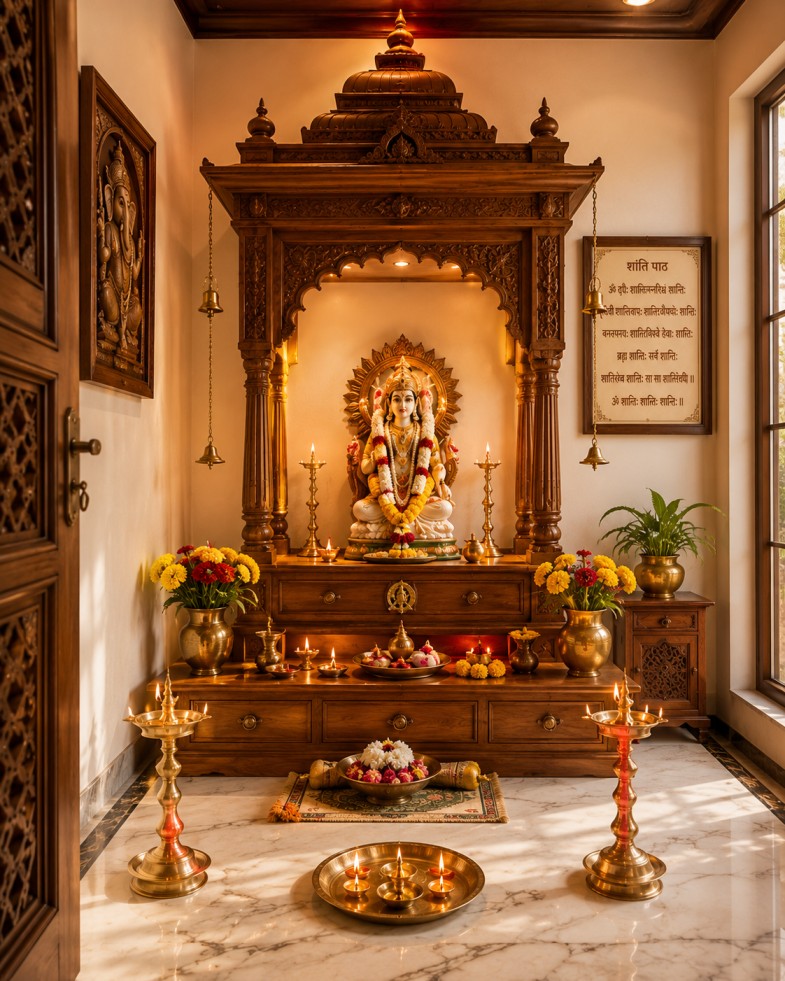
- Keep it Clean and Clutter-Free: The Pooja room must always stay tidy and well-organised. Clutter actively blocks the flow of positive energy, so remove unnecessary items immediately.
- Place Idols Facing East or North: Deities must face East or North, and always rest on an elevated platform or pedestal. Placing idols on the floor shows disrespect and disrupts the energetic flow of the space.
- Allow Natural Light and Ventilation: Ensure the room receives natural light and fresh airflow daily. Sunlight and fresh air carry Prana powerfully into the space.
- Choose the Right Colours and Materials: Use light, soothing colours like white, cream, yellow, or soft blue. For materials, choose wood — particularly teak or sheesham — and marble, since both carry a natural spiritual quality and age beautifully over time.
- Remove All Electronics: Keep the Pooja room completely free from televisions, speakers, computers, and mobile chargers. Technology disrupts the meditative energy that the room needs to hold.
- Keep a Lamp or Diya Burning: Always light a lamp or diya during prayers. In Vastu, lighting symbolises the active removal of darkness and the invitation of divine presence into the home.
Common Mistakes to Avoid When Placing Your Pooja Room
Even when homeowners follow Vastu guidelines for direction and design, a few common errors can undo all the effort. Therefore, watch out carefully for these mistakes:
- Placing the Pooja Room in the Bedroom: This is one of the most frequent mistakes in urban Indian apartments. The bedroom carries rest-and-intimacy energy, which fundamentally conflicts with the sacred energy of a mandir. Always keep these two spaces separate.
- Pooja Room Adjacent to or Above a Bathroom: Bathrooms carry negative energy in Vastu. Therefore, a Pooja room that shares a wall with — or sits directly above — a bathroom significantly compromises the sanctity of the mandir.
- Overcrowding the Space with Idols and Decor: More idols and more decorations do not equal more blessings. In fact, overcrowding creates clutter and disrupts the energy flow. Keep the space simple, intentional, and respectful.
- Keeping Broken or Damaged Idols: Always remove and respectfully immerse or retire broken idols immediately. A damaged idol carries negative energy and actively harms the atmosphere of the Pooja room.
- Placing Idols at the Wrong Height: Idols must sit at a height where the worshipper views them at eye level or slightly above when seated — not too high above, and never at floor level.
Conclusion
Your Pooja room is more than just a room — it is the soul of your home. And like any soul, it deserves careful placement, clear intention, and the wisdom that Vastu Shastra offers.
Therefore, choose the North-East first for your Pooja room placement direction. If the North-East is unavailable, the East and North both offer excellent alternatives. In contrast, avoid the South-East, South-West, and West to maintain spiritual balance and protect the sanctity of your sacred space.
Moreover, when you align your Pooja room with Vastu principles, you do not simply follow ancient guidelines — you actively create a space where your family feels the difference every day. The peace, the clarity, the sense of being held — the right placement genuinely delivers all of this.
Finally, at Furnofy, we understand that every inch of your home tells a story. If you plan to design or redesign your Pooja room and want expert guidance on Vastu-compliant layouts, material selection, and mandap design, our team is ready to help you build a space that truly feels sacred.