
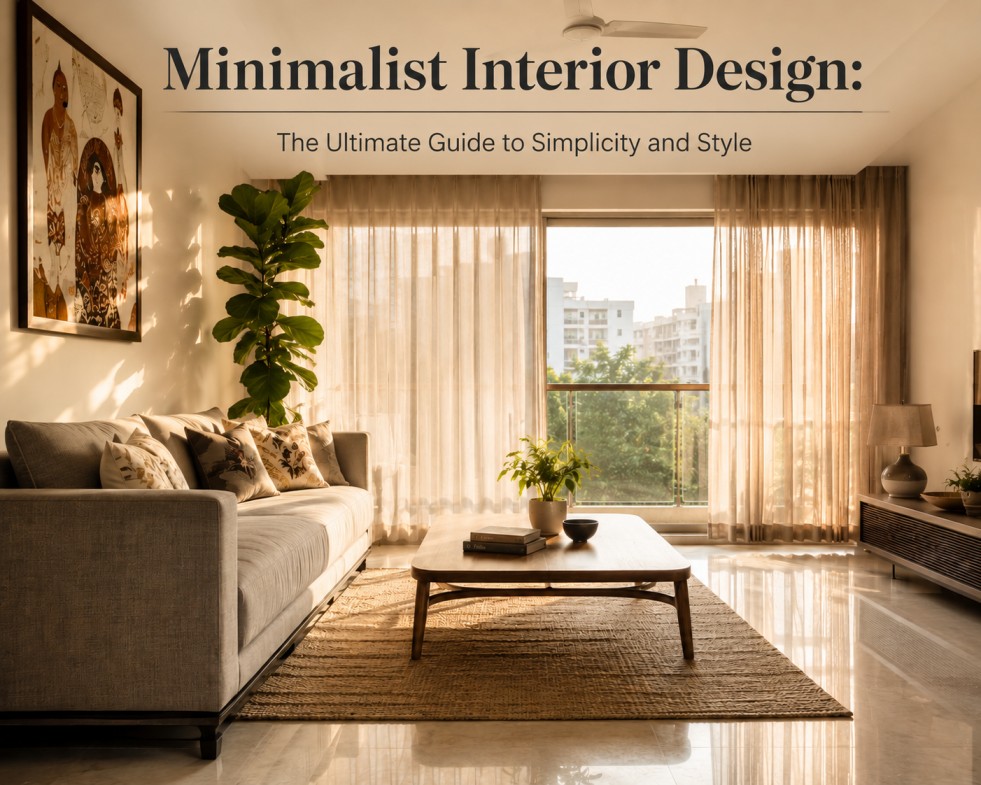
Let’s be honest — most of us live with way more stuff than we actually need. Clothes we don’t wear, furniture we trip over, décor pieces collecting dust on shelves. It adds up, and so does the stress that comes with it. That’s exactly why minimalist interior design has caught on the way it has — and why it works so well in Indian homes where space is often at a premium.
But minimalism isn’t about living in a cold, empty box. Done right, it’s warm, intentional, and surprisingly personal. In this guide, Furnofy walks you through everything you need to know — from the core principles to room-by-room tips that are practical and easy to apply.
Outline
- What Is Minimalist Interior Design?
- Why Choose Minimalist Design for Your Home?
- Key Principles of Minimalist Interior Design
- Simplify Your Colour Palette
- Let Functionality Lead
- Prioritise Natural Light
- Choose Quality Over Quantity
- How to Create a Minimalist Interior: Step-by-Step
- Step 1: Declutter First, Decorate Later
- Step 2: Choose Simple, Timeless Furniture
- Step 3: Add Texture Without Visual Noise
- Step 4: Be Intentional With Decoration
- Minimalist Design Ideas for Every Room
- Living Room
- Bedroom
- Kitchen
- Bathroom
- Common Mistakes to Avoid
- The Furnofy Take
What Is Minimalist Interior Design?
At its core, minimalist interior design is about reducing a space to its most essential elements. Fewer pieces, cleaner lines, and a colour palette that breathes. However, the magic of minimalism lies in how much thought goes into what stays. Every item earns its place.
Because spaces are carefully curated, minimalist interiors actually feel more intentional than maximalist ones. There is nothing random or accidental about them. Consequently, they tend to feel calmer, more spacious, and surprisingly sophisticated.
In Indian homes — whether it’s a 2BHK in Mumbai or a sprawling villa in Bangalore — minimalism translates beautifully. It works with natural light, adapts to compact floor plans, and pairs well with both contemporary and traditional Indian furniture.
Why Choose Minimalist Design for Your Home?
There are several practical reasons to go minimal — and they go well beyond aesthetics:
- Your home feels larger. Removing excess furniture and accessories instantly opens up floor space, even in compact apartments.
- Cleaning becomes easier. Fewer surfaces mean fewer places for dust and clutter to collect.
- Your design stays timeless. Minimalism doesn’t follow seasonal trends. Therefore, you don’t have to redo your home every few years.
- Your mental health benefits. Research consistently shows that clutter increases cortisol levels and anxiety. A clean, organised space genuinely helps you feel calmer.
- You spend smarter. Instead of buying many cheap pieces, you invest in a few quality ones that last.
Additionally, minimalism pairs particularly well with Vastu principles — both philosophies prioritise open, uncluttered spaces that allow energy to flow freely.
Key Principles of Minimalist Interior Design
Simplify Your Colour Palette
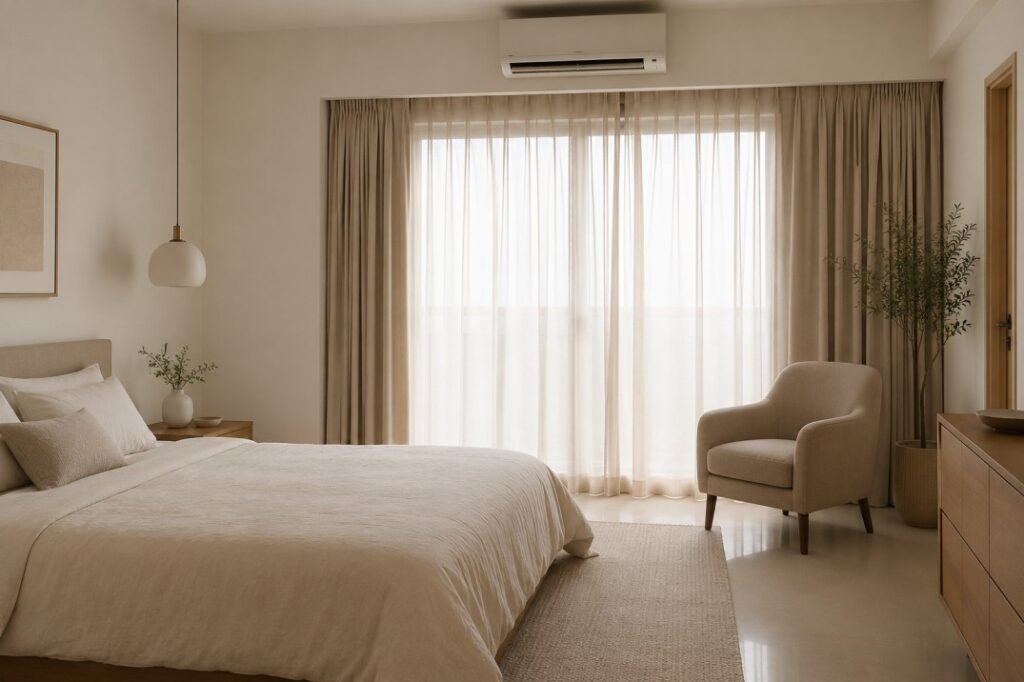
A neutral colour palette is the backbone of minimalist design. Think whites, warm beiges, soft greys, and earthy tones. These shades create a cohesive, clean base that lets the architecture and furniture speak for themselves.
Furthermore, neutral walls make rooms look bigger — which is always a win in Indian homes with lower ceilings or limited natural light.
Let Functionality Lead
In a minimalist space, every piece of furniture and every object must serve a purpose. Decorative items that don’t add function or genuine meaning to the space are simply clutter in disguise.
As a result, minimalist homes feel intentional. Nothing is there by accident. Everything contributes — either by being useful, beautiful, or ideally both.
Prioritise Natural Light
Light is one of the most powerful tools in minimalist design. The more natural light you allow into a room, the more open and airy it feels — even without changing a single piece of furniture.
Consequently, minimalist interiors tend to keep window treatments light and simple. Sheer curtains or neutral roller blinds work far better than heavy drapes that block light and make spaces feel heavier.
Choose Quality Over Quantity
Minimalism is not a budget design style — it’s a quality-first design style. Since you’re buying fewer pieces, it makes sense to invest in items that are well-crafted, durable, and genuinely beautiful.
Moreover, a single statement piece — a solid teak sideboard, a hand-thrown ceramic vase, or a well-chosen artwork — adds far more character than a shelf full of generic decor items from a discount store.
How to Create a Minimalist Interior: Step-by-Step
Step 1: Declutter First, Decorate Later
Before you buy anything new, remove everything that doesn’t serve you. This is the most important step — and the hardest. Go room by room. If an item doesn’t have a clear purpose or bring you genuine joy, it goes.
Specifically, pay attention to surfaces. Clear countertops, empty side tables, and uncluttered shelves are the visual signature of minimalist design.
Step 2: Choose Simple, Timeless Furniture
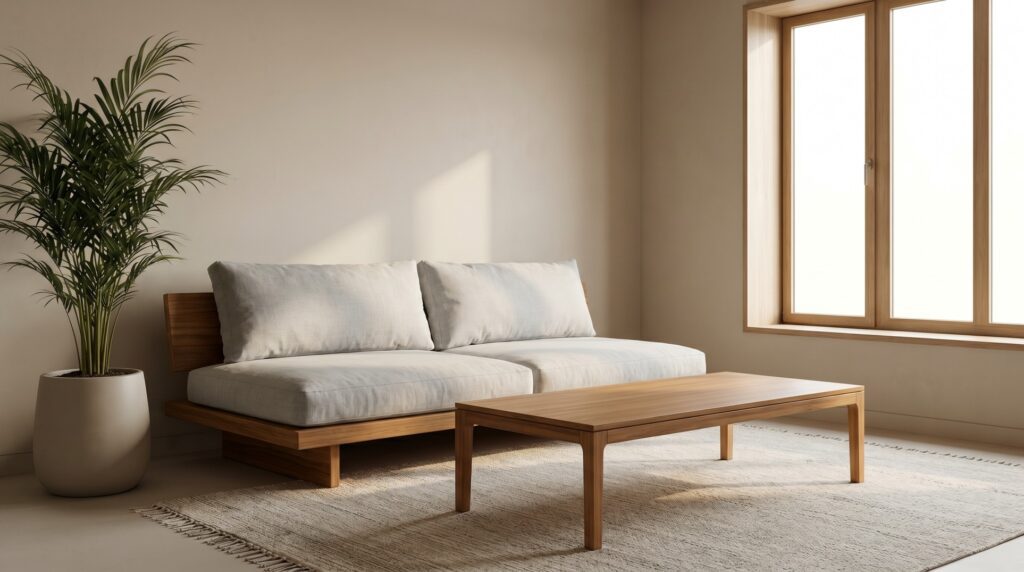
Minimalist furniture typically features clean, straight lines and simple silhouettes. Avoid pieces with heavy ornamentation, elaborate carvings, or bulky proportions. Instead, look for furniture that is light visually — even if it’s physically sturdy.
Additionally, consider the scale of your furniture relative to the room. Oversized sofas in small rooms destroy the sense of space that minimalism tries to create
Step 3: Add Texture Without Visual Noise
Just because minimalist interiors are simple doesn’t mean they’re boring. Texture is what keeps them from feeling cold and sterile. Think woven cotton throws, smooth leather chairs, rough jute rugs, or natural stone surfaces.
However, keep the number of textures in check. Two or three different materials in a room is plenty. Moreover, sticking to materials in similar tones means they work together rather than competing visually.
Step 4: Be Intentional With Decoration
Décor in a minimalist space is sparse by design — but that doesn’t mean it’s absent. A carefully chosen piece of wall art, a sculptural vase, or a small collection of books can add a great deal of personality without breaking the visual calm.
Furthermore, consider living décor. Indoor plants are particularly popular in minimalist interiors because they add warmth and life without creating clutter. A single fiddle leaf fig or a cluster of succulents goes a long way.
Minimalist Design Ideas for Every Room
Living Room
- Choose a sleek sofa in a neutral fabric — grey, cream, or sage green work beautifully.
- Use a single large rug to anchor the space instead of multiple smaller ones.
- Keep the TV unit wall clean and simple. Floating shelves beat bulky entertainment units every time.
- Limit artwork to one or two impactful pieces rather than a gallery wall.
Bedroom
- A low-profile platform bed immediately creates a calming, minimalist feel.
- Stick to soft, breathable bedding in neutral tones — cotton or linen both work wonderfully.
- Replace traditional wardrobes with built-in sliding door wardrobes that disappear into the wall.
- Keep your bedside tables simple — a lamp and a book, nothing more.
Kitchen
- Opt for handleless or minimal-handle cabinet fronts for a sleek, seamless look.
- Keep countertops completely clear except for two or three appliances you use daily.
- Choose a consistent colour for all cabinet surfaces — white, pale grey, or warm wood tones.
- Built-in storage is your best friend. Pull-out drawers, corner carousels, and pantry units keep clutter hidden.
Bathroom
- Floating vanities instantly modernise a bathroom and make the floor visible, creating a sense of space.
- Choose large-format tiles in a single neutral tone. Fewer grout lines mean a cleaner look.
- Conceal toiletries in a mirrored medicine cabinet rather than leaving them on the counter.
- A single quality towel rail and a small potted plant are all the décor you need.
Common Mistakes to Avoid
Going too bare: Minimalism doesn’t mean empty. If your space feels cold or unlived-in, it’s not minimalism — it’s just sparse. Warmth comes from texture, lighting, and a few personal touches.
Relying only on grey and white: Too much neutrality in the same tone can make a space feel lifeless. Therefore, introduce warmth through earthy accents — terracotta, warm wood, soft sage.
Sacrificing comfort for style: A minimalist home should still be a comfortable home. Choose furniture that is as comfortable as it is good-looking. Additionally, prioritise good lighting — overhead-only lighting makes even beautiful spaces feel flat.
Decluttering once and forgetting: Minimalism is a habit, not a one-time project. Consequently, you’ll need to revisit what’s in your home regularly and let go of things that no longer serve you.
The Furnofy Take
Minimalist interior design isn’t about having less — it’s about making more room for what matters. When you clear away the visual noise, the things that genuinely make your home yours become that much more visible.
Whether you’re starting fresh in a new apartment or slowly working through a room-by-room makeover, the principles are the same: simplify your palette, choose quality pieces, let light in, and be intentional about what you bring into your space.
At Furnofy, we believe good design should make your life easier — not more complicated. So start small, stay consistent, and enjoy the process of creating a home that actually feels like you.