
Why Eco-Friendly Finishing Materials Matter for Your Home
Sustainability is no longer just a buzzword — it has become a genuine necessity. More and more homeowners across India are moving away from conventional materials and choosing eco-friendly alternatives that are better for their families and the planet. The good news is that making your home greener does not mean compromising on style or durability.
Eco-friendly finishing materials are now widely available, and they offer outstanding performance while significantly reducing environmental impact. Whether you are building a new home or renovating an existing space, these materials can transform your interiors into something beautiful, healthy, and sustainable. Furthermore, many of these options are well-suited to India’s climate, making them both practical and smart.
In this guide, Furnofy walks you through the top eco-friendly finishing materials for sustainable homes — covering everything from paints and flooring to countertops and insulation. Additionally, we have included image suggestions and AI prompts so you can visualise each material as you read along.
Outline
- Eco-Friendly Paints and Finishes
- Why You Should Choose Eco-Friendly Paints
- Sustainable Flooring Options
- Bamboo Flooring
- Cork Flooring
- Recycled and Reclaimed Wood Flooring
- Natural Wall Materials
- Clay Plaster
- Hempcrete
- Natural Stone
- Recycled and Repurposed Materials
- Recycled Glass Tiles
- Reclaimed Wood
- Recycled Metal
- Low-Impact Insulation Options
- Cotton Insulation
- Cellulose Insulation
- Green Countertops and Backsplashes
- Recycled Glass Countertops
- Bamboo Countertops
- Paper Composite Countertops
- Creating a Beautiful, Sustainable Home — One Choice at a Time
Eco-Friendly Paints and Finishes
One of the simplest and most impactful changes you can make is switching to non-toxic, low-VOC (volatile organic compound) paints and finishes. Traditional paints release harmful chemicals into the air, which negatively affects indoor air quality and contributes to long-term health issues. Fortunately, eco-friendly alternatives are now just as effective, just as long-lasting, and considerably safer.
Why You Should Choose Eco-Friendly Paints
- Healthier indoor air: Low-VOC and zero-VOC paints release far fewer pollutants, so they actively reduce the risk of respiratory problems, headaches, and allergies.
- Lower environmental impact: Many eco-friendly paints use natural pigments and are manufactured through sustainable processes that minimise waste.
- Excellent durability: Modern green paints deliver strong coverage and a wide range of finishes — from matte to semi-gloss — without sacrificing performance.
- Natural ingredients: Paints made with clay, lime, or plant-based binders give walls a rich, textured, organic finish that works beautifully in Indian homes.
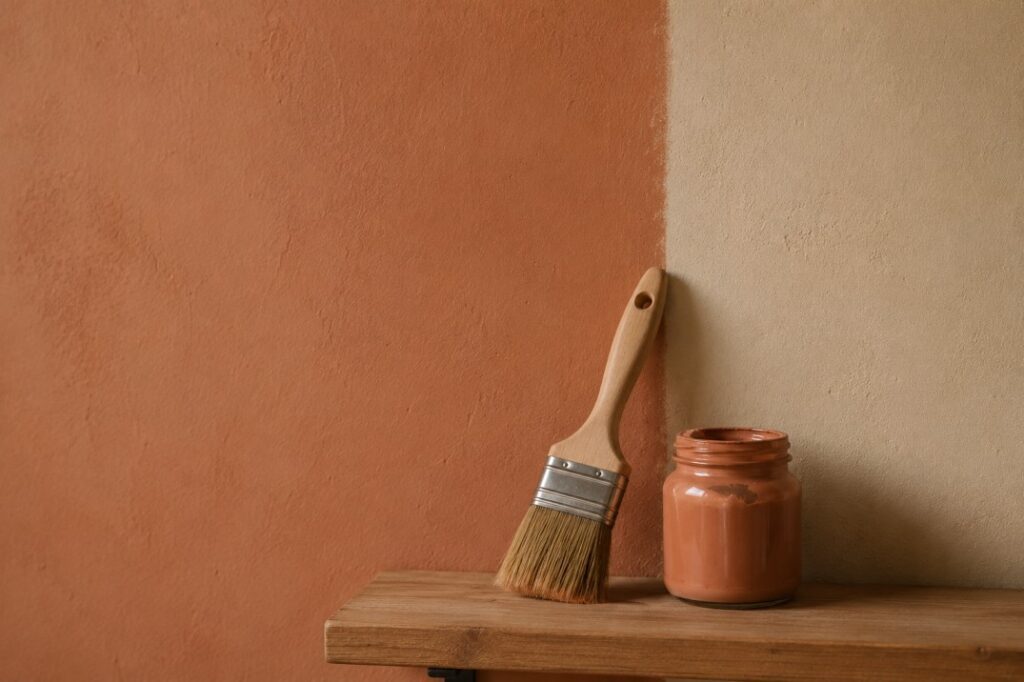
Moreover, many of these paints are breathable, which helps walls manage moisture naturally — an important quality in humid Indian climates. Consequently, they can reduce dampness and mould over time.
Sustainable Flooring Options
Flooring covers the largest surface area in any home, so choosing sustainable options here makes a significant difference. Several eco-friendly flooring materials are now readily available in India, and they combine style with environmental responsibility effectively.
Bamboo Flooring
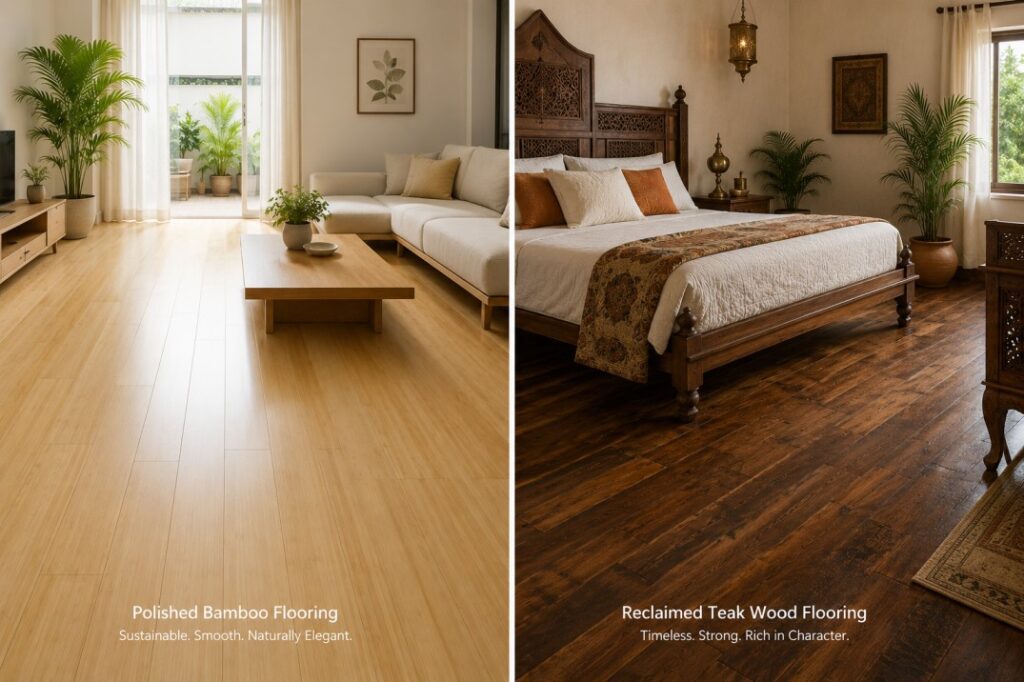
Bamboo is widely regarded as one of the most eco-friendly flooring materials available today. It grows remarkably fast — reaching maturity in just three to five years — requires minimal water, and can be harvested without uprooting the plant entirely. Additionally, bamboo flooring is highly durable, easy to maintain, and available in a variety of finishes that complement both modern and traditional Indian interiors.
Cork Flooring
Cork is harvested from the bark of cork oak trees, which naturally regenerates after each harvest. This makes it a genuinely renewable resource that is both biodegradable and recyclable. Moreover, cork provides excellent sound insulation and has a naturally warm, cushioned feel underfoot — making it particularly suitable for bedrooms and children’s rooms.
Recycled and Reclaimed Wood Flooring
If you love the look of wood, reclaimed or recycled wood is the most responsible way to achieve it. These materials are sourced from old buildings, furniture, or industrial structures and are transformed into stunning flooring that carries a story with it. Importantly, using reclaimed wood directly reduces the demand for fresh timber and supports forest conservation. The characteristic grain patterns and textures also add warmth and character that new wood simply cannot replicate.
Natural Wall Materials
The walls of your home do more than define space — they actively influence temperature, humidity, and air quality. Choosing natural wall materials is therefore one of the most impactful decisions you can make for a sustainable home. These options are not only environmentally responsible but also contribute to a healthier, more comfortable living environment.
Clay Plaster
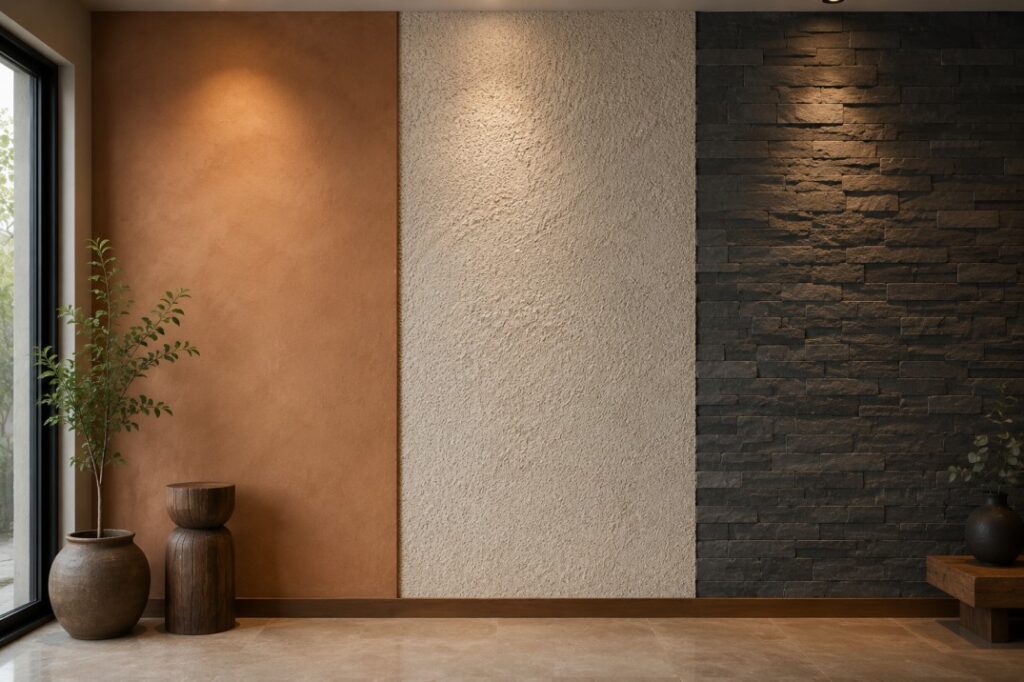
Clay plaster is a completely natural wall finish made from locally sourced clay, sand, and water. It provides a smooth, earthy texture that looks stunning in contemporary Indian interiors. More importantly, clay is highly breathable, which means it naturally regulates indoor humidity — absorbing moisture when the air is damp and releasing it when conditions are dry. As a result, it actively helps maintain a balanced indoor environment without any mechanical assistance.
Hempcrete
Hempcrete is an innovative building material made from hemp fibres, lime, and water. It delivers excellent thermal insulation, making it ideal for energy-efficient homes in India’s varied climate zones. Additionally, hempcrete is naturally resistant to mould and pests, and it can be used both as insulation and as a finished wall surface. Since hemp grows quickly and requires very few pesticides, it is a notably low-impact crop.
Natural Stone
Natural stone — including slate, limestone, and granite — is one of the most durable and timeless eco-friendly finishing materials available. Its long lifespan makes it a genuinely sustainable investment, as walls and surfaces finished in natural stone can last for generations without replacement. Furthermore, stone is often available locally in India, which significantly reduces the carbon emissions associated with transportation.
Recycled and Repurposed Materials
Using recycled and repurposed materials is one of the most powerful ways to minimise waste and reduce your home’s environmental footprint. These materials are sourced from discarded or salvaged items, giving them a second life while keeping usable resources out of landfills. Moreover, they often bring a distinctive, character-rich aesthetic that newly manufactured materials simply cannot match.
Recycled Glass Tiles
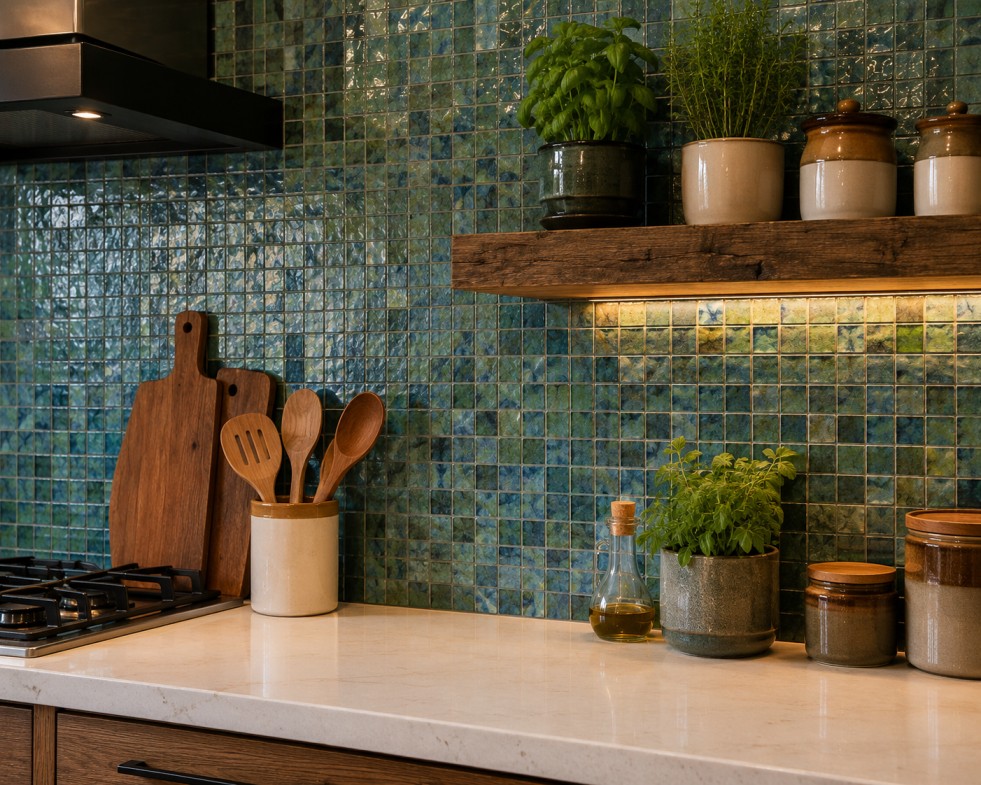
Recycled glass tiles are made from repurposed glass bottles, windows, and industrial glass waste. They are then processed and cut into stylish tiles suitable for backsplashes, feature walls, and even flooring. In addition to diverting glass from landfills, these tiles introduce a beautiful, light-catching quality to interiors — with colours ranging from ocean blues and greens to warm ambers.
Reclaimed Wood
Reclaimed wood is one of the most versatile eco-friendly finishing materials available for furniture, wall panels, and accent features. By reusing existing timber, you directly reduce the demand for new wood and support the preservation of forests. Additionally, the natural aging and patina of reclaimed wood creates a warmth and character that is difficult to replicate with new materials.
Recycled Metal
Recycled aluminium and steel are increasingly used in modern construction for roofing, cladding, and structural components. These metals are highly durable and can be recycled repeatedly without any loss in quality. Furthermore, opting for recycled metal significantly reduces the energy-intensive processes involved in mining and refining new metal ore — making it a smart environmental and economic choice.
Low-Impact Insulation Options
Insulation plays a critical role in a home’s energy efficiency — it keeps interiors cool in summer and warm during cooler months, directly reducing the energy required for air conditioning and heating. However, many conventional insulation materials contain harmful chemicals or rely on non-renewable raw materials. Thankfully, several sustainable alternatives are now widely accessible.
Cotton Insulation
Cotton insulation is made primarily from recycled cotton fibres, often sourced from denim manufacturing waste. It offers excellent thermal and acoustic performance, comparable to conventional fiberglass. Additionally, it is completely non-toxic and safe to handle without protective gear, which makes it a particularly practical choice for residential construction and renovations.
Cellulose Insulation
Cellulose insulation is produced from recycled paper products, most commonly old newspapers. It is treated with safe, non-toxic fire retardants and is highly effective at reducing air leaks in walls and ceilings. Moreover, because it uses post-consumer waste as its primary raw material, cellulose insulation has a much lower embodied carbon footprint compared to most alternatives.
Green Countertops and Backsplashes
The kitchen is often the heart of an Indian home, and the materials chosen for countertops and backsplashes have both visual and environmental significance. Selecting eco-friendly options for these surfaces allows you to enhance the beauty of your kitchen while making a meaningful contribution to sustainability.
Recycled Glass Countertops
Recycled glass countertops are crafted from post-consumer glass products — including bottles, tiles, and glass offcuts — that are combined with a binding agent and formed into smooth, durable surfaces. They offer a uniquely colourful and contemporary appearance and are highly resistant to heat and stains. Furthermore, every countertop of this kind diverts a meaningful quantity of glass waste from landfills.
Bamboo Countertops
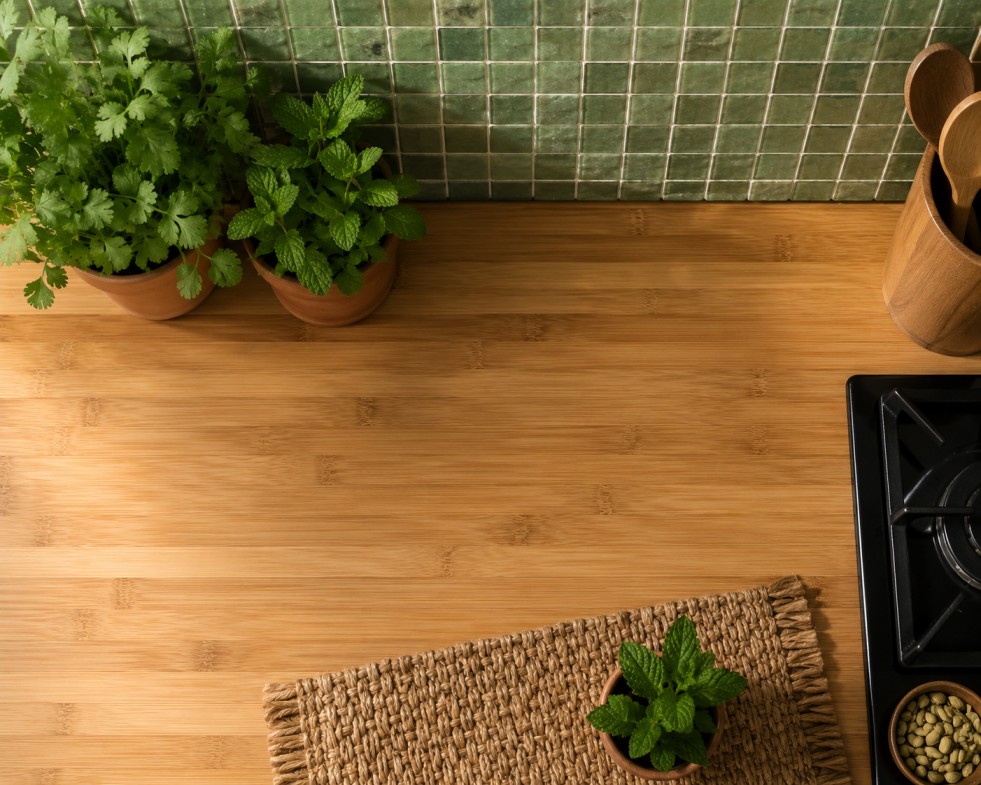
Bamboo countertops bring the same sustainability credentials as bamboo flooring to your kitchen surfaces. They are durable, water-resistant, and easy to maintain with basic care. Additionally, bamboo’s natural grain pattern gives countertops a warm, organic look that pairs well with both modern and heritage-inspired Indian kitchen designs.
Paper Composite Countertops
Paper composite countertops are manufactured from layers of recycled paper saturated with resin and pressed under high heat and pressure. The result is a dense, non-porous surface that is highly resistant to scratches, heat, and stains. These countertops are available in an impressive range of colours and textures, and their use of recycled raw materials makes them one of the most environmentally responsible choices for contemporary kitchens.
Creating a Beautiful, Sustainable Home — One Choice at a Time
Every material you choose for your home tells a story — and increasingly, homeowners across India are choosing materials whose story is one of responsibility, thoughtfulness, and care for the environment. The good news is that sustainable living does not require you to compromise on style, quality, or comfort.
From low-VOC paints that improve air quality to bamboo countertops that bring warmth to your kitchen, eco-friendly finishing materials offer genuine advantages at every level. Additionally, many of these options are increasingly available through Indian suppliers, making them more accessible and affordable than ever before.
At Furnofy, we believe that great design and responsible choices go hand in hand. Whether you are planning a full renovation or simply refreshing a room, we encourage you to consider these sustainable alternatives. Not only will you be creating a healthier, more beautiful space for your family — you will also be contributing to a greener future for all of us.
Have questions about eco-friendly materials for your home? Explore more on the Furnofy blog or reach out to our design team for personalised guidance.