

Ceiling finishes play a major role in shaping how a room feels, functions, and lasts over time. Among the many options available today, PVC Ceiling vs. Wooden Ceiling is one of the most common comparisons. Each brings its own style, maintenance needs, and performance benefits. While one offers a sleek, modern look with easy upkeep, the other adds warmth, texture, and timeless appeal. Choosing between the two isn’t just a design decision, it affects cost, durability, and long-term comfort. This comparison breaks down both materials across key factors to help you make a smart, informed choice for your space.
In this blog, you will find out how PVC and wooden ceilings perform across different parameters like installation, moisture resistance, maintenance, longevity, aesthetics, and cost. By understanding the strengths and trade-offs of each option, you can match the ceiling type to your lifestyle, climate conditions, and interior goals. Whether you’re updating a single room or planning an entire home, making the right ceiling choice early on can save time, money, and effort in the long run.
Outline of the Blog
- Overview of PVC Ceiling vs. Wooden Ceiling
- Cost Comparison between PVC ceiling vs. Wooden ceiling
- Durability and Longevity
- Maintenance Requirements between PVC ceiling vs. Wooden ceiling
- Aesthetic Appeal
- Environmental Impact
- Installation Process
- Conclusion
1. Overview of PVC Ceiling vs. Wooden Ceiling
PVC Ceiling:
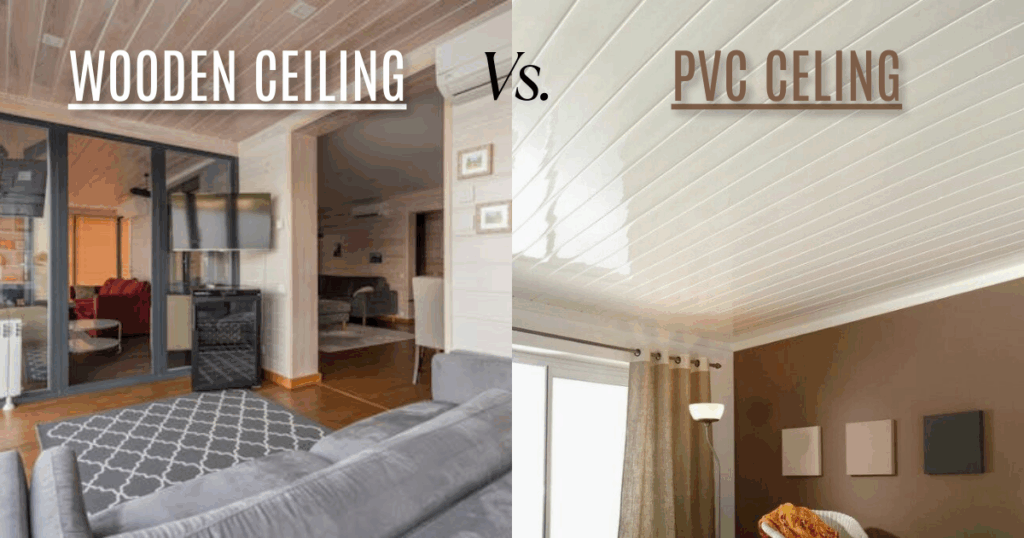
PVC ceilings are made from Polyvinyl Chloride, a strong and lightweight plastic material. This type of ceiling is widely used in contemporary homes, offices, retail stores, and hospitality spaces. One of the key advantages of PVC is its ease of installation. The panels are designed to fit together seamlessly, making the process quick and hassle-free. They are also water-resistant and termite-proof, which makes them suitable for kitchens, bathrooms, and other moisture-prone areas.
In terms of design, PVC ceilings offer a broad range of colors, surface finishes, and patterns; ranging from glossy to matte, plain to textured. This allows flexibility in achieving different styles, from sleek and minimal to decorative and bold. PVC panels do not require painting or polishing, which reduces maintenance over time. Their smooth surfaces are easy to clean using a simple cloth, making them a practical choice for busy households or commercial interiors. Additionally, they are resistant to fading, warping, and cracking, which helps preserve their appearance over time.
Wooden Ceiling:
Wooden ceilings are crafted using solid wood, plywood, or engineered wood panels. These ceilings are known for their natural texture, depth, and warmth, making them a popular choice in homes that value character and timeless design. They are often seen in traditional interiors, heritage homes, and mountain cabins, but they also work well in modern spaces that aim to bring in a touch of nature.
The appeal of wood lies in its organic beauty and the sense of comfort it adds to a room. Grains, knots, and rich tones create visual interest that synthetic materials often can’t replicate. Wooden ceilings can be left raw, stained, or painted, depending on the style and atmosphere you want to achieve. While they elevate the visual quality of any space, wooden ceilings require proper upkeep. They need protection from moisture, regular cleaning, and occasional polishing or sealing to prevent warping or damage over time. Installation also tends to be more labor-intensive compared to pre-finished materials. Despite these factors, their durability and long-term value make them a preferred option for those who prioritize craftsmanship and design integrity.
2. Cost Comparison between PVC ceiling vs. Wooden ceiling
Cost is often a deciding factor when selecting ceiling materials, especially during large-scale renovations or new construction. Comparing PVC and wooden ceilings from a pricing perspective can help clarify what fits within your budget without compromising on design goals.
PVC Ceiling Cost:
PVC ceilings are usually the more budget-friendly option. The material itself is produced at a lower cost, and the panels are manufactured in large quantities using efficient processes. This makes them widely available and affordable for most residential and commercial projects. In addition to the lower material price, PVC ceilings are economical to install. Their lightweight nature reduces labor time and effort, which lowers overall installation charges. There’s minimal need for additional finishing work, such as painting or sealing, which further cuts down on expenses. Maintenance costs over time also remain low, as PVC does not require special treatments or regular upkeep. For homeowners seeking a durable, attractive solution without a heavy financial commitment, PVC offers strong value.
Wooden Ceiling Cost:
Wooden ceilings tend to fall on the higher end of the pricing scale, especially when solid wood or premium finishes are selected. The overall cost depends heavily on the type and grade of wood. Hardwoods like teak, oak, walnut, and mahogany carry a higher price tag due to their strength, grain quality, and durability. In contrast, softwoods such as pine or cedar are more affordable but may require additional treatment for long-term performance.
Beyond material costs, wooden ceilings often involve greater expenses during installation. The panels or planks are heavier and need skilled handling, which increases labor charges. In many cases, structural support or leveling may be required before installation, which adds to the overall budget. Finishing work such as staining, sealing, or polishing also contributes to the final cost. Long-term maintenance including periodic touch-ups or protective coatings can further impact overall expenses. While the investment is higher, wooden ceilings offer lasting visual appeal and structural strength, which can add value to the property over time.
Cost Verdict:
For those working within a limited budget, PVC ceilings offer a practical and affordable solution. They provide good visual appeal, easy installation, and long-term savings with minimal maintenance. This makes them suitable for cost-conscious projects where functionality and clean design are the focus.
On the other hand, wooden ceilings require a larger initial investment but deliver strong aesthetic value and lasting character. They enhance the overall atmosphere of a space and contribute to a higher-end finish. If budget allows and the goal is to create a warm, distinctive interior with lasting quality, the extra cost of wood can be justified. The choice ultimately comes down to what balance of cost, style, and long-term value aligns best with your design priorities.
3. Durability and Longevity
When choosing between PVC ceiling vs wooden ceiling, durability is another important factor to consider.
PVC Ceiling Durability:
PVC ceilings are known for their strong resistance to wear and environmental stress. The material does not absorb moisture, which makes it ideal for spaces exposed to steam, splashes, or general dampness, such as bathrooms, kitchens, and laundry areas. It does not swell, rot, or crack even when exposed to high humidity for long periods. This moisture resistance also helps in maintaining its shape, color, and finish over time.
Another advantage of PVC is its immunity to pests. It does not attract termites or insects, which adds to its reliability, especially in regions with a warm or tropical climate. PVC panels are designed to be flexible yet tough, so they hold up well under daily use without bending or sagging. They also resist staining and discoloration, reducing the need for frequent touch-ups or replacements. With proper handling and installation, PVC ceilings can last for many years while keeping their original look intact.
Wooden Ceiling Durability:
Wooden ceilings offer lasting strength but require consistent care to maintain their appearance and structural stability. Natural wood reacts to changes in temperature and humidity, which can lead to expansion, contraction, or warping over time. In areas with high moisture levels, wood is more vulnerable to issues such as rot, damp patches, and mold growth unless properly treated.
To keep wooden ceilings in good condition, routine maintenance is necessary. This includes sealing the surface to protect against moisture, staining to preserve color and grain, and cleaning to remove dust or residue that could damage the finish. In regions with a dry and stable climate, wood tends to perform better, showing fewer signs of movement or decay. However, even in these environments, wood may develop minor cracks or splinters over time, especially if left untreated.
The natural durability of wood depends on the type selected. Hardwoods generally last longer and resist damage better than softwoods, though they still need care. When maintained well, wooden ceilings can age beautifully and remain structurally sound for decades, offering both visual and material value across the years.
Durability Verdict:
For environments exposed to high humidity or frequent temperature shifts, PVC ceilings offer a more dependable solution. Their built-in resistance to water, dampness, and termite activity makes them a strong choice for bathrooms, kitchens, basements, and coastal regions. They perform consistently over time with minimal upkeep, which helps avoid long-term repair or replacement costs.
Wooden ceilings, on the other hand, demand regular care but can deliver impressive longevity when properly maintained. In dry, well-ventilated spaces, wood can hold up well and even improve in character as it ages. The key lies in consistent sealing, protection from moisture, and occasional refinishing. When these steps are followed, wood remains strong and visually appealing for decades. If durability with minimal maintenance is the priority, PVC is a more practical fit. If long-term character and natural material appeal are more important, wood becomes a worthy investment despite the added maintenance needs.
4. Maintenance Requirements between PVC ceiling vs. Wooden ceiling
Understanding how much upkeep a ceiling needs helps in planning ahead, both in terms of time and long-term care. The maintenance demands of PVC and wooden ceilings differ widely due to the nature of the materials.
PVC Ceiling Maintenance:
PVC ceilings are known for being extremely easy to maintain. Their non-porous surface resists stains, moisture, and dust buildup, making cleaning simple and infrequent. A quick wipe with a damp cloth is usually enough to keep them looking neat. They do not require any treatments, coatings, or polishing over time. This makes PVC a suitable option for spaces that see daily activity or areas where cleaning time is limited. Since they don’t absorb moisture, there’s little risk of mold or mildew forming on the surface, even in bathrooms or kitchens. Once installed, PVC ceilings continue to perform well with very little effort involved in their upkeep.
Wooden Ceiling Maintenance:
Wooden ceilings, by contrast, need regular attention to retain their original finish and structural health. Dusting should be done frequently to prevent dirt from settling into the wood grain. Mild cleaners that do not strip the surface are ideal. Periodic application of protective sealants is essential to shield the wood from moisture and insect exposure. Depending on the type of finish, wooden ceilings may also require re-oiling, staining, or polishing after a few years. Without consistent care, wood can develop cracks, lose its color, or suffer from swelling or shrinkage. In areas exposed to changing weather or humidity levels, the maintenance needs may increase further.
Maintenance Verdict:
PVC ceilings are a practical solution for anyone seeking a low-effort option. Their surface stays clean with minimal work, and they hold up well across time without needing ongoing treatments. For homes with tight schedules or high-traffic zones, PVC offers a reliable, low-maintenance finish. Wooden ceilings, while visually rich and timeless, demand a regular care routine to maintain their look and structural condition. For those willing to invest time and attention into upkeep, wood rewards with depth, warmth, and character that grow more refined with age. The choice depends on how much maintenance you’re prepared to manage over the years.
5. Aesthetic Appeal
Visual impact plays a major role when selecting ceiling materials. Both PVC and wooden ceilings bring distinct styles to a space, and the choice often depends on the mood or atmosphere you want to create.
PVC Ceiling Aesthetic:
PVC ceilings deliver a clean, contemporary appearance. They are available in a wide variety of colors, textures, and surface finishes, allowing easy coordination with different interior styles. From soft matte tones to high-gloss panels, PVC gives flexibility in achieving a sleek and uniform ceiling look. Some panels even mimic the look of wood or stone, offering visual interest without the cost or maintenance of natural materials. Their smooth, reflective surfaces can brighten up a room and make compact spaces feel more open. Ideal for minimalist, modern, or cost-efficient interiors, PVC ceilings help achieve a neat, polished finish that complements functional design goals.
Wooden Ceiling Aesthetic:
Wooden ceilings bring unmatched natural beauty and timeless elegance. The grain, tone variations, and organic patterns found in real wood introduce depth and warmth to a space. These ceilings can transform a room into a more inviting, character-filled environment. Whether used in traditional homes, mountain retreats, or rustic villas, wooden ceilings enhance the architectural language and add richness to the visual experience. From exposed beams to clean-lined planks, the design possibilities with wood are extensive. It suits both classic interiors and modern spaces that embrace natural materials and earthy finishes.
Aesthetic Verdict:
For those drawn to heritage-inspired or cozy design themes, wooden ceilings provide lasting beauty and a grounded, organic feel. Their natural texture and warmth enhance the emotional tone of a room and pair well with layered, expressive interiors. On the other hand, PVC ceilings are ideal for modern living spaces that prioritize simplicity, uniformity, and low maintenance. With a wide range of finishes including those that imitate wood, PVC offers visual flexibility at a lower cost. The final choice depends on your preferred design language and how much value you place on natural materials versus contemporary performance.
6. Environmental Impact
Understanding how each ceiling material affects the environment helps in making a more responsible and informed decision. From sourcing to disposal, the ecological footprint of PVC and wood differs in many ways.
PVC Ceiling Environmental Impact:
PVC ceilings are made from synthetic plastic, which raises concerns about long-term environmental impact. The production process involves the use of chemicals and energy-intensive methods, which can release harmful emissions into the air and water. Since PVC is not biodegradable, discarded panels contribute to plastic waste, remaining in landfills for many years. Although durable, once damaged or no longer in use, they are difficult to recycle on a large scale. That said, some manufacturers now offer PVC ceiling panels made from recycled materials, which slightly reduces their environmental footprint. Their long lifespan also means they do not need to be replaced often, lowering the frequency of disposal and reinstallation.
Wooden Ceiling Environmental Impact:
Wood is a natural, renewable resource, and when harvested responsibly, it is one of the most sustainable building materials available. Biodegradable and recyclable, wood breaks down naturally without causing harm to the environment. Choosing wood that comes from responsibly managed forests helps support ecosystems and reduce deforestation. Certifications from organizations like the Forest Stewardship Council (FSC) ensure that the wood is sourced in an ethical and environmentally sound manner. Processing wood generally consumes less energy compared to manufacturing plastic, further lowering its carbon impact. However, finishes, stains, and sealants used on wooden ceilings may introduce some chemical elements, so it’s important to choose eco-friendly treatment options where possible.
Environmental Verdict:
Wooden ceilings stand out as a more environmentally conscious option. Their renewable nature, recyclability, and lower production impact make them a suitable choice for sustainable design. When sourced from certified suppliers, wood supports ecological balance and reduces the strain on natural resources. PVC ceilings, while efficient and long-lasting, remain a synthetic product with environmental challenges, mainly due to production emissions and limited recyclability. If sustainability is a key factor in your decision, wood offers a clear advantage.
7. Installation Process
The installation method plays a crucial role in deciding which ceiling material works best for your space, timeline, and skill level. Ease of handling, required tools, and preparation all vary between PVC and wooden ceilings.
PVC Ceiling Installation:
PVC ceilings are designed for convenience. The panels are lightweight and can be easily carried, cut, and shaped using basic tools. Many PVC ceiling systems come with interlocking edges, which help create a seamless look and simplify the process. These panels can be mounted on simple framing structures or even fixed directly over existing ceilings, reducing the need for demolition or heavy prep work. This makes PVC ceilings a suitable option for quick renovations or DIY installations. Since no surface polishing or post-installation treatment is required, the ceiling is ready for use as soon as it’s fixed in place. The speed and simplicity of this process saves both time and labor cost.
Wooden Ceiling Installation:
Installing wooden ceilings involves more steps and careful planning. The panels or planks are heavier and may require a stronger framework or added support to hold the weight securely. Handling real wood demands accurate measurements, proper alignment, and awareness of expansion gaps to accommodate natural material movement. Wood often needs to be pre-treated before installation to guard against moisture and insects. Depending on the design, sanding, sealing, or staining may also be needed during or after installation. This adds to the project timeline. Due to the complexity involved, hiring skilled professionals is often the better route to ensure a proper and long-lasting finish.
Installation Verdict:
If you want a quick and easy installation, PVC ceilings are the preferable option. They are lightweight, easy to transport, and frequently come with interlocking components that make installation simple, even for DIY enthusiasts. On the other hand, while timber ceilings are unquestionably lovely and capable of bringing warmth and character to a space, they are more difficult to install. They frequently require exact measurements, specialized tools, and professional skills to achieve a flawless finish and long-lasting durability.
8. Conclusion
Choosing between a PVC ceiling and a wooden ceiling depends on what you value most: practicality or natural beauty, speed or craftsmanship, affordability or timeless appeal. Each material brings a distinct set of advantages that serve different needs, design styles, and project goals.
PVC ceilings offer a smart, functional solution for those looking for low maintenance, quick installation, and long-term durability in moisture-prone or high-use areas. They are lightweight, easy to clean, and available in a wide range of finishes that suit modern interiors. Their cost-effectiveness and resistance to humidity make them ideal for bathrooms, kitchens, and utility spaces where convenience matters most.
Wooden ceilings create a different experience. They bring warmth, texture, and an organic presence that elevates the entire room. Their depth and character are unmatched, especially in spaces where design richness and emotional tone are a priority. While they demand more care and a higher investment, wooden ceilings reward you with enduring beauty and architectural value that grows stronger with time.
There is no one-size-fits-all answer. It comes down to how the material aligns with your lifestyle, design vision, and environmental conditions. If ease, speed, and minimal upkeep are your focus, PVC offers a practical route. If you’re building a home with a lasting story and design that ages gracefully, wood makes a meaningful statement. The best ceiling is the one that supports your space both functionally and emotionally day after day, year after year.