
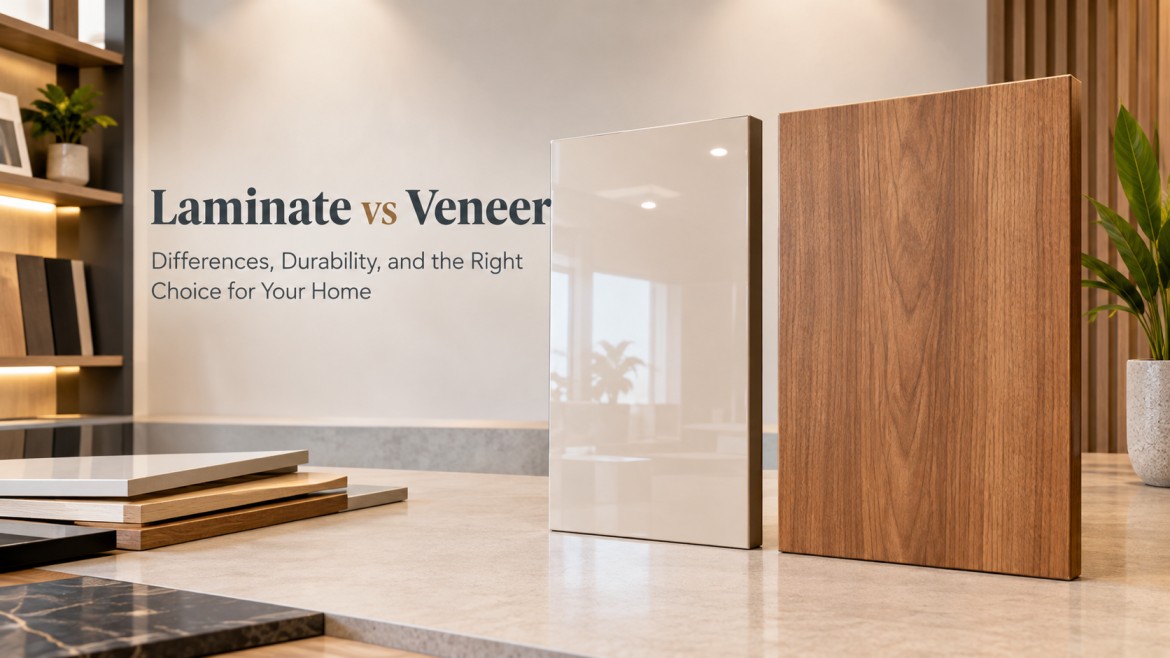
A showroom sample rarely tells the whole story, since laminate and veneer can look nearly identical on a small swatch but behave very differently across years of daily use. Deciding between laminate vs veneer India homeowners actually stick with long-term comes down to three things: how each material ages, how much upkeep it demands, and what it costs once the whole house is factored in. This guide walks through both materials honestly, including where each one falls short, so the choice fits your home rather than just the sample board.
Outline
- What Is Laminate?
- What Is Veneer?
- Laminate vs Veneer: Durability
- Laminate vs Veneer: Maintenance
- Laminate vs Veneer: Look and Feel
- Laminate vs Veneer: Cost
- Laminate vs Veneer Comparison Table
- Which Should You Choose for Your Home?
- FAQ’s
- Final Thoughts
What Is Laminate?
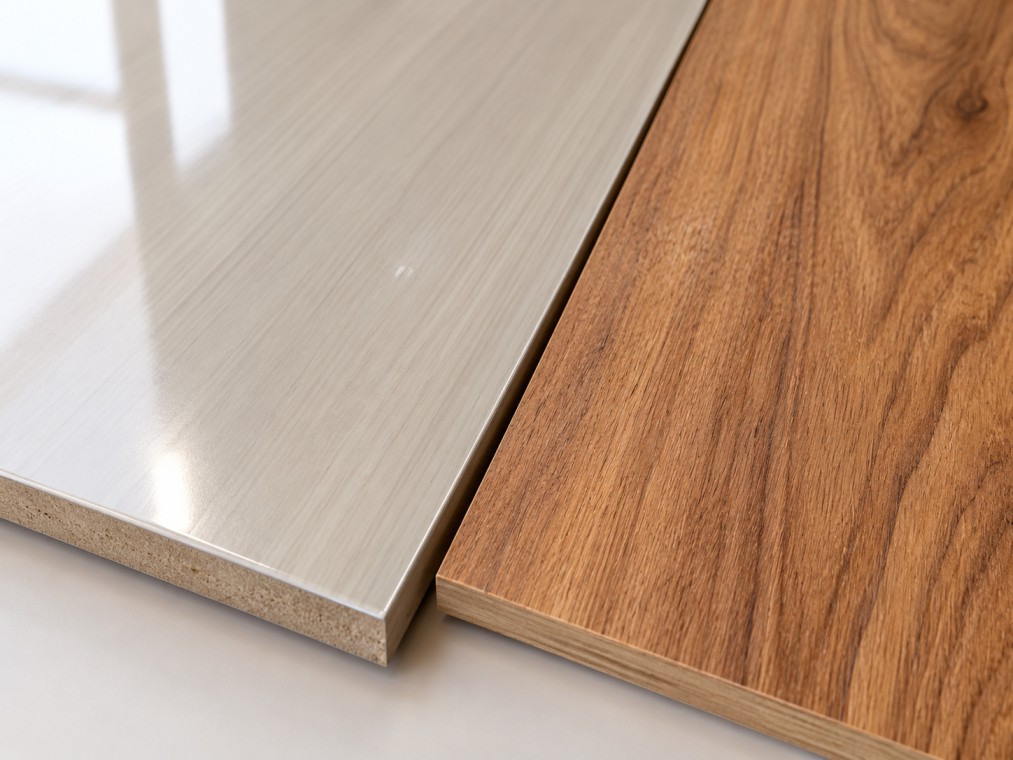
Laminate is a synthetic sheet made by pressing layers of paper soaked in resin under high heat and pressure, then printing a decorative pattern or wood-look design on top. Because the surface is engineered rather than natural, laminate reproduces almost any colour, pattern, or texture, including convincing wood grains, at a fraction of real wood’s price.
What Is Veneer?
Veneer is a thin slice of real wood, typically less than a millimetre thick, glued onto a plywood or MDF base. Since the surface is genuine timber, veneer carries natural grain variation and depth that no printed material fully replicates, which is exactly why it remains the go-to choice for a premium, authentic look.
Laminate vs Veneer: Durability
Laminate generally wins on everyday durability, since its resin-based surface resists scratches, heat from hot vessels, and minor impacts better than a thin wood layer. Veneer, on the other hand, can dent, scratch, or fade with prolonged sun exposure, though a good polish and reasonable care go a long way toward slowing this down.
Laminate vs Veneer: Maintenance
Laminate needs little beyond regular wiping, since its sealed surface doesn’t absorb moisture or stains easily. Veneer, in contrast, benefits from periodic polishing and should be kept away from constant direct sunlight and standing water, or the wood layer can dry out, crack, or discolour over time.
Laminate vs Veneer: Look and Feel
Even the best laminate, when examined closely, shows a repeating printed pattern rather than genuine grain variation. Veneer, because it’s real wood, has natural inconsistencies and depth that most homeowners associate with a higher-end, more authentic finish — a difference that becomes obvious the moment you run a hand across both surfaces.
Laminate vs Veneer: Cost
Laminate costs considerably less than veneer for a comparable area, largely because it skips the raw timber and hand-finishing veneer requires. That said, exact pricing depends on the laminate grade or the wood species chosen for veneer, so it’s worth getting a same-day quote from your supplier rather than assuming a fixed rate.
Laminate vs Veneer Comparison Table
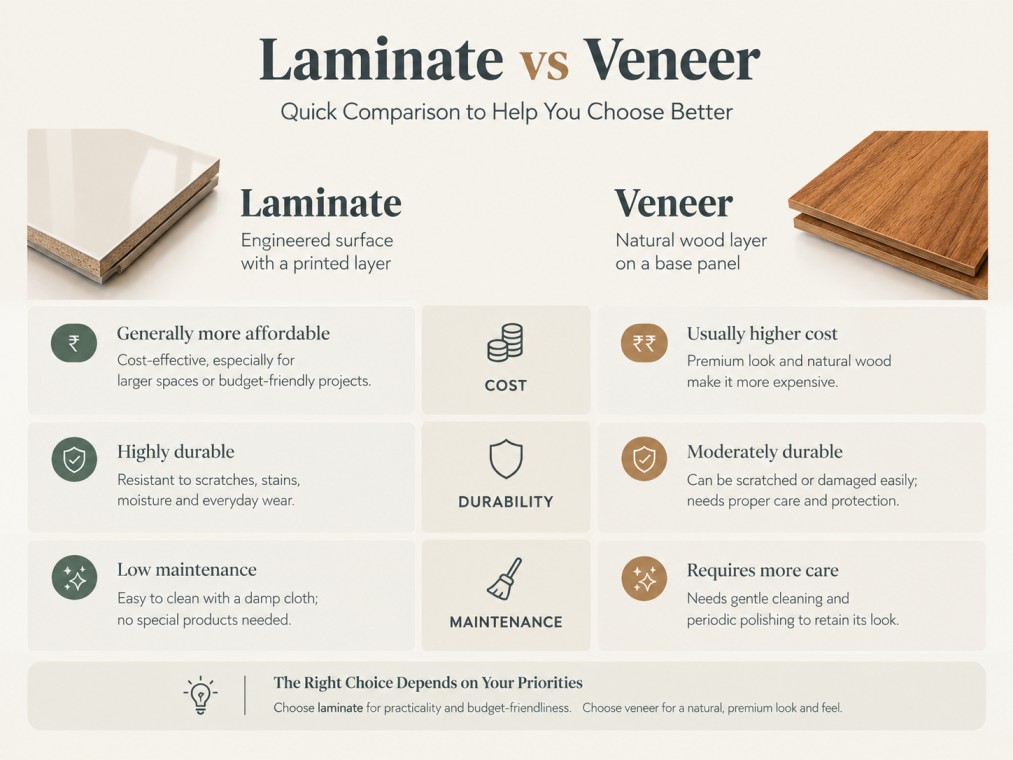
| Factor | Laminate | Veneer |
| Material | Synthetic, resin-based | Real wood, thin sliced layer |
| Durability | High; scratch and heat resistant | Moderate; needs careful handling |
| Maintenance | Low; wipeable | Moderate; periodic polishing needed |
| Look | Printed pattern, consistent | Natural grain, unique and premium |
| Typical cost | Lower | Higher |
Which Should You Choose for Your Home?
Kitchen Cabinets
Laminate is generally the more practical choice here, since kitchens deal with heat, grease, and daily wiping that laminate handles more comfortably than veneer.

Wardrobes and Bedroom Furniture
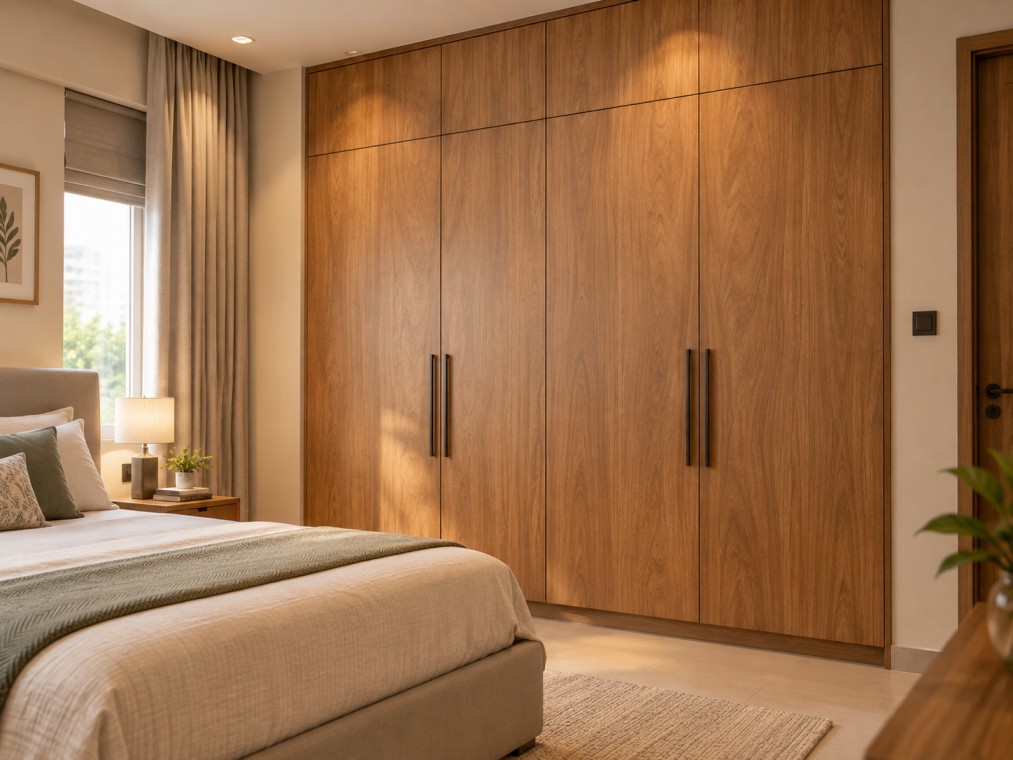
Veneer works beautifully in bedrooms, where sunlight and moisture exposure are usually lower, allowing its natural warmth to stand out without the maintenance concerns it faces elsewhere.
Living Room Furniture and TV Units
Either material suits this space, so the decision usually comes down to budget and whether a natural or a uniform printed finish fits the room’s overall design.
High-Traffic or Rental Properties
Laminate is the safer bet in rental homes or heavily used furniture, since its resistance to scratches and stains reduces the risk of visible wear before a tenant moves out.
FAQ’s
Laminate is generally more durable for everyday scratches, heat, and moisture, while veneer requires more careful handling despite its premium appearance.
Yes, veneer typically costs more than laminate for a comparable area, mainly because it uses real wood and requires more skilled finishing work.
Modern laminates come impressively close in colour and pattern, though up close, veneer’s natural grain variation still sets it apart from a printed surface.
It’s possible, but laminate is generally the more practical choice for kitchens because it resists heat, grease, and moisture better than a thin wood veneer layer.
Yes, veneer benefits from periodic polishing and should avoid constant direct sunlight or standing water, unlike laminate, which needs minimal upkeep.
Final Thoughts
Neither finish is objectively better — laminate wins on durability and budget, while veneer wins on authenticity and long-term visual appeal. Match the finish to the room’s actual usage rather than the showroom sample alone, and the choice becomes far easier. If you’re still weighing laminate vs veneer India options for your own home, the Furnofy design team can recommend the right finish for each room based on how you’ll actually use it.