
Anyone who has browsed a hardware store’s paint aisle has probably wondered about the wall putty vs primer difference. The two products sit right next to each other. Both promise a smoother wall, and painters and contractors often mention them in the same breath. But they solve different problems. Using them in the wrong order is a common reason fresh paint starts peeling within a year.
At Furnofy, our design team fields putty and primer questions on nearly every residential project. This applies whether it’s a full home interior or a single accent wall. This guide breaks down what each material does, how they differ, and the order to apply them. Follow it and your walls stay smooth while your paint job lasts longer.
Outline
- What Is Wall Putty?
- What Is Primer?
- Wall Putty vs Primer: Key Differences
- Which Comes First: Putty or Primer?
- Approximate Cost Considerations
- Putty and Primer for Different Wall Surfaces
- FAQ’s
- Conclusion
What Is Wall Putty?
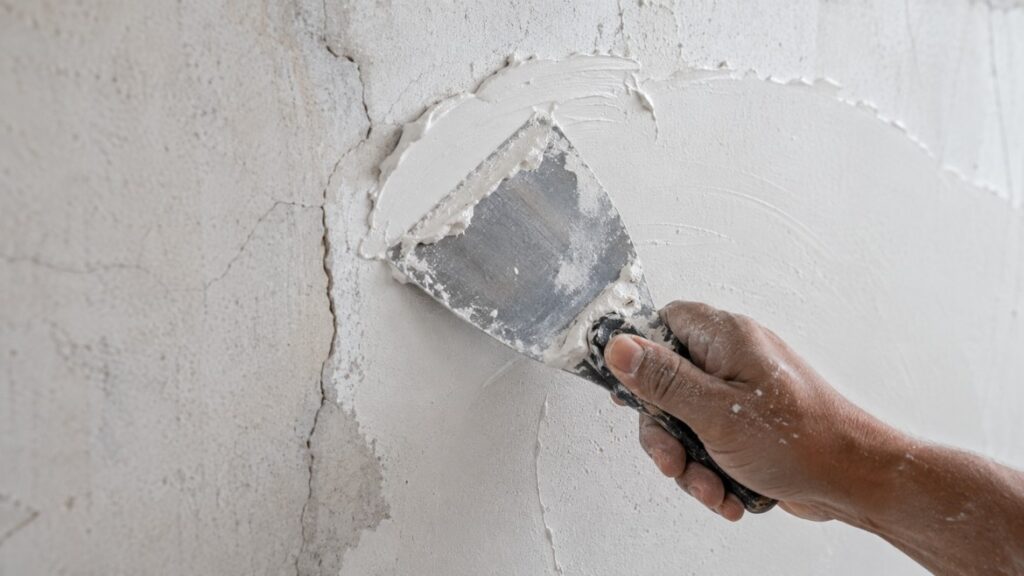
Wall putty is a powder-based filling compound made from white cement or acrylic polymers. Workers mix it with water and apply it using a putty knife or trowel. Its main job is to level out an uneven wall surface. Putty fills and smooths small cracks, pores, and rough patches left over from construction before any paint touches the wall.
A properly puttied wall feels smooth to the touch and looks even under bright light. That’s exactly the base a good paint finish needs. Skip this step, and every imperfection in the plaster shows through the final coat, regardless of paint price.
Most interior walls need two coats of putty. Apply the coats at right angles to each other so you don’t miss any low spots. Sand each coat once it fully dries, then apply the next one.
What Is Primer?
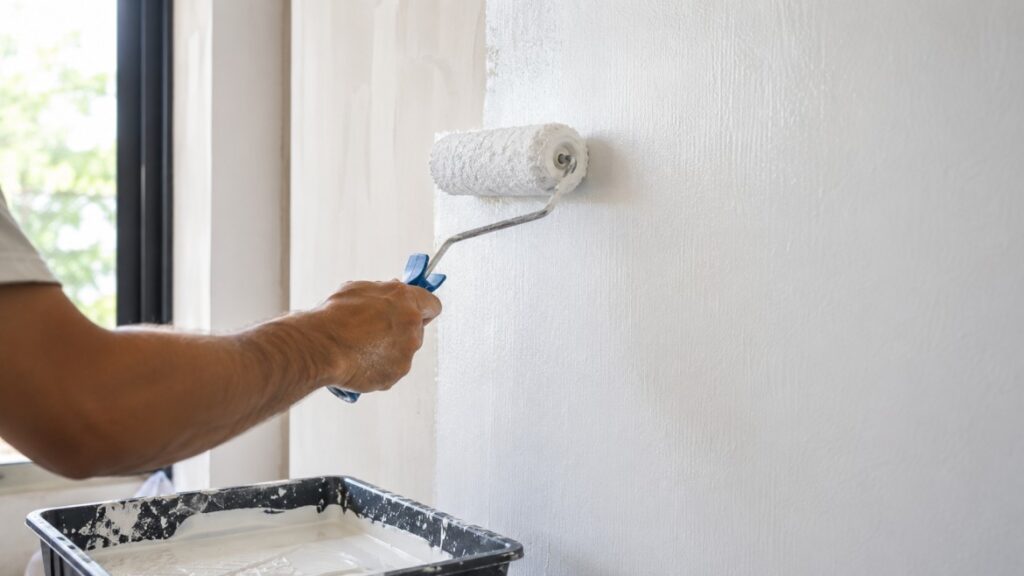
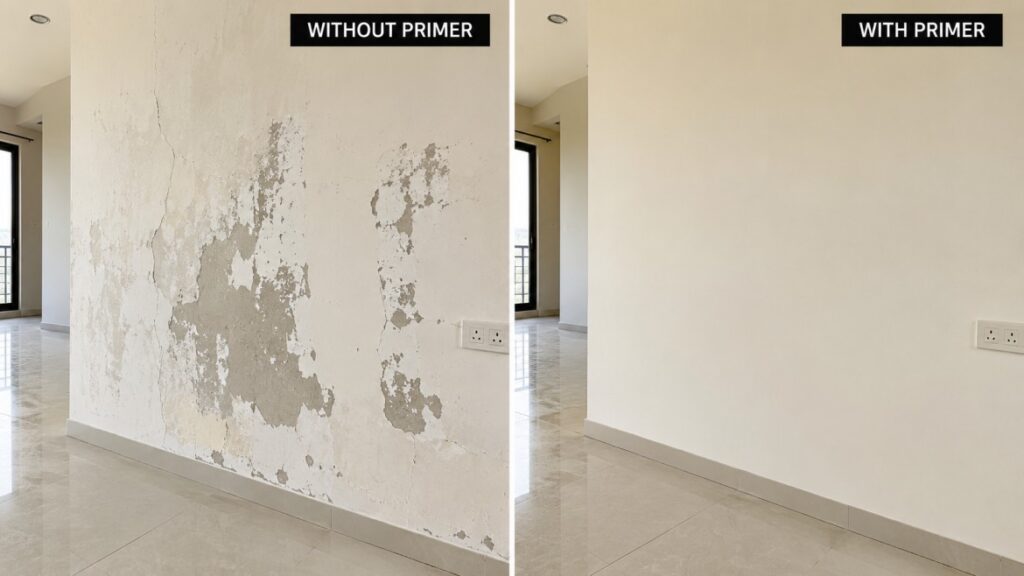
Primer is a thin, liquid coating. You roll or brush it onto the wall after you finish and sand the putty work smooth. Unlike putty, primer doesn’t fix surface flaws. Instead, it seals the porous wall surface and blocks stains and alkalinity from the cement below. It also gives the finishing paint something consistent to grip onto.
A wall without primer tends to absorb paint unevenly, since dry putty and plaster soak up moisture at different rates. That’s why unprimed walls often look patchy, need extra paint coats, and peel sooner than primed ones.
Primers come in water-based and oil-based versions. The right choice depends on your wall surface and your next paint. Check product compatibility before you buy.
Wall Putty vs Primer: Key Differences
Because you apply both before the final paint, it’s easy to assume putty and primer do the same job. They don’t. Here’s a direct side-by-side comparison.
| Aspect | Details |
| Purpose | Putty fills cracks and levels the wall; primer seals the surface and improves paint adhesion |
| Form | Putty is a thick paste mixed from powder; primer is a ready-to-use liquid |
| Application tool | Putty knife or trowel for putty; brush or roller for primer |
| When it’s used | Putty is applied first, directly on bare or repaired plaster; primer follows, after putty is sanded smooth |
| Drying time | Putty typically needs 4 to 6 hours between coats; primer usually dries in 1 to 2 hours |
| Skipping it | Skipping putty leaves visible cracks and rough patches; skipping primer causes patchy, short-lived paint |
Which Comes First: Putty or Primer?
This trips up most first-time renovators, so here it is plainly: putty always comes before primer, and primer always comes before paint. Applying primer first means sealing an uneven, cracked surface. That defeats the purpose of both products and leaves visible flaws once the paint goes on.
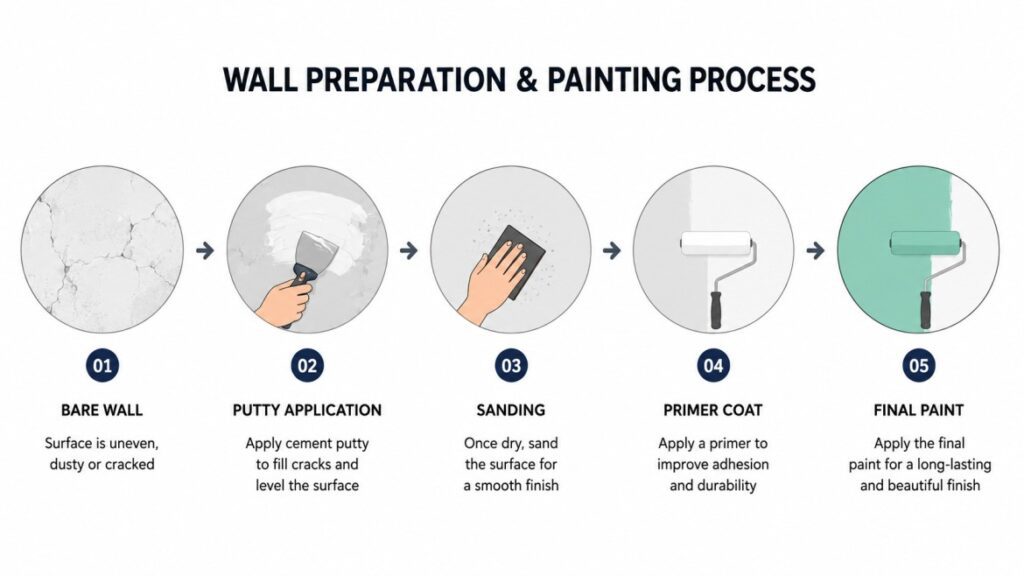
Correct Order of Application
- Step 1: Clean the wall and remove any loose plaster, dust, or old flaking paint
- Step 2: Apply the first coat of wall putty and let it dry fully
- Step 3: Sand the surface lightly, then apply a second coat of putty at a right angle to the first
- Step 4: Sand again until the wall feels smooth and even under your hand
- Step 5: Apply one or two coats of primer, and let each coat dry as the product label directs
- Step 6: Apply the finishing paint once the primer fully cures
Following this sequence protects the time and money you’ve already put into the wall. A rushed step at any point usually means redoing the whole surface later.
Common Mistakes to Avoid
- Applying paint directly over unsanded putty leaves a rough, uneven finish
- Skipping primer to save time shortens the life of the paint significantly
- Using interior putty on exterior walls, since exterior surfaces need weatherproof putty made for outdoor conditions
- Applying a second coat before the first coat of putty or primer fully dries
- Ignoring the manufacturer’s recommended drying time — humidity in coastal cities like Mumbai often shortens it
Approximate Cost Considerations
TThe ranges below are pulled from multiple published Indian home-improvement cost guides and contractor rate cards as of 2026, not from a These ranges come from multiple published Indian home-improvement cost guides and contractor rate cards as of 2026, not from a Furnofy quote or a single supplier. Treat them as a starting reference for budgeting conversations, not a number to promise a client. Actual rates shift by city, brand, wall condition, and coat count. Confirm them with a local contractor before you finalize any project cost.
| Item | Researched Range (2026) | Notes |
| Wall putty (material + labour, 2 coats) | ₹8 – ₹15 per sq. ft. | Standard interior wall; premium finishes run ₹15 – ₹25 |
| Primer (material + labour) | ₹10 – ₹30 per sq. ft. standalone; often bundled at ₹2 – ₹3 per sq. ft. within a full paint job quote | Wide variance depending on whether it’s quoted separately or as part of a paint package |
| Full wall prep (putty + primer + 2 coats paint, fresh plaster) | ₹18 – ₹35 per sq. ft. | Repainting without full prep typically runs lower, around ₹8 – ₹16 per sq. ft. |
Note: These figures come from public cost guides and rate cards, not verified pricing. They can be a year or more out of date, since material and labour costs shift regularly. Always get a fresh, written quote from your contractor or from Furnofy’s team before budgeting a project.
Putty and Primer for Different Wall Surfaces
Not every wall behaves the same way. The right putty-and-primer combination often depends on where the wall sits and what it’s made of. A newly plastered wall, for instance, needs time to cure before you apply putty. Applying putty too early traps moisture underneath and causes bubbling later. Older, previously painted walls usually need you to scrape off flaking layers first. Sand lightly afterward so fresh putty can bond properly.
Bathroom and kitchen walls face more humidity than the rest of the house. A primer formulated for moisture resistance is worth the small extra cost here. That’s true even if the putty underneath stays the same product you use elsewhere. Exterior walls face the harshest conditions of all — sun, rain, and temperature swings all work against the paint film. That’s why exterior-grade putty and a weatherproof primer are non-negotiable, not optional upgrades.
Furnofy’s site teams typically inspect wall condition room by room before recommending a product combination. A one-size-fits-all approach to putty and primer tends to age unevenly across a home.
FAQ’s
Yes. Wall putty levels the surface and closes hairline cracks. Skipping it usually means the final paint job shows every flaw in the plaster underneath.
It’s possible on a wall that’s already perfectly smooth. But most freshly plastered or repainted walls still have enough surface irregularities that we recommend putty first.
Two coats are standard for most interior walls. Apply them in perpendicular directions and sand between coats for an even finish.
Not for coverage, but a primer tinted closer to the final paint shade can reduce the paint coats you need. It’s worth asking your painter about.
Most primers need one to two hours to dry to the touch. For full curing time before painting, check the product label, since humidity and room ventilation both affect drying time.
Conclusion
A wall’s final look depends far more on what happens before the paint than most homeowners expect. The putty-then-primer sequence is the step people skip or rush most often. Getting it right the first time means fewer touch-ups later and a finish that actually holds up to daily wear.
If you’re planning a home interior project, Furnofy’s design and execution team can walk you through wall finishing correctly, from prep to paint. We’ll factor in your specific space and city conditions.