
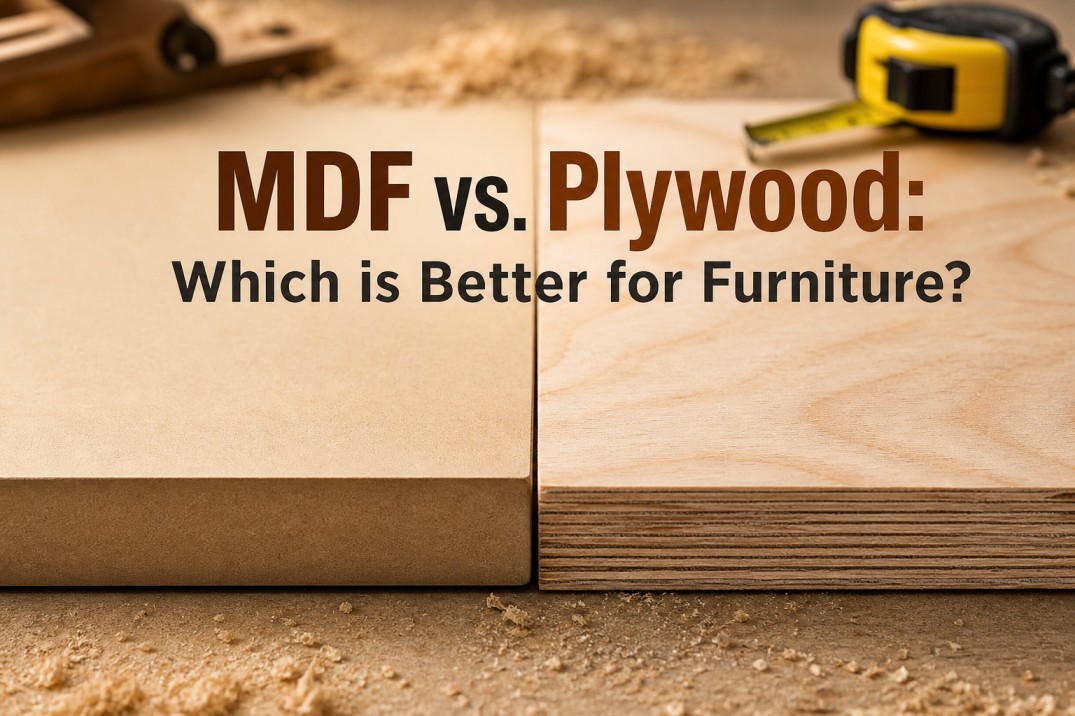
Selecting the right material for furniture is a crucial step in creating pieces that are both functional and long-lasting. Among the wide range of options available today, MDF vs. Plywood remains one of the most common comparisons in engineered wood products. Each has its own structure, performance features, and applications in furniture making. Understanding how they differ helps in making informed decisions that align with your budget, usage, and design goals. From cabinets and wardrobes to wall panels and shelves, the material you choose plays a major role in durability, appearance, and overall quality.
This guide takes a closer look at MDF and Plywood to help you compare their strengths, limitations, and ideal use cases for furniture design.
Table of Contents
- What is MDF?
- What is Plywood?
- MDF vs. Plywood: A Detailed Comparison
- A. Durability and Strength
- B. Cost and Affordability
- C. Aesthetic Appeal and Finish
- D. Ease of Use and Workability
- E. Environmental Impact
- Ideal use Cases
- Where MDF works best (interior panels, painted furniture, etc.)
- Where plywood is more suitable (load-bearing furniture, wet areas, etc.)
- Which is Better for-
- A. For Budget-Friendly Projects?
- B. For Heavy Duty Furniture?
- C. For Decorative Furniture?
- Conclusion
1. What is MDF?
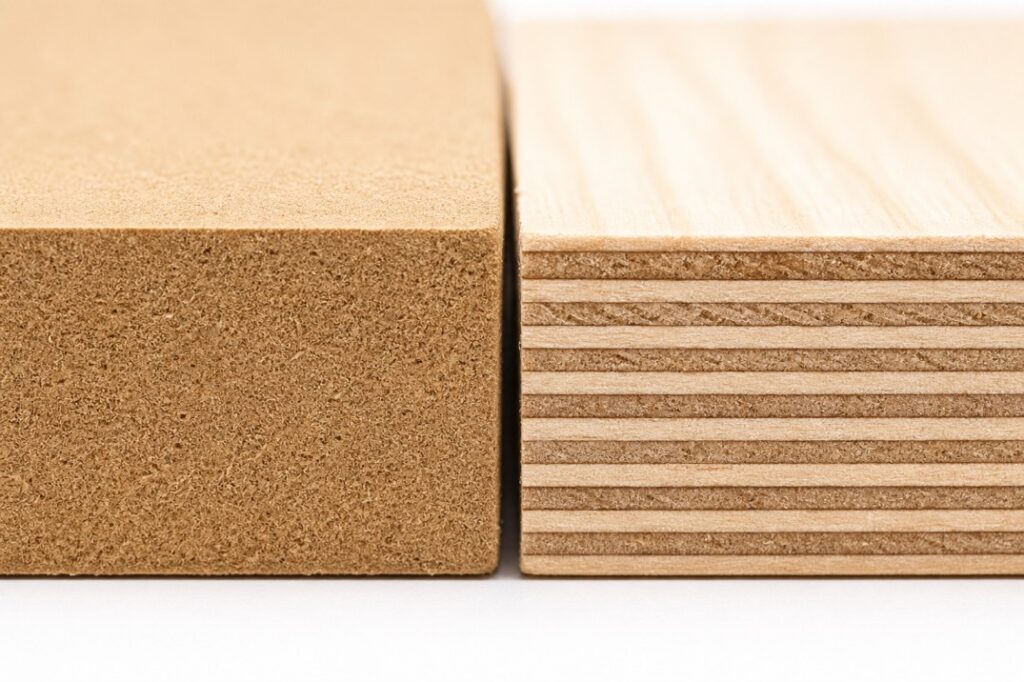
MDF, or Medium Density Fiberboard, is a type of engineered wood made by breaking down hardwood or softwood into fine fibers. Manufacturers combine these fibers with synthetic resin and compress them under high pressure and temperature to form dense, flat panels. This process creates a strong, stable sheet material with a smooth and consistent surface from edge to edge.
The smooth surface makes MDF ideal for applications that demand a flawless finish. It absorbs paint evenly and serves as a reliable base for veneers and laminates. Since the board has no knots, grain, or natural imperfections, it allows for precise cutting and shaping. These qualities make it a practical choice for detailed joinery and decorative elements, especially when comparing MDF vs. Plywood for fine interior work.
Many furniture makers use MDF for cabinetry, wall panels, shelving, and interior fittings. Its density gives it a solid feel, and its fine composition supports intricate designs. The board resists splintering during machining, which improves ease of handling in both factory and site environments.
Pros of MDF:
- Smooth Finish: The surface of MDF is completely flat and free from grain or knots, making it perfect for painting, laminating, or applying decorative veneers.
- Affordable: MDF is generally more budget-friendly than plywood, which makes it an attractive choice for cost-conscious furniture projects without sacrificing finish quality.
- Consistency: Its uniform structure ensures that every part of the board looks and behaves the same, providing a stable and predictable material for cutting, drilling, and finishing.
- Versatile: MDF can be easily shaped, carved, or machined into detailed forms and complex designs, making it ideal for customized furniture, moldings, and decorative features.
Cons of MDF:
- Less Durable: MDF lacks the structural strength of plywood, making it more prone to sagging or damage under heavy loads. It is not ideal for weight-bearing furniture or pieces that require high durability.
- Sensitive to Moisture: Prolonged exposure to moisture can cause MDF to swell, distort, or lose its shape. This limits its use in damp areas like bathrooms or outdoor settings.
- Heavy: MDF has a dense composition, which increases its weight. Handling, transporting, or installing large panels can be more challenging due to this added heaviness.
- Not as Eco-Friendly: The manufacturing process of MDF involves chemical resins that may emit formaldehyde, raising concerns about indoor air quality and environmental impact.
2. What is Plywood?
Plywood is an engineered wood product that manufacturers create by bonding multiple layers of wood veneer using strong adhesives. They position each layer, or ply, with its grain running at a right angle to the one above and below. This cross-grain construction enhances stability and reduces the risk of bending, splitting, or warping over time. Because of its strength and resistance to movement, plywood serves as a reliable material for furniture, cabinetry, paneling, flooring, and even structural construction especially when evaluating MDF vs. Plywood for long-lasting performance.
Manufacturers produce plywood in various grades and thicknesses to meet different application needs. Higher-grade plywood features smooth, knot-free surfaces suited for visible finishes, while lower grades work well for internal structures or rough construction. The material also comes in different core types, including MR (moisture resistant), BWR (boiling water resistant), and marine plywood, each offering a specific level of durability and moisture resistance.
Plywood generally falls into two main categories based on the wood species used: hardwood and softwood. Hardwood plywood, made from species like oak, birch, or maple, delivers higher strength and better wear resistance. Softwood plywood, made from pine or fir, is more suitable for light-duty or non-load-bearing projects. The quality, strength, and durability of the final product depend on the number of layers and the wood species selected during the manufacturing process. The MDF vs. Plywood comparison often comes down to structural needs and desired longevity.
Pros of Plywood:
- Strong and Durable: Plywood offers excellent structural strength, making it suitable for heavy-use furniture like beds, tables, and wardrobes. It holds screws well and provides lasting support in load-bearing applications.
- Resistant to Warping: The cross-layered construction of plywood reduces the risk of bending, splitting, or deforming. This stability helps maintain its shape over time, even with regular use.
- Moisture Resistance: Certain grades, such as BWR and marine plywood, are designed to resist moisture. This makes them a good choice for kitchens, bathrooms, and other areas exposed to humidity.
- Eco-Friendly: Plywood can be a more sustainable option, especially when it is manufactured using certified wood from responsibly managed forests. It also tends to release fewer harmful emissions compared to materials that rely heavily on chemical resins.
Cons of Plywood:
- Visible Grain Patterns: The natural wood grain on plywood surfaces can create an uneven texture. Achieving a flawless, uniform finish for paint or high-gloss coatings often requires additional surface treatment.
- Cost: Plywood typically comes at a higher price point than MDF. This is especially true for premium variants made from hardwood species, which can significantly increase the overall material cost for furniture projects.
- Veneer Damage: The top veneer layer, while decorative, can be thin and prone to chipping or peeling under impact or pressure. Once damaged, it may expose the inner layers, which are less resistant to wear.
- Not as Easy to Shape: Plywood is strong but rigid, making it harder to carve or mold into fine or detailed patterns. It does not support intricate design work as easily as MDF, especially for curved or ornamental elements.
3. MDF vs. Plywood: A Detailed Comparison
To make an informed decision, it’s important to evaluate MDF and plywood side by side across essential performance areas. This comparison will help you understand which material suits your furniture needs more effectively.
A. Durability and Strength
Plywood ranks higher in strength due to its layered construction. The alternating grain direction in each sheet gives it excellent resistance against cracking, bending, and splitting. It performs well under load and can handle daily use, making it a solid choice for structural furniture such as wardrobes, tables, shelves, and kitchen cabinets.
MDF offers less strength in comparison. Its uniform fiberboard structure lacks the reinforcing layers that plywood has, which limits its ability to handle weight or pressure. Although MDF provides a smooth and stable surface for finishes, it is more vulnerable to damage when exposed to impact or heavy use. It is better suited for lightweight furniture, wall paneling, or decorative trims where structural strength is not the main priority.
B. Cost and Affordability
In terms of pricing, MDF is typically the more economical choice. It is made using wood fibers, resin, and heat, which makes the production process relatively simple and cost-effective. This allows MDF to be priced lower in the market, making it suitable for furniture projects where cost control is important. It is often used in mass-produced items, interior panels, and budget-focused furniture designs.
Plywood, in contrast, generally carries a higher price tag. Its construction involves bonding multiple layers of wood veneer, which increases both production time and material cost. The final price also depends on the type and grade of wood used. Softwood plywood is usually more affordable, while hardwood plywood, which uses stronger and finer-quality timber, tends to be more expensive. The durability and strength that plywood offers often justify the additional cost, especially for long-lasting or high-performance furniture pieces.
C. Aesthetic Appeal and Finish
MDF offers a consistently smooth surface that makes it ideal for projects where a clean and flawless finish is important. Its uniform texture accepts paint evenly, allowing for a refined appearance with minimal preparation. It also serves as a reliable base for laminates and veneers, making it a practical option for modern furniture designs that require flat, uniform surfaces without natural variations.
Plywood, in contrast, showcases visible grain patterns that reflect the character of real wood. This natural texture gives it a warm, rustic appearance that works well in traditional or organic design styles. While this grain adds charm, it can make it difficult to achieve a completely smooth surface without extra finishing work. The outer veneer layer, though visually appealing, is sometimes prone to minor damage, which may affect the final look of the piece if not handled carefully.
D. Ease of Use and Workability
MDF is known for its excellent workability. Its fine, uniform composition allows for clean cuts without splintering, making it suitable for detailed shaping and precision work. Drilling, routing, or carving can be done with basic tools, which helps speed up the fabrication process. This quality makes MDF a preferred material for custom furniture pieces that involve curves, moldings, or decorative profiles.
Plywood, though versatile, presents more challenges during fabrication. Its layered structure and grain variation can lead to splinters or chipping, especially when cut across the grain. Cutting and shaping often require sharp blades and careful handling to avoid damaging the surface veneer. Additionally, the exposed edges may appear rough and often need edge banding or sanding to create a clean, finished look. These factors can add time and effort to the process, especially in projects that demand fine detailing.
E. Environmental Impact
The environmental impact of both MDF and plywood depends largely on how they are manufactured and the type of materials used. Plywood is often considered the more sustainable option, especially when it is produced from wood harvested in responsibly managed forests. Many suppliers now offer plywood that meets certification standards for sustainable forestry, helping reduce the strain on natural resources.
MDF, in contrast, is made using wood fibers combined with synthetic adhesives. Some of these adhesives may release formaldehyde and other emissions during and after production. These emissions can affect indoor air quality and raise health concerns. However, recent advances in manufacturing have led to the availability of low-emission MDF products. Boards labeled as low-VOC or formaldehyde-free offer a safer alternative and reduce the overall environmental impact. Checking product certifications and emission ratings is essential when making environmentally conscious choices.
4. Ideal Use Cases–
A. Where MDF works best
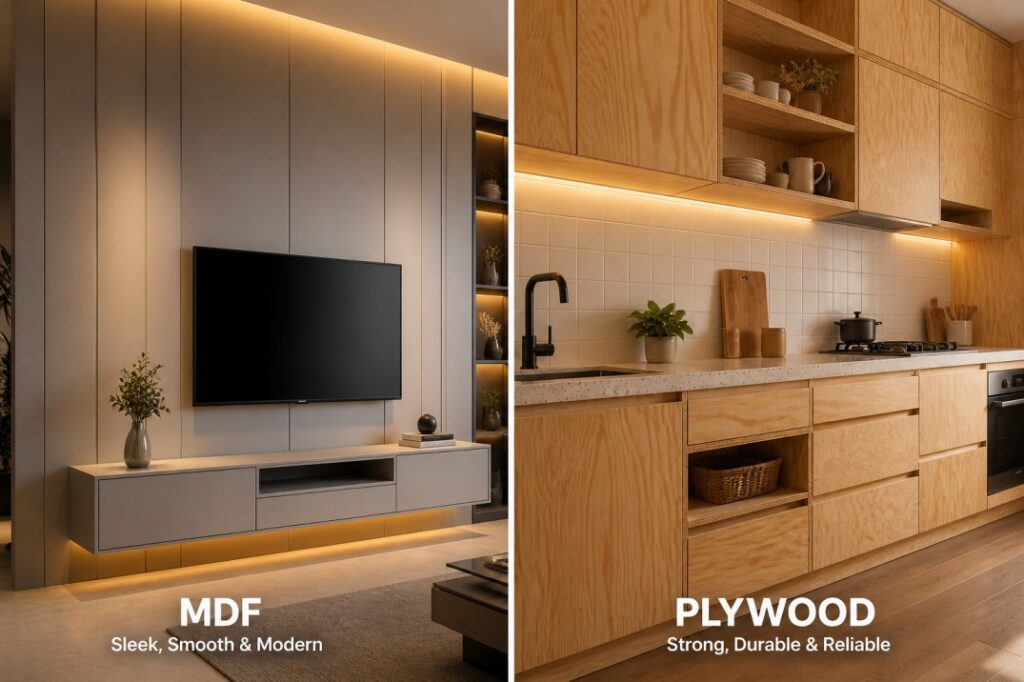
MDF is best suited for indoor applications where a smooth finish and fine detailing are important. Its flat, uniform surface allows for clean paint application and easy lamination, making it a common choice for painted furniture, wall moldings, and decorative panels. MDF is also widely used in interior elements such as wardrobes, cupboard shutters, storage units, TV units, and display cabinets. Since it is easy to cut and shape, it works well for custom furniture that features curves, patterns, or engraved designs. In addition, MDF is often used in budget-friendly projects and ready-to-assemble furniture due to its affordability and versatility.
B. Where plywood is more suitable
Plywood is more suitable for furniture that requires high strength, durability, and stability under load. Its multi-layered construction makes it ideal for structural pieces like bed frames, dining tables, heavy storage cabinets, and study desks. Plywood is also recommended for areas exposed to moderate to high moisture, such as kitchen trolleys, bathroom vanities, lofts, and utility room fittings. When treated plywood or marine-grade plywood is used, it performs well in humid environments without warping or swelling. Beyond furniture, plywood is often used in architectural frameworks, flooring underlays, ceiling panels, and other long-term installations where reliability is a priority.
5. Which is Better for –
A. For Budget-Friendly Projects
For cost-conscious furniture needs, MDF proves to be a highly practical choice. It is significantly more affordable than plywood, making it suitable for projects where controlling expenses is important. Its smooth, even surface makes it ideal for painted finishes and decorative laminates, allowing you to achieve a clean and stylish look without increasing the material cost.
MDF works particularly well for lightweight furniture items that are not subject to heavy usage. It is commonly used in shelving units, display racks, side tables, wardrobes, and partition panels in residential interiors. For homeowners or designers working within a tight budget, MDF delivers value by offering design flexibility and a neat finish without the high price tag of premium wood-based alternatives.
B. For Heavy Duty Furniture
When durability and load-bearing capacity are essential, plywood stands out as the more reliable material. Its layered construction gives it excellent strength and stability, allowing it to support weight without bending or breaking over time. This makes plywood an ideal choice for furniture that faces regular use and must maintain structural integrity.
Common applications include bookshelves filled with heavy items, large cabinets, dining tables, study desks, and storage units. Plywood can also handle the demands of high-traffic areas in both residential and commercial spaces. Moisture-resistant variants are especially useful in environments where occasional exposure to humidity is expected. For long-lasting performance and dependable support, plywood offers a strong foundation that holds up well under daily stress.
C. For Decorative Furniture
MDF is a preferred material for decorative furniture due to its fine, consistent composition. The smooth surface allows for seamless painting, polishing, and lamination, which helps achieve a refined and elegant finish. It supports detailed shaping without splintering, making it ideal for furniture that features curves, cutouts, or ornamental patterns.
This quality makes MDF a popular choice for custom-designed cabinet doors, wall moldings, headboards, and decorative panels. It is also well-suited for feature walls, display units, and artistic elements that require precise detailing. In the MDF vs. Plywood comparison, designers often choose MDF when the goal is to create furniture that stands out through shape, texture, or color rather than wood grain. For interiors that focus on design expression and smooth finishes, MDF offers flexibility and ease in achieving the desired look.
6. Conclusion
Choosing between MDF and plywood comes down to understanding the needs of your project. Each material offers unique benefits that serve different functions in furniture design. MDF stands out for its smooth finish, easy workability, and cost efficiency, making it a smart choice for decorative elements, low-traffic furniture, and projects where fine detailing is a priority. Its clean surface supports creative expression through paint, laminates, and intricate shapes.
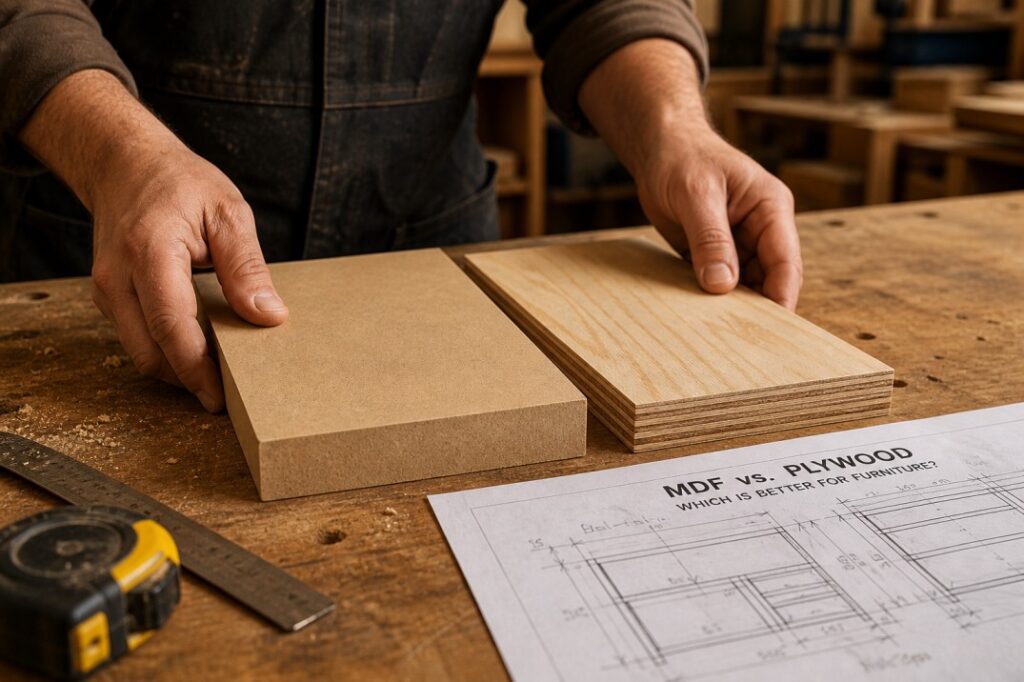
Plywood, on the other hand, provides superior strength, stability, and resistance to wear. Its layered construction offers lasting support, making it ideal for structural furniture, high-use areas, and spaces that demand durability over time. With the right grade and finish, plywood can perform reliably in both residential and commercial interiors.
Understanding how each material performs allows you to make decisions based on practicality, aesthetics, and long-term value. In the MDF vs. Plywood debate, your choice depends on the specific requirements of the project. Whether you’re working on custom cabinets, heavy-duty furniture, or feature pieces with detailed designs, selecting the right base material sets the foundation for lasting quality and function. A thoughtful approach not only improves the outcome of your furniture but also ensures better performance, safety, and satisfaction in everyday use.