Introduction
Let us be honest — the moment most people consider hiring an interior designer, the first question that comes to mind is: how much will this actually cost me?
The cost of interior designing in India is not a fixed number. It depends on where you live, how large your space is, what style you want, and the materials you choose. So instead of giving you a vague answer, Furnofy breaks it all down — city by city, space by space, and style by style.
Whether you plan to furnish a compact 1BHK in Mumbai or design a full-scale corporate office in Bengaluru, this guide gives you the clarity to plan your budget without any surprises. By the end, you will know exactly what to expect, what to prioritise, and how to get the most value for your money.
Outline
- Factors That Influence the Cost of Interior Designing in India
- Location and City
- Size of the Space
- Design Style and Complexity
- Materials and Finishes
- Designer’s Experience and Reputation
- Additional Services
- Cost Breakdown by Space Type
- Residential Spaces
- Commercial Spaces
- How to Budget for Interior Designing in India
- Hiring an Interior Designer: Is It Worth the Cost?
- Smart Tips to Make the Most of Your Interior Design Budget
- Conclusion
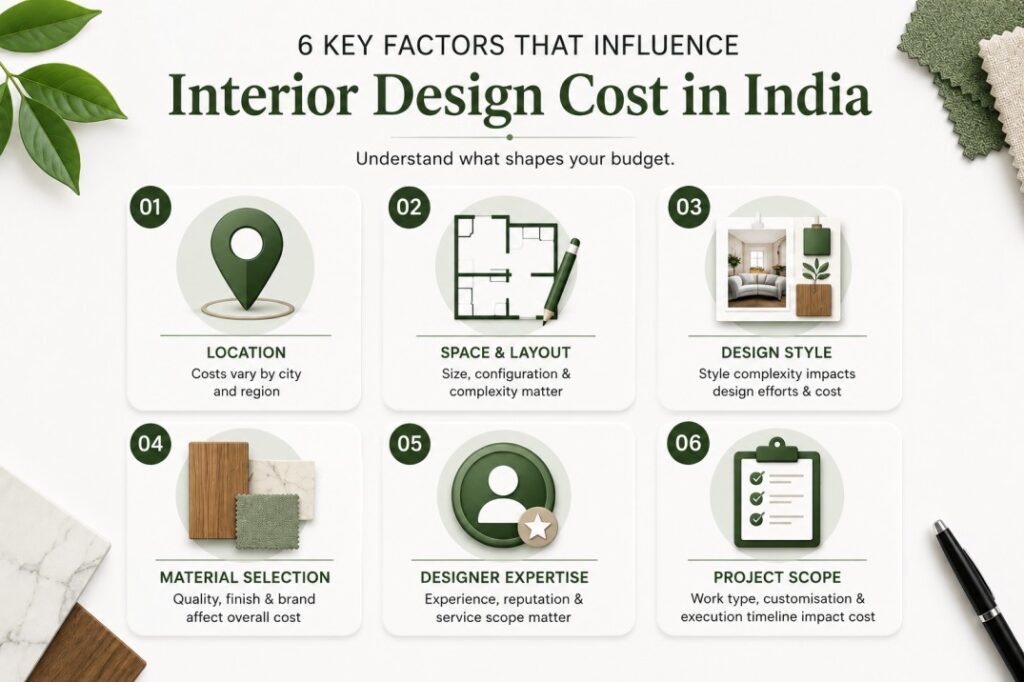
Factors That Influence the Cost of Interior Designing in India
Before we get into specific numbers, it helps to understand what actually drives the cost. Several key factors shape the final pricing of any interior design project.
Location and City
Where you live is one of the biggest cost drivers. Cities like Mumbai, Delhi, and Bengaluru have significantly higher interior design rates compared to Tier 2 or Tier 3 cities. This is because the cost of living, skilled labour, and material sourcing are all more expensive in metros.
For instance, a designer in Mumbai may charge between Rs. 800 and Rs. 2,000 per sq. ft., while the same quality of work in a city like Nagpur or Jaipur could cost between Rs. 400 and Rs. 900 per sq. ft. Therefore, your location plays a major role in shaping the overall budget.
Size of the Space
Naturally, a larger space requires more materials, more man-hours, and more coordination — all of which add to the total cost. A studio apartment will always cost less than a 3BHK, even when the design style and material quality stay the same.
Most designers in India charge either on a per sq. ft. basis or as a percentage of the total project value — usually between 10% and 15%. So, as the space grows, the design fee grows proportionally.
Design Style and Complexity
The style you choose directly affects the cost. Here is a quick breakdown:
- Modern/Contemporary: Clean lines, neutral tones, and minimalist furniture — this is generally the most budget-friendly style.
- Traditional or Classic: Intricate woodwork, carved furniture, and rich fabrics make this style more expensive.
- Industrial or Rustic: Raw materials like exposed brick, metal, and reclaimed wood can be surprisingly cost-variable depending on sourcing.
- Luxury or High-End: Imported marble, designer fixtures, and bespoke furniture push costs to the highest range.
Materials and Finishes
Material choices make a significant difference to your budget. For example, ceramic tile flooring costs far less than marble, and laminate finishes are considerably cheaper than solid wood or veneer. Similarly, ready-made furniture saves much more than custom-built pieces.
As a result, two homes of the exact same size can have wildly different interior design costs based purely on the materials the homeowner selects.
Designer’s Experience and Reputation
A senior designer with a strong portfolio charges more than a fresher just starting out. However, experienced designers often deliver better space planning, fewer execution errors, and more cohesive results — which can actually save you money in the long run.
At Furnofy, we always recommend finding a balance: look for a designer whose style matches yours and whose portfolio reflects work within a similar budget range.
Additional Services
Services like 3D visualisation, project management, site visits, and material sourcing all add to the total cost. Furthermore, customisations such as bespoke furniture, built-in units, or specialty lighting installations push the budget higher than standard, off-the-shelf solutions.
Cost Breakdown by Space Type
Now that we understand what drives costs, let us look at realistic price ranges for different spaces across India.
Residential Spaces
| Space Type | Estimated Cost Range | What It Typically Covers |
| Studio / 1BHK | Rs. 50,000 to Rs. 2,00,000 | Basic furniture, standard finishes, minimal customisation |
| 2BHK Apartment | Rs. 2,00,000 to Rs. 6,00,000 | Modular kitchen, wardrobes, living and bedroom design |
| 3BHK Apartment | Rs. 5,00,000 to Rs. 12,00,000 | Full home design, custom furniture, quality finishes |
| Luxury Home / Villa | Rs. 15,00,000 and above | Premium materials, imported fixtures, fully bespoke design |
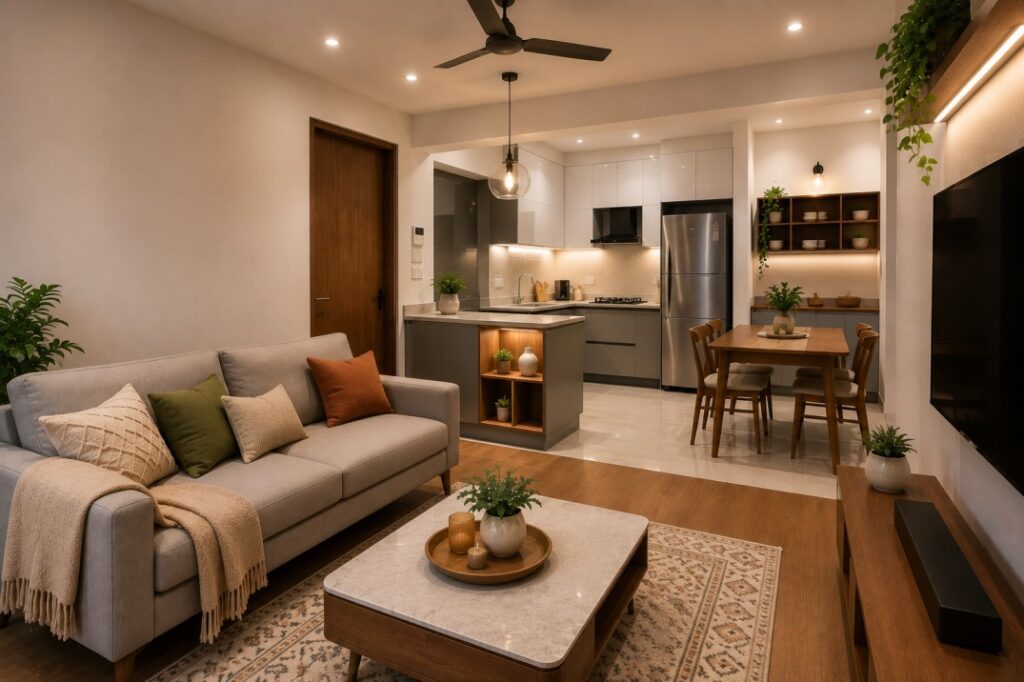
To clarify, these ranges assume a mid-quality finish. If you opt for premium materials throughout, even a 2BHK can cross Rs. 8 to 10 lakhs. Conversely, smart material choices can bring a 3BHK well under Rs. 5 lakhs.
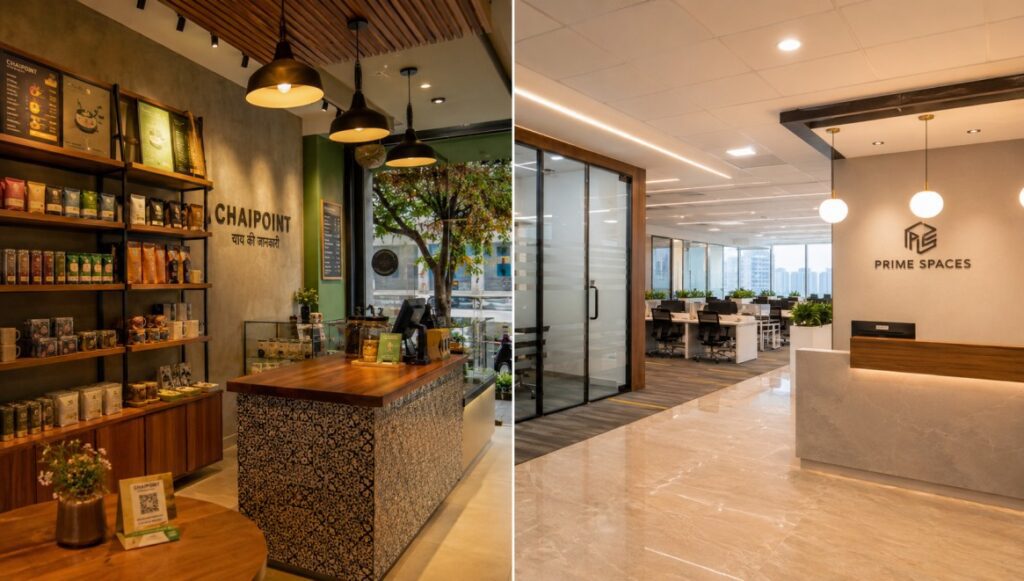
Commercial Spaces
| Space Type | Estimated Cost Range | Key Notes |
| Small Retail / Store | Rs. 2,00,000 to Rs. 5,00,000 | Brand-aligned display, signage, and lighting |
| Cafe or Restaurant | Rs. 5,00,000 to Rs. 20,00,000 | Theme-based design, kitchen planning included |
| Small Corporate Office | Rs. 2,00,000 to Rs. 8,00,000 | Workstations, cabin, and reception area |
| Large Corporate Office | Rs. 10,00,000 to Rs. 30,00,000+ | Multi-floor, custom partitions, AV and lighting |
Commercial projects tend to cost more per sq. ft. than residential ones because they demand higher durability, better acoustics, brand-specific aesthetics, and compliance with safety standards.
How to Budget for Interior Designing in India
Planning your budget before the design process starts saves you from making costly decisions under pressure. Here are some practical tips that actually work:
- Set Clear Priorities First: Decide which rooms or elements matter most to you. For example, if the kitchen and master bedroom are your priority, allocate a larger share of your budget there and keep the remaining rooms simpler.
- Choose Materials Wisely: You do not always need the most expensive option to achieve a beautiful result. Laminates that mimic wood, engineered stone instead of marble, and locally sourced tiles can all look stunning while staying within budget.
- Get Multiple Quotes: Always speak with at least two or three designers before finalising one. This gives you a realistic sense of market rates and helps you negotiate better.
- Keep a Contingency Buffer: Always set aside 10 to 15% of your total budget for unexpected expenses — delayed deliveries, rework, or last-minute changes are common in any design project.
- Understand the Fee Structure: Some designers charge a flat fee, others charge per sq. ft., and some take a percentage of the project value. Make sure you understand how your designer bills before signing the contract.
Hiring an Interior Designer: Is It Worth the Cost?
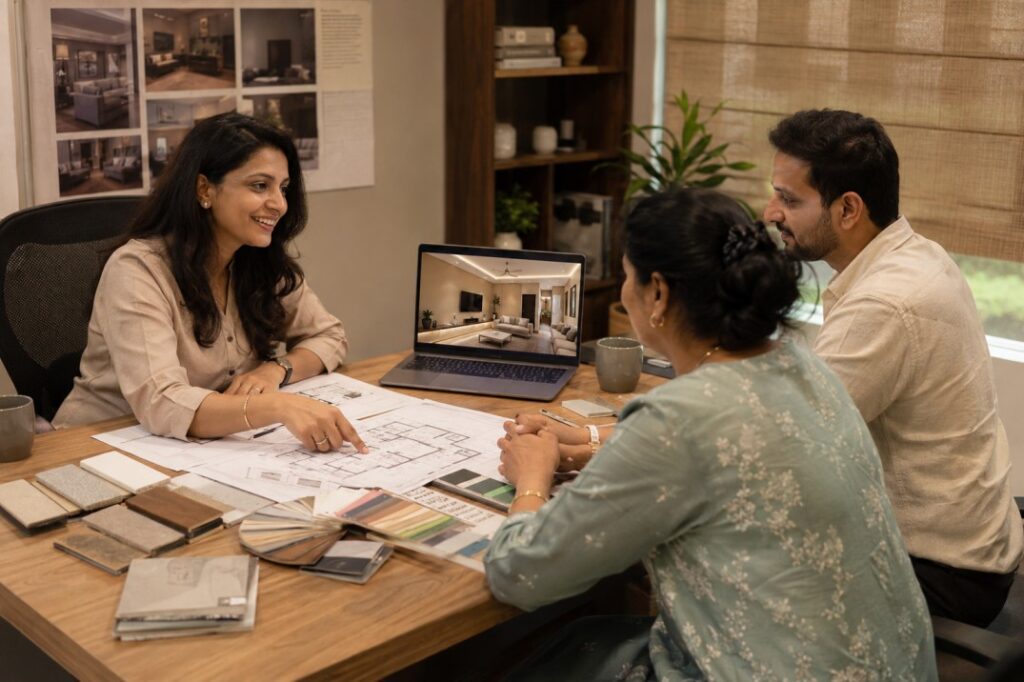
Many homeowners hesitate to hire a professional designer because it feels like an added expense on top of an already large budget. However, a good interior designer can actually help you save money — not spend more of it.
Here is why: designers know where to source materials at better prices, how to avoid costly mistakes in execution, and how to use your space more efficiently. Furthermore, they handle coordination with contractors, vendors, and carpenters — which saves you significant time and stress.
Additionally, a well-designed space adds long-term value to your property. Whether you plan to live in it, rent it out, or sell it eventually, a thoughtfully designed interior always commands a better price in the market.
So, while the upfront cost of hiring an interior designer might seem high, the value they deliver — in quality, efficiency, and peace of mind — often far outweighs what you pay them.
Smart Tips to Make the Most of Your Interior Design Budget
To wrap things up, here are some final Furnofy-approved tips to help you get the best results without overshooting your budget:
- Start with a Mood Board: Collect references from Pinterest, Instagram, or Furnofy’s blog to show your designer a clear picture of what you want. This cuts down on revisions and saves time.
- Do Not Compromise on Structural Work: It is always smarter to invest in quality flooring, plumbing, and electrical work upfront. These are harder and more expensive to redo later.
- Mix High and Low Thoughtfully: Splurge on a few statement pieces — like a sofa or a dining table — and save on background elements like walls and generic storage units.
- Think Long-Term Over Trendy: Choose timeless designs over trend-driven ones. A classic interior will look just as good five years from now as it does today.
Conclusion
The cost of interior designing in India covers a very wide spectrum — and that is actually a good thing. It means there is a solution for every budget, every space, and every style preference.
Whether you spend Rs. 1 lakh on a compact apartment refresh or Rs. 30 lakhs on a full luxury villa, what matters most is that you plan smartly, choose the right professionals, and stay clear on your priorities.
At Furnofy, we are here to help you navigate every step of that journey. Explore our blog for more guides on home interiors, material comparisons, and design inspiration made for Indian homes.